*This post may contain affiliate links for which I earn commissions.*
This image was created with AI and serves as decorating inspiration.
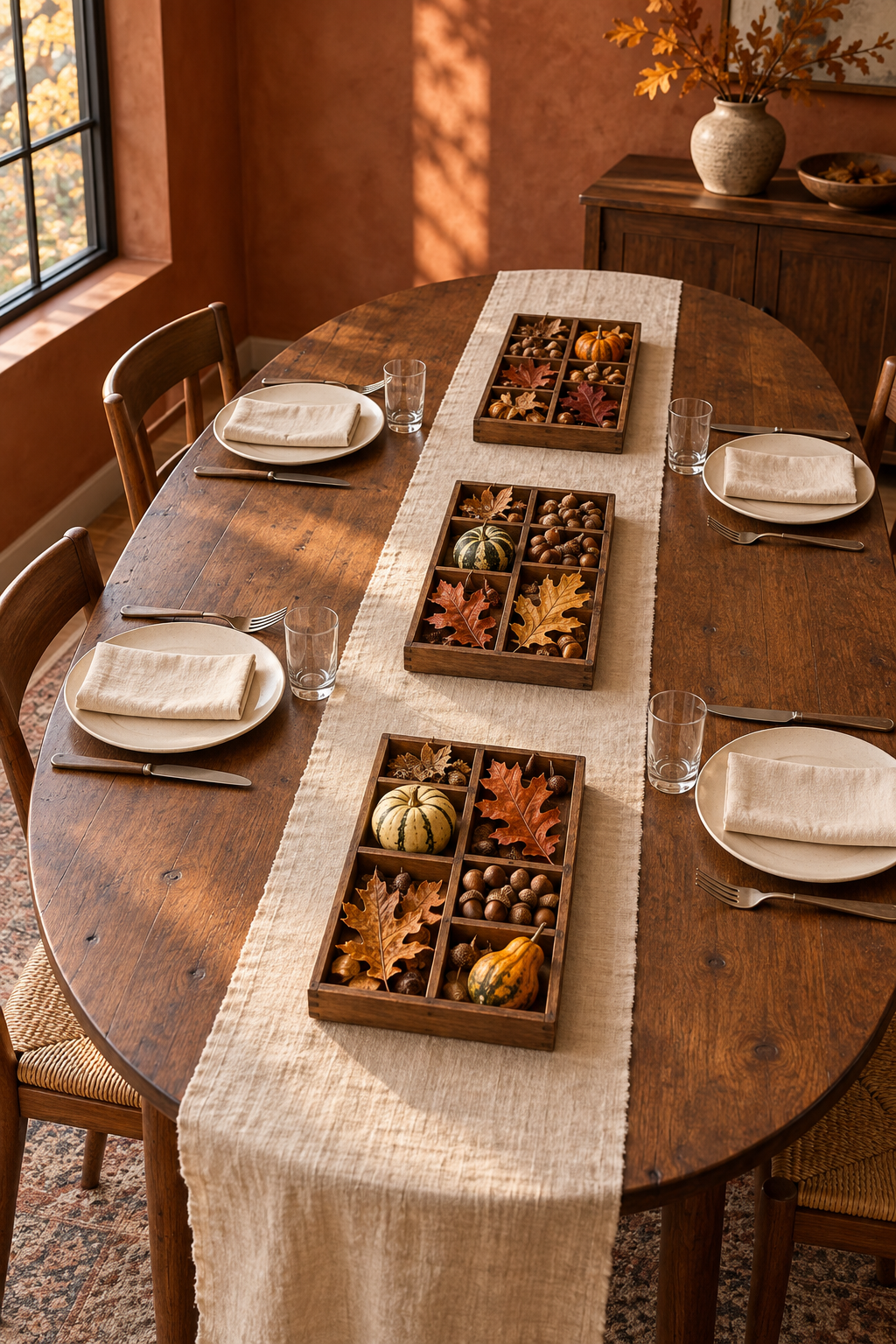
A Thanksgiving centerpiece can feel abundant without becoming a pile of pumpkins. In this inspiration image, divided trays turn leaves, acorns and small gourds into an orderly collection down the middle of an oval dining table. A pale runner softens the wood, while simple plates and folded napkins leave the harvest display easy to see.
The appeal is part dinner table, part autumn field collection. You can borrow that idea with a few shallow containers and seasonal pieces you already have, adjusting the number of trays to the space your meal needs.
What Makes This Look Work
Compartments give small autumn finds a purpose
The dividers keep each shape readable. Acorns sit together, leaves spread across their own sections, and small gourds provide rounded forms among the flatter pieces. That separation creates the specimen-collection idea. Mixing everything into one bowl would produce a different, more conventional harvest centerpiece.
The contents need not be botanically identified or labeled. Their contrasting outlines do the work, so the arrangement remains approachable rather than turning the dining room into a museum display.
A light center strip connects the trays
The cream runner links the repeated containers against the darker tabletop. Its soft, slightly rumpled surface offsets the straight edges of the compartments and keeps the setting relaxed. Because it occupies only the center, substantial areas of wood remain visible around the plates.
That exposed perimeter matters. It gives the individual settings a clear boundary and prevents the decorative collection from spreading into the meal itself.
Warm walls carry the seasonal color
The terracotta-toned room and amber afternoon light reinforce the leaves and gourds without requiring patterned dishes or elaborate napkin treatments. Pale dinnerware provides a quiet pause beside the detailed trays. In a room with white or gray walls, the same effect can come from warm brown containers and a few russet leaves rather than repainting or adding many new accessories.
Key Pieces to Recreate the Look
Shallow divided display trays
Choose low containers with compartments large enough to hold a small gourd or a leaf without crushing it. Brown wood tones relate to the pictured table, but the useful feature is the clear separation between sections.
A narrow cream table runner
A softly textured runner establishes the collection’s center line. Select a width that accommodates your trays while keeping their edges clear of plates and glassware.
Decorative autumn leaves
Flat leaves introduce recognizable seasonal outlines without adding height. Look for varied shapes in amber, rust and muted brown, or use clean, fully dry leaves that hold their shape.
Acorns and small woodland accents
Acorns fill the smaller compartments and contrast with broader leaves. A restrained quantity is enough; their role is to create a distinct little group, not cover the entire tray base.
Mini pumpkins or gourds
Small rounded pieces break up the flat collection. Choose specimens that fit inside the dividers and sit steadily rather than balancing on the compartment walls.
Plain plates and cloth napkins
Cream dinner plates and simply folded napkins keep the dining settings calm. Existing neutral dishes work well, especially when the trays already supply several colors and textures.
How to Style It at Home
Lay out the meal before the collection
Set the plates, necessary utensils and drinking glasses first. Then place the serving dishes you expect to use, even if they are empty during the trial arrangement. This reveals the actual space available for decoration more reliably than starting with a fully dressed center.
If the trays crowd a platter or make guests reach over one another, reduce their number. A single well-arranged divided tray can carry the concept on a smaller table. The image’s repeated arrangement is an option, not a requirement.
Arrange one kind of find in each section
Work with the biggest pieces first. Nestle the gourds into suitable compartments, spread the leaves where their outlines remain visible, and add acorns to the smaller spaces. Leave some of the container base showing instead of filling every section to its rim.
Aim for differences between neighboring compartments. A broad leaf beside a compact cluster of acorns makes both easier to notice. Avoid packing delicate leaves beneath heavier decorations just to fit more materials into the display.
Check the runner against an oval tabletop
Center the fabric along the table’s length and smooth bulky folds beneath the trays. On an oval table, a very wide runner can consume the curved ends, so check the whole outline before deciding on its width.
Sit at each place and make sure the glass can be lifted without brushing a tray. Keep the containers low enough that people can see one another across the table. When a full family-style meal needs more room, move one tray to a sideboard and retain a shorter collection at the center.
Prepare natural pieces away from food
Inspect gathered materials before bringing them indoors and use only clean, thoroughly dry pieces. Keep loose botanical decorations contained in their display trays, separate from food and serving utensils. Faux acorns or leaves are useful when shedding, storage or repeated use would make natural materials inconvenient.
The arrangement can be assembled ahead of the meal, but leave the final serving-space check until you know which dishes will be on the table. That small adjustment keeps the display useful through dinner.
Shop Similar Pieces
Compare the inside of divided trays
Product photographs may emphasize the overall size while hiding how narrow the sections are. Check compartment dimensions and divider height against the decorations you plan to use. A deep storage organizer can obscure leaves, while a shallow display tray keeps them visible. Treat an ordinary decorative tray as decor-only unless its listing states otherwise.
Choose a runner for your table, not the photo
Measure the tabletop and decide whether you want an overhang before choosing the length. Check care instructions, especially if the runner will share space with Thanksgiving serving dishes. A washable neutral fabric is easier to reuse beyond one holiday than a highly specific printed design.
Keep gourd scale modest
Look at the largest dimension of each faux pumpkin or gourd rather than relying on the word “mini.” Compare it with the tray’s usable compartment area. Mixed shapes are helpful, but a collection with consistently oversized pieces will force a different layout.
Check leaf finishes before buying a bundle
Matte, subdued leaves suit this collected look more closely than glossy or glittered ones. Loose leaves are easier to place in compartments than attached stems, so check which form the listing actually supplies.
Final Styling Tip
Before clearing the table, take a quick overhead reference photo of the tray contents. Store each compartment’s pieces together in a small bag afterward, and next year’s arrangement will be easier to rebuild without losing the combinations you liked.