*This post may contain affiliate links for which I earn commissions.*
This image was created with AI to offer inspiration for your own decorating.
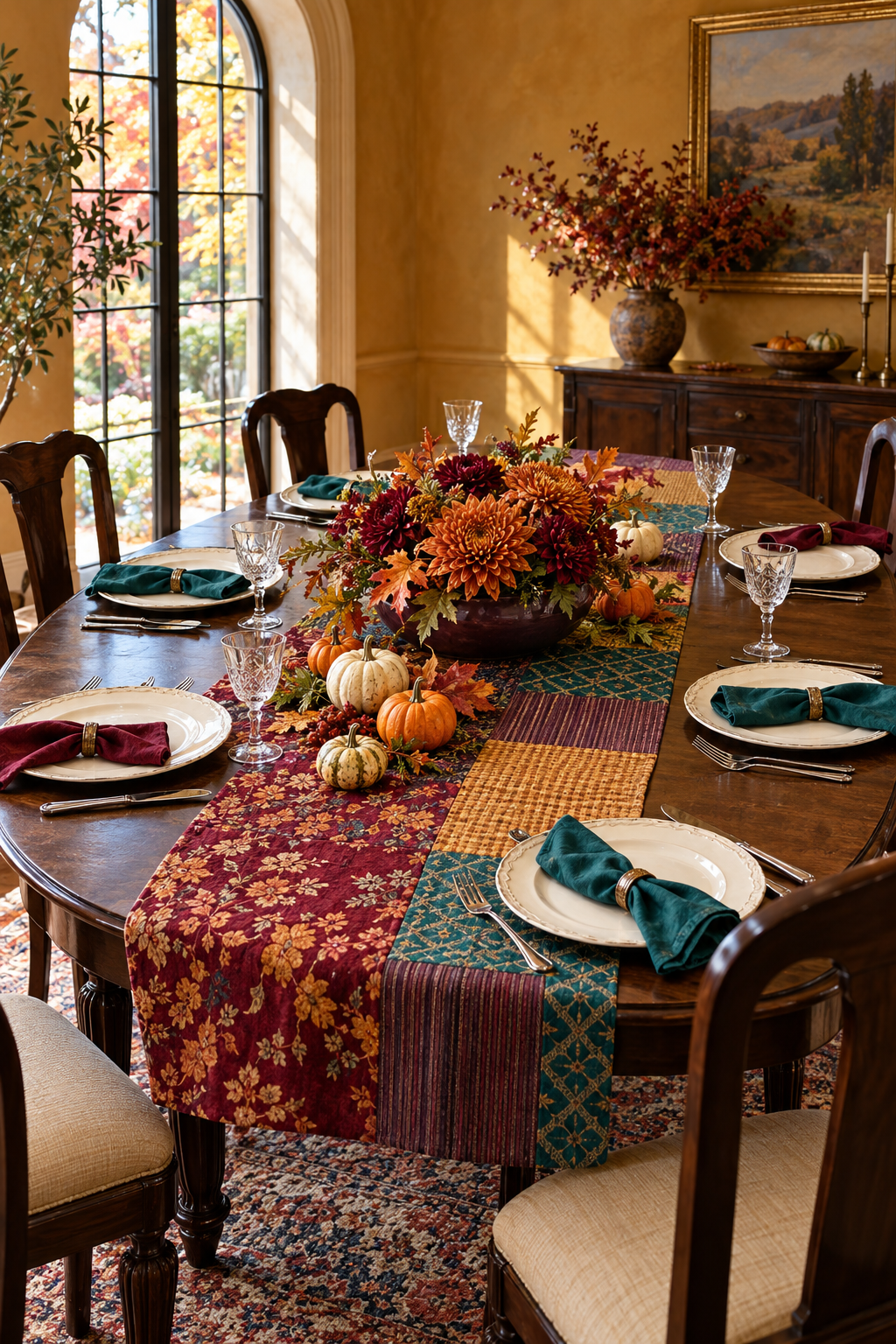
A patchwork runner gives this Thanksgiving table a different starting point from a plain cloth or a line of pumpkins. Burgundy florals, teal motifs, narrow plum stripes, and warm checks meet beneath a full bowl of autumn flowers. Cream plates and clear glasses leave enough breathing room for the fabric to stay visible.
The setting feels rich without needing a different decoration at every seat. You can borrow its mix of color and pattern for a smaller dinner, using a runner you already own and a few pieces that repeat its strongest shades.
What Makes This Look Work
The runner supplies the pattern mix
The cloth brings several motifs together in one continuous piece. That makes the arrangement easier to follow than a collection of unrelated patterned accessories. Its teal and burgundy panels also connect to the napkins, so the colors travel from the middle of the table to its edges.
Pale dishes separate fabric from food
The light plates create clear circles against the dark tabletop and busy runner. Their subtle shaped rims suit the traditional chairs, but the pale surface is the useful part to borrow. A strongly patterned dinner plate would make the food and the patchwork compete for attention.
Flowers gather the harvest colors
Rust and burgundy blooms sit together in a broad, dark bowl. Small pumpkins and loose foliage extend the centerpiece along the cloth without turning it into an uninterrupted mound. The dark wood remains visible around the place settings, giving the saturated colors a steady background.
Key Pieces to Recreate the Look
A pieced or patchwork-style table runner
Choose a runner with clearly different fabric blocks and a shared color family. Floral, checked, and striped panels can coexist when two or three colors appear across several sections.
Teal and burgundy cloth napkins
Solid napkins repeat the runner’s colors without adding another print. A soft fabric that folds comfortably will be more useful here than a stiff, highly decorative square.
Cream dinner plates
Plain or gently scalloped plates offer a calm place for the meal. Check the space they occupy on your table before choosing oversized dishes just for the border detail.
A broad centerpiece bowl
A low, dark plum or burgundy vessel gives the flowers a defined base. If you use fresh stems, choose a watertight bowl or fit a suitable liner inside a decorative container.
Autumn flowers and foliage
Rounded rust blooms, darker red flowers, and a few leaf shapes echo the cloth without needing an exact flower-for-flower copy. Keep the arrangement wide enough to feel gathered, with an uneven outline rather than a rigid dome.
Small pumpkins in mixed pale and orange tones
Modest pumpkin sizes can sit among the foliage while leaving the dishes accessible. Look for stable bases and believable stem shapes; the mix of colors matters more than having many different varieties.
How to Style It at Home
Fit the runner around the end seats
Set the table for the actual number of guests before adding flowers. On an oval table, a broad runner can reach beneath an end plate while remaining clear of the side settings. Decide whether that overlap works for your meal, then check that the runner lies flat beneath any dish placed on it.
At the ends, keep hanging fabric clear of laps and chair seats. A shorter runner is a sensible adaptation if the pictured drop would catch when someone sits down. Fold a clean hem underneath rather than bunching excess cloth in the center.
Make the flowers pass the seated-view test
Place the empty bowl first and sit in opposite chairs to judge its position. Build the flowers gradually, checking the tallest stems from seated height rather than relying on the overhead view. Lower or remove a bloom that hides the person across the table.
For a tight dining surface, use a smaller version of the same bowl-shaped arrangement and reserve the sideboard for serving dishes. That keeps the floral idea intact without requiring guests to lift decorations out of the way during dinner.
Let the fabric determine the napkin rhythm
Pull one cool shade and one warm shade from the runner. Alternate them around the table, or place matching napkins opposite each other when there are fewer seats. The arrangement should still look deliberate once a guest picks up a napkin.
Keep other place-setting details simple. The image uses rings, but an easy folded napkin gives the same color connection. You do not need to buy rings if the cloth already holds a tidy fold.
Gather the harvest accents away from elbows
Place small pumpkins in loose groups near the bowl, then extend a few along the runner. Test the nearest seat with cutlery in hand. Move any stem or leaf that reaches into the space someone needs to cut food or put down a glass.
Bring out serving bowls for a final rehearsal. If they displace most of the decoration, keep one pumpkin group and move the rest to a nearby surface. The patchwork still carries the look when the table is in use.
Shop Similar Pieces
Check the runner’s reverse and seams
Look for close-up photographs that show whether the patchwork is pieced fabric or a printed design. Either can work, but raised seams, bulky backing, and loose trim affect how steadily a bowl or plate will sit. Compare the listed care instructions with the kind of meal you plan to serve.
Choose napkins by usable fabric size
Confirm the dimensions after any expected washing shrinkage, and check whether the listing sells individual napkins or a set. Teal can lean green or blue, so compare product photographs against the runner rather than buying by the color name alone.
Find a bowl that can hold the arrangement
Check the opening as well as the overall height. A narrow-neck vase may be short but still force flowers upward; a broader bowl offers more room to angle stems outward. For fresh flowers, verify water suitability rather than assuming glazed appearance means watertight construction.
Buy pumpkins that sit firmly
Mixed sets can include pieces much smaller than their main photograph suggests. Read the individual dimensions and favor a few sturdy forms over a large bag of tiny accents. Soft fabric pumpkins are an alternative if hard stems would intrude into nearby settings.
Final Styling Tip
Before the guests arrive, remove a petal or leaf fragment from each plate and napkin. Fresh flowers can shed during setup, and this small check keeps the finished place settings ready for dinner.