*This post may contain affiliate links for which I earn commissions.*
This image was created with AI to offer inspiration for your own home styling.
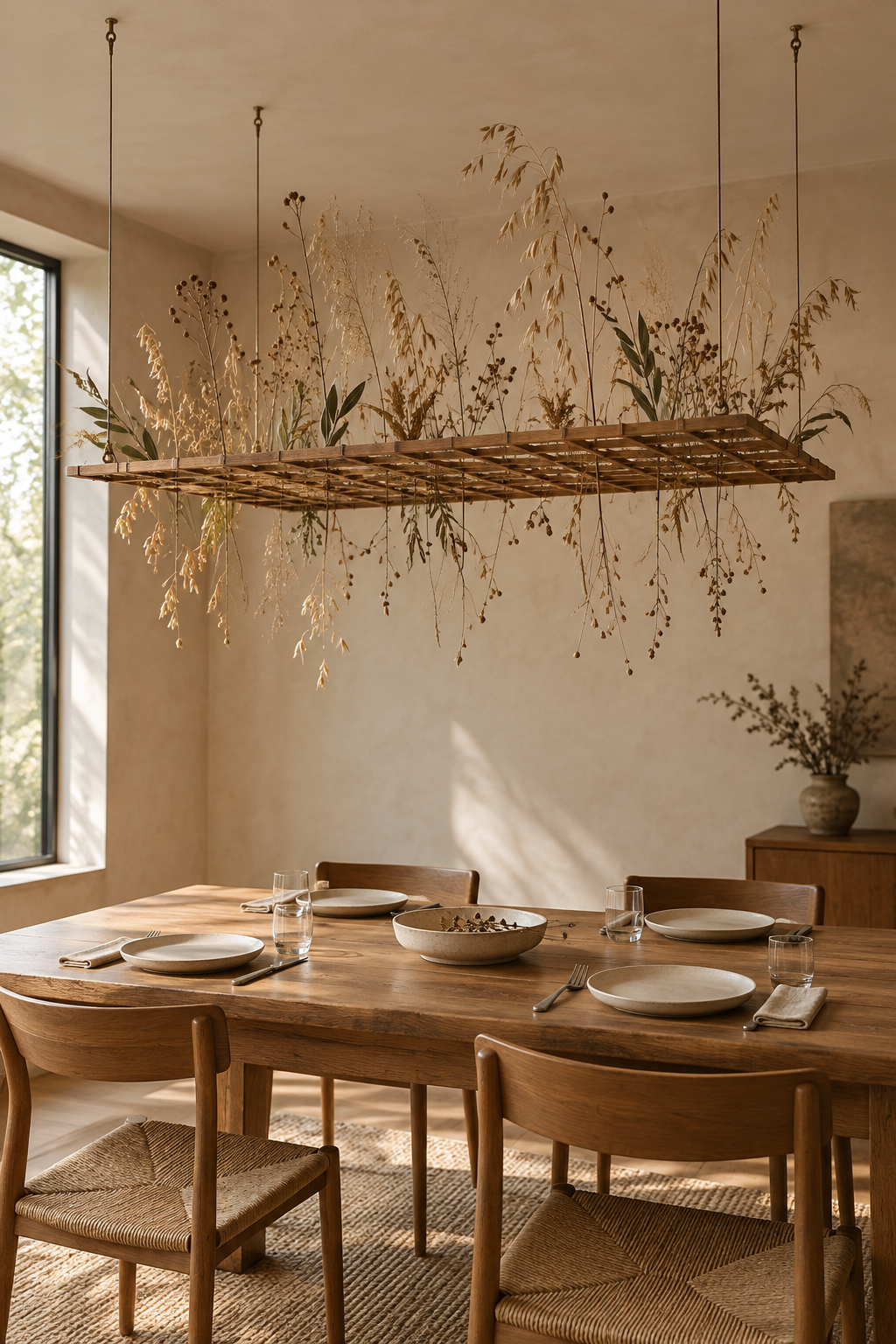
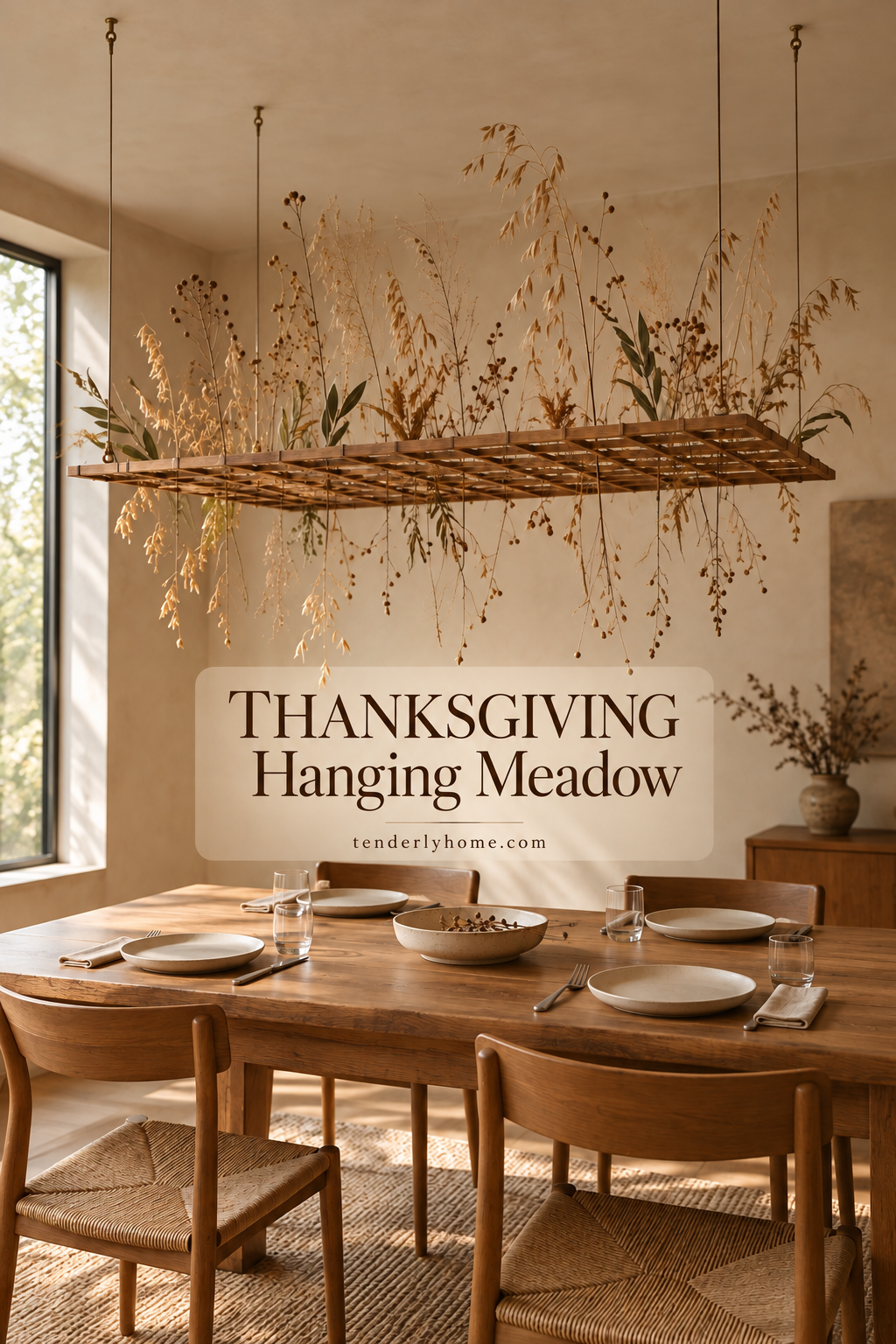
A suspended meadow changes where the Thanksgiving centerpiece lives. In this inspiration image, fine grasses and seed heads rise through a hanging wooden grid, with slender stems trailing underneath. Cream plates, folded neutral napkins and a shallow bowl stay close to the table, leaving the overhead arrangement to carry the autumn character.
The appeal is the space between the layers. You can see the tabletop, the open lattice and the wall beyond the grasses. Recreating that relationship matters more than copying every stem. Plan the support first, then choose a restrained collection of dried-looking botanicals and everyday dining pieces.
What Makes This Look Work
The open grid makes the meadow understandable
The wooden lattice remains visible underneath the grasses. Its repeated openings explain how a small landscape can sit above the table without reading as a solid ceiling of decoration. Sparse stems let the framework show through, so the structure becomes part of the styling rather than something to hide beneath foliage.
There is also a useful contrast between straight wooden lines and loose botanical shapes. The stems bend and lean in different directions, while the rectangular frame keeps the whole arrangement organized. Covering every opening would erase that contrast and move the scene toward a dense floral installation.
Tall stems and trailing ends share one light silhouette
Some grasses rise above the lattice and others hang beneath it. That uneven outline suggests a meadow rather than a row of identical bundles. Tawny stems, small dark seed heads and scattered olive-toned leaves provide variation without introducing a dominant decorative flower color.
The tall side window gives these thin forms definition. Light reaches the wall through the arrangement, revealing gaps that would be lost in a much denser display. The surrounding room stays quiet enough for the small botanical differences to remain noticeable.
The supper setting stays low and simple
Rounded cream plates, clear glasses and softly folded napkins sit below the installation. The exposed wood and shallow central bowl give the table a grounded, practical character. Nothing large competes with the meadow or fills the space between diners.
This is a useful priority for Thanksgiving: let the elevated decoration establish the occasion, then arrange the dining surface around the meal. The image offers that visual idea, but a real installation still needs its own mounting and clearance assessment.
Key Pieces to Recreate the Look
An open hanging framework
A lightweight lattice or purpose-built hanging frame provides the meadow’s base. Choose an open construction that can accept botanical ties and suitable suspension points, with a footprint comfortably inside your table’s perimeter.
Fine grasses and seed-head stems
Slender dried grasses create the irregular meadow outline. Favor narrow forms and small seed heads over thick plumes, with enough stem length to vary the heights above and below the frame.
Restrained olive-toned foliage
A few lightweight leafy stems interrupt the beige tones without turning the installation green. Small, matte-looking leaves keep the grasses visually dominant and are easier to distribute through open sections.
Suspension fittings for the actual load
Cords, connections and mounting hardware must suit the finished arrangement and the ceiling structure. Their role is functional as well as visual: the hanging lines should remain believable instead of disappearing into an unsupported floating effect.
Neutral fabric napkins
Flax-colored napkins bridge the warm wood and pale ceramics. A simple fold beside each plate keeps the fabric accessible and avoids adding another sculptural element beneath the meadow.
Low cream dinnerware and serving pieces
Quiet plate rims and a shallow bowl repeat the soft palette at dining height. Use food-contact dinnerware for the meal and select a serving piece that leaves room for the other dishes you expect to bring out.
How to Style It at Home
Begin with the ceiling and seated views
Locate a support method appropriate to the ceiling before buying the frame or botanicals. The visible hooks in the image are an inspiration cue, not proof of a rated installation. Check the complete load and every connection, following the selected hardware’s instructions; seek appropriate installation help when the structure is uncertain.
Then sit in each dining position and check headroom, sightlines and reach across the table. Keep the lowest stems out of people’s faces and away from food. Do not choose an arbitrary hanging height from the photograph, since the real table, ceiling and guests will set the workable spacing.
Build a meadow with gaps instead of bundles
Arrange the frame on a work surface before hanging it. Start with a few taller grasses, then add shorter stems in different directions. Leave recognizable sections of lattice empty and step back frequently to check the silhouette.
Secure individual stems so they cannot drop onto the meal. Loose, shedding botanicals are unsuitable above uncovered food; substitute stable artificial stems when needed. Keep this installation away from open flames and hot lighting. The finished goal is an airy outline, not a fragile mass that needs constant adjustment during supper.
Rehearse the table with serving dishes
Set out the plates, glasses and napkins you will actually use, then add empty serving dishes as a rehearsal. Move pieces until each guest can eat and someone can pass a bowl without reaching through decorations. The picture’s shallow central bowl can inspire the proportions without dictating your meal layout.
For a narrow table, serve larger dishes from another surface and reserve the center for smaller shared pieces. Keep the place settings equally functional even if the photograph does not show every utensil clearly. The low table layer should feel ready for dinner rather than staged around an empty decorative centerpiece.
Let your room decide the final outline
In a compact dining room, shorten the frame instead of squeezing a full-size version against walls or furniture. Preserve the idea of a meadow lifted above supper by keeping the open lattice visible and the grasses distinct.
Use the window light to judge density. If the arrangement casts a heavy, continuous shadow or hides the room behind it, remove some stems. A plain background helps; additional hanging decorations nearby can make the support lines and meadow silhouette harder to read.
Shop Similar Pieces
Compare frames beyond their appearance
Check listed weight, assembly requirements and intended mounting use before choosing a decorative lattice. A garden panel with a similar look is not automatically suitable for hanging over a dining table, and the connection design matters as much as the finish.
Check the shape of grass assortments
Look at the actual stems included in a bundle rather than its styled bouquet photo. Mixed packs dominated by fluffy plumes may not create the fine, separated outline shown here; stem condition and shedding also affect placement above a meal.
Choose foliage that stays subordinate
Compare leaf size with the grasses you already selected. A broad-leaf garland may cover several grid openings at once, while separate slim sprays offer more control. Check attachment flexibility rather than assuming a stiff decorative branch will bend around the frame.
Match ceramics to your serving needs
Review usable bowl depth, plate dimensions and care instructions. A pale decorative bowl can resemble the image while being unsuitable for food, so verify the intended use and consider whether its handles or rim will fit among your settings.
Final Styling Tip
Keep a small labeled storage box for the removable stems after the holiday. Packing the delicate seed heads separately from the frame can make next year’s setup easier without forcing you to preserve a bulky assembled installation.