*This post may contain affiliate links for which I earn commissions.*
This image was created with AI and is presented as decorating inspiration.
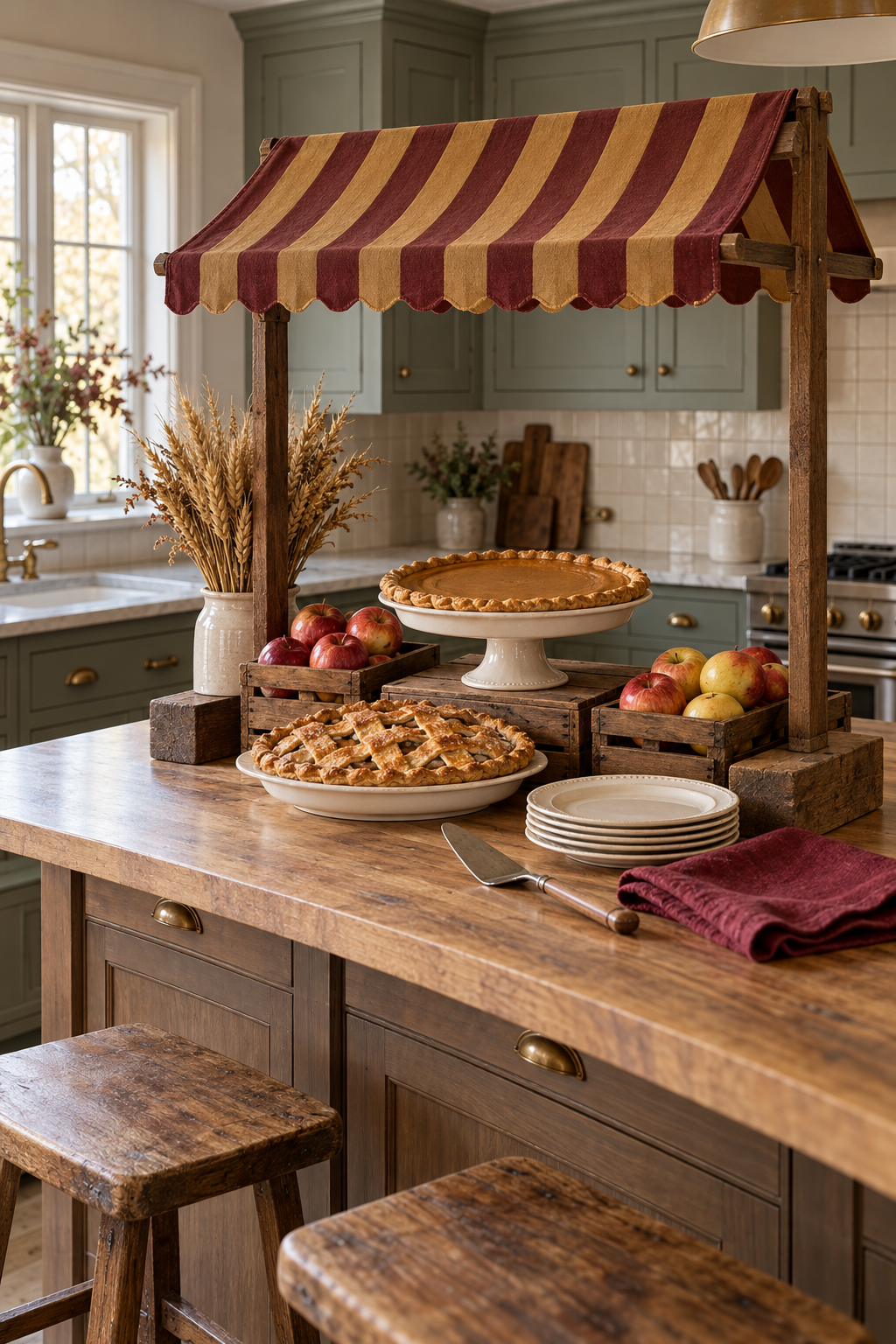
A striped canopy turns this kitchen island into a little harvest market. Beneath it, two pies sit at different heights, apples fill small wooden crates, and wheat rises from a cream vessel. Burgundy fabric and golden stripes give the dessert display a Thanksgiving feel without covering the counter with seasonal ornaments.
The useful idea is the relationship between a decorative frame and an ordinary dessert service. At home, keep food on suitable serving dishes and choose a display that leaves enough room to cut, lift, and pass each slice.
What Makes This Look Work
The canopy gives the pies a setting
The wooden posts and striped roof suggest a market stall immediately. That recognizable shape makes the display feel like a small scene rather than a collection of unrelated fall accessories. The open sides let the pies remain visible and keep the structure from looking like a closed cabinet.
The surrounding kitchen matters, too. Painted cabinets, a tiled backsplash, and the wood island place the theatrical detail in a familiar home. You can borrow the stall idea without changing your kitchen or copying its cabinet color.
Different serving heights keep the center readable
The rear pie sits on a footed stand above a low wooden support, while the lattice pie occupies a lower dish in front. Both remain easy to recognize. Apples flank the pastries, so the arrangement has a central dessert focus with produce at its edges.
A real serving station should use the smallest height difference that gives this effect. A tall stack can look impressive in a photograph but be awkward when someone reaches across it with a plate.
Burgundy and mustard connect fabric and food
The canopy repeats warm tones already present in the apples, pastry, and wheat. The folded burgundy cloth echoes its darker stripes near the plates. Cream ceramics provide a quiet interval between the wood and richly colored fabric.
Avoid adding another strong patterned runner beneath everything. The canopy already supplies the pattern; a plain counter or simple cloth allows that one treatment to carry the scene.
Key Pieces to Recreate the Look
A tabletop display frame
Look for a small freestanding frame with broad, stable feet and an open serving area. The image suggests a decorative stall, but a ready-made display frame or a suitably sized existing structure can provide the same outline without a full carpentry project.
Striped canopy fabric
A burgundy-and-gold or similarly warm striped textile gives the roof its market character. Choose a fabric that hangs neatly over the support and keep its loose edges clear of food and serving hands.
A cream footed serving stand
A plain pedestal stand raises one pie without competing with the canopy. Its usable top should support the actual pie dish, and its base should sit flat when the dessert is being cut or served.
Small wooden crates
Low crates give the apples a produce-market setting. A warm brown finish fits the picture, while shallow sides help the fruit remain visible. Decorative wood containers should be treated as display pieces unless their suitability for food contact is established.
Wheat and a compact vessel
Upright wheat adds a harvest detail beside the stall. Use a modest bundle in a vessel with a steady base, positioned far enough from the pastries that dry stems do not brush the food.
Plain cloth napkins
Burgundy cloth near the plate stack repeats the canopy color at counter level. Napkins should be easy to pick up, so keep the folded pile outside the frame rather than tucked behind the pies.
How to Style It at Home
Plan the station around your serving routine
Decide where guests will collect plates and where slices will be served before placing the decorative frame. On a smaller island, make a single approach side and leave the remaining surface available for everyday kitchen use. Move nearby stools if they prevent someone from standing comfortably at the desserts.
Set your largest empty pie dish on the counter as a guide. Check that you can reach it with a pie server without passing your hand under hanging fabric. The scene should accommodate that motion, not just fit within a photograph.
Test the frame before adding dessert
Position the frame toward the back of the counter, with both feet fully supported. Gently check for rocking and confirm that fabric cannot slide forward into the dishes. Follow the product’s intended use and avoid balancing an improvised roof on unsecured sticks or separate crates.
If a suitable frame is unavailable, use a small striped textile behind the serving area and keep the pies on open stands. The market reference can be subtler while the meal remains convenient.
Build the food arrangement from back to front
Place the higher dessert first, then add the lower dish with enough separation for lifting and cutting. Use a stable, load-appropriate riser only if needed; skip the extra wood elevation if your cake stand already gives enough height.
Add apples at the sides in shallow containers, reserving the front corner for plates and a serving utensil. Place the wheat last, where it can rise beside the display without overhanging an uncovered pie. Keep decorative surfaces separate from the food’s serving surface.
Reduce the setup for a narrow counter
One pie, a small apple crate, and the striped canopy can carry the whole idea. Put additional desserts on a nearby plain serving area rather than compressing them beneath the roof. This also gives you a convenient place to replenish dishes during the gathering.
For the photograph, show the full frame and some surrounding kitchen. For the actual meal, prioritize access and remove any decorative piece that gets in the way once serving begins.
Shop Similar Pieces
Compare the frame’s usable opening
Check the space between the feet and the height beneath the canopy against your dishes. Product photos can hide oversized bases; measure the full footprint rather than judging only the roof width.
Choose a stand for your pie dish
Compare the diameter of the usable surface, base width, and stated intended use. A decorative pedestal with a small top is not a substitute for a serving stand that fully supports the dish.
Find crates with shallow sides
Read the interior dimensions and inspect the finish. A compact nesting set may supply useful sizes, but you do not need to display every crate. Use a suitable liner or separate food-safe container when needed.
Look for napkins you can wash
Compare fabric care and the actual shade rather than relying on a name such as wine or burgundy. A plain, washable set can stay useful after the seasonal canopy has been packed away.
Final Styling Tip
Keep a plain tray nearby for used serving utensils. It gives sticky pie servers somewhere to rest without staining the decorative wood or the folded napkins.