*This post may contain affiliate links for which I earn commissions.*
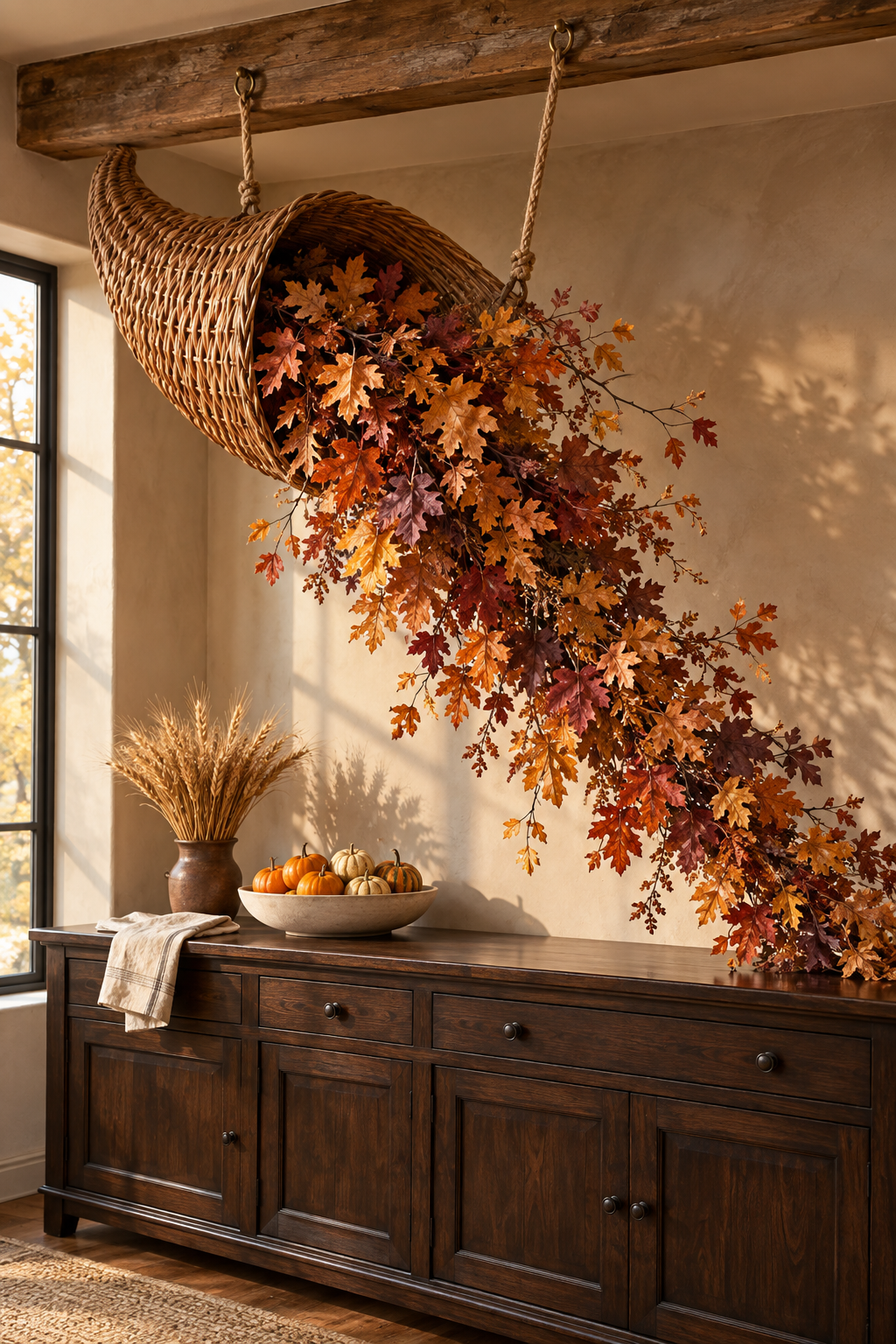
A hanging wicker basket sends a sweep of copper, gold and plum-colored leaves across the wall above a dark buffet. Beneath it, a bowl of miniature pumpkins, a wheat-filled vessel and a softly draped napkin keep the Thanksgiving setting simple. The unusual feature is overhead, leaving the furniture itself available for gathering and serving.
This image was created with AI to offer inspiration for your own home styling.
What Makes This Look Work
The basket gives the leaves a starting point
The tapered woven form reads like a cornucopia, with foliage emerging from its wide opening. That relationship matters more than the number of leaves. Without the visible vessel, the same foliage could look like a wall garland; with it, the display becomes a generous harvest spill.
Two cords connect the basket to fittings on the overhead beam. They contribute to the composition by making the suspension understandable, rather than hiding how such a large object could stay in place.
A diagonal sweep leaves room for the buffet
The foliage travels down toward the right while the smaller tabletop arrangement sits on the left. This offset avoids piling every decorative layer into the same spot. The eye can follow the leaves, then settle on the bowl and vessel below.
The cascade reaches close to the surface at one end. For actual serving, that end would be best reserved for decoration, with food and dishes arranged beyond the foliage’s reach.
Afternoon light picks out the woven texture
Light from the tall window makes the basket strands, leaf edges and cabinet fronts readable. The warm wall supports the rusty foliage without introducing another competing color. Small plum-toned sections interrupt the orange and gold, so the hanging piece has depth even where the leaves overlap densely.
Key Pieces to Recreate the Look
A lightweight woven basket or cornucopia
Choose an open form with a mouth wide enough to show where the foliage begins. A lightweight decorative cornucopia is a closer substitute for the pictured silhouette than a deep square storage basket.
Flexible autumn foliage
Look for warm-toned faux leaf stems or garlands with branching shapes and bendable connections. A mixture of copper, amber and subdued burgundy will give the cascade variation without requiring several unrelated floral ingredients.
Suitable suspension hardware
The pictured cords and beam fittings are part of the look, but appearance alone cannot establish their strength. Select mounting hardware and cord for the actual support, total display weight and product instructions.
A shallow cream bowl
A low bowl gathers the miniature pumpkins without creating another tall focal point. A softly matte finish works beside the woven texture and keeps reflections quieter than they would be in a polished metal vessel.
Miniature decorative pumpkins
Small rounded pumpkins in orange and cream give the buffet a recognizable harvest cue. Keep their scale comfortably within the bowl rather than filling the whole furniture surface with larger seasonal objects.
Wheat stems and a compact vessel
A short brown vessel supports an upright wheat arrangement beside the pumpkin bowl. Its narrow footprint is useful here because the tabletop already needs to accommodate the end of the leaf cascade.
How to Style It at Home
Check the hanging location before choosing the basket
Treat this as decorating inspiration, not a structural installation tutorial. A visible beam in an AI image does not establish that a beam in your home is suitable for added hanging loads. Confirm the actual mounting location and use qualified help if the support or hardware requirements are uncertain.
Before purchasing anything, mark the proposed basket outline on the wall with removable paper. Stand back from the room entrance and check whether it fits the available height. The display should sit over the buffet zone, not extend into a route where someone could brush against it.
Build the leaf spill around one clear curve
Arrange the foliage on a work surface first. Give the opening a fuller cluster, then let branching sections become narrower toward the end. A continuous direction will make the basket look as though it is releasing the leaves, rather than supporting several disconnected bunches.
Use lightweight foliage instead of hanging real pumpkins or loose fruit inside the overhead basket. Secure each component using a method appropriate to its materials. Keep attachment points accessible for inspection rather than covering every connection immediately with extra leaves.
Plan a decorative end and a serving end
Place the bowl and wheat where they balance the hanging arrangement, then decide which part of the buffet will hold plates or food. If the foliage occupies the right-hand surface, allow that section to remain decorative. Move serving dishes to a separate clear area rather than pushing them underneath the leaf tips.
Test the arrangement with the largest platter you expect to use. Check that a person can lift it without catching a stem, brushing a cord or reaching through the display. Keep the cabinet doors and drawers usable as well.
Edit the lower arrangement after the hanging piece is settled
The basket and leaves already fill much of the wall, so the buffet does not need a second garland, a row of candles or extra framed art. Begin with the shallow bowl and vessel, then view the whole grouping from across the room.
If the wheat competes with the hanging foliage, shorten or reduce the stems. The napkin can soften the hard surface, but place it where its hanging edge will not interfere with a drawer you need during the meal. This is also a useful look to adapt on a smaller sideboard by shortening the cascade rather than shrinking every object equally.
Shop Similar Pieces
Find the right basket opening
Compare photographs of the mouth, sides and underside, not just the front silhouette. A tightly woven closed form may be difficult to attach foliage to; an open lightweight decorative form offers more options without requiring the hanging piece to carry a heavy load.
Compare the foliage structure
Check whether a listing supplies individual picks or a continuous garland. Branching picks allow more control over the taper, while a garland can establish the main line. Product photos should show the stem connections and leaf finish, not only a densely styled example.
Choose a bowl that leaves space around it
Measure the clear serving area before buying a larger bowl. A shallow interior and stable base matter more than a precise match to the pictured cream color, especially if you plan to move the bowl during dinner.
Buy wheat with the vessel in mind
Compare stem length with the height and opening of your existing container. Dry stems may shed, so keep this accent away from uncovered food and choose a vessel that contains the stems without requiring a wide, unstable spread.
Final Styling Tip
Keep a small labeled bag with spare ties and any removable basket fittings when the display comes down. Photograph the accepted hanging arrangement before dismantling it so next year’s setup does not depend on remembering which connection belonged where.