
*This post may contain affiliate links for which I earn commissions.*
This inspiration image was created with AI.
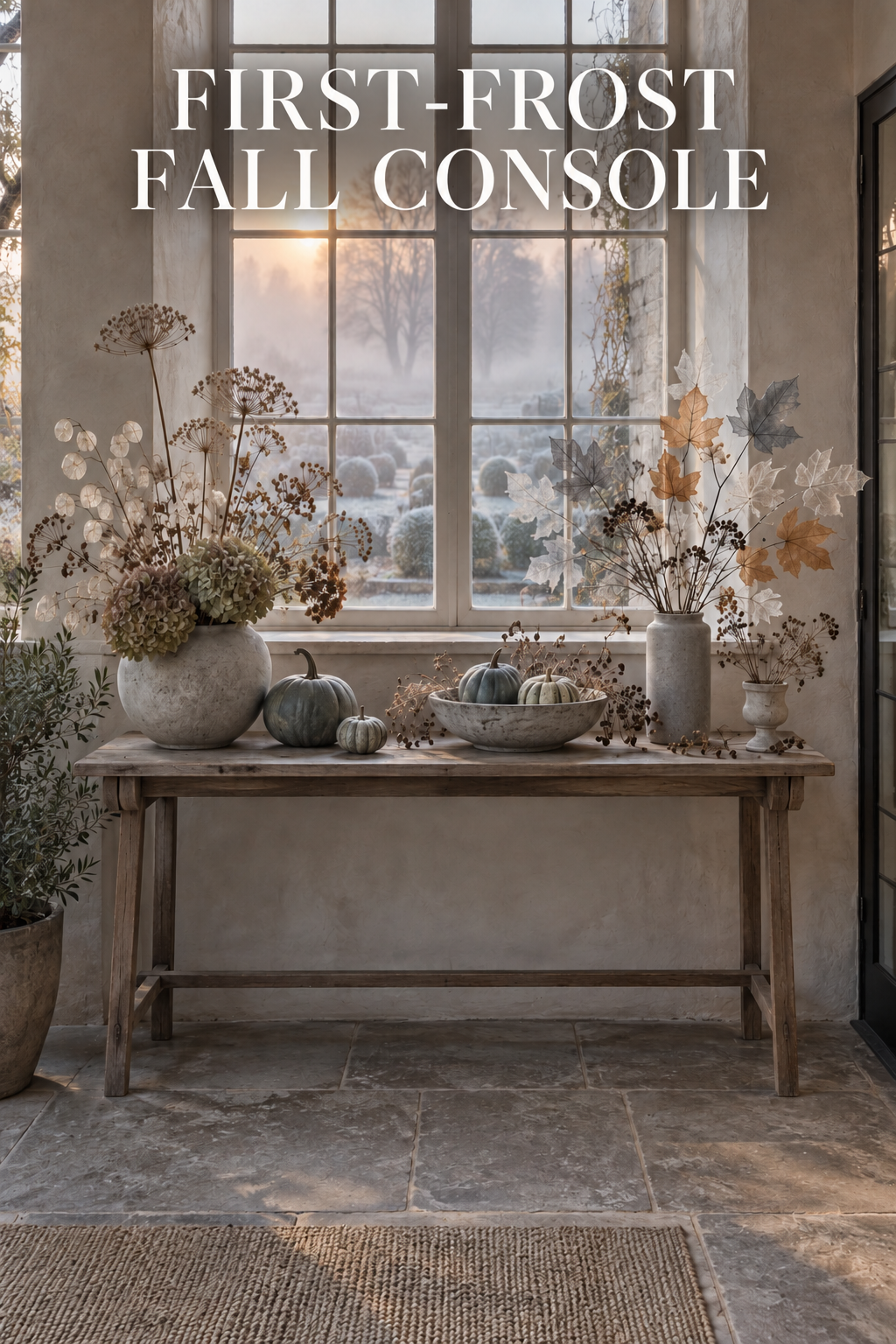
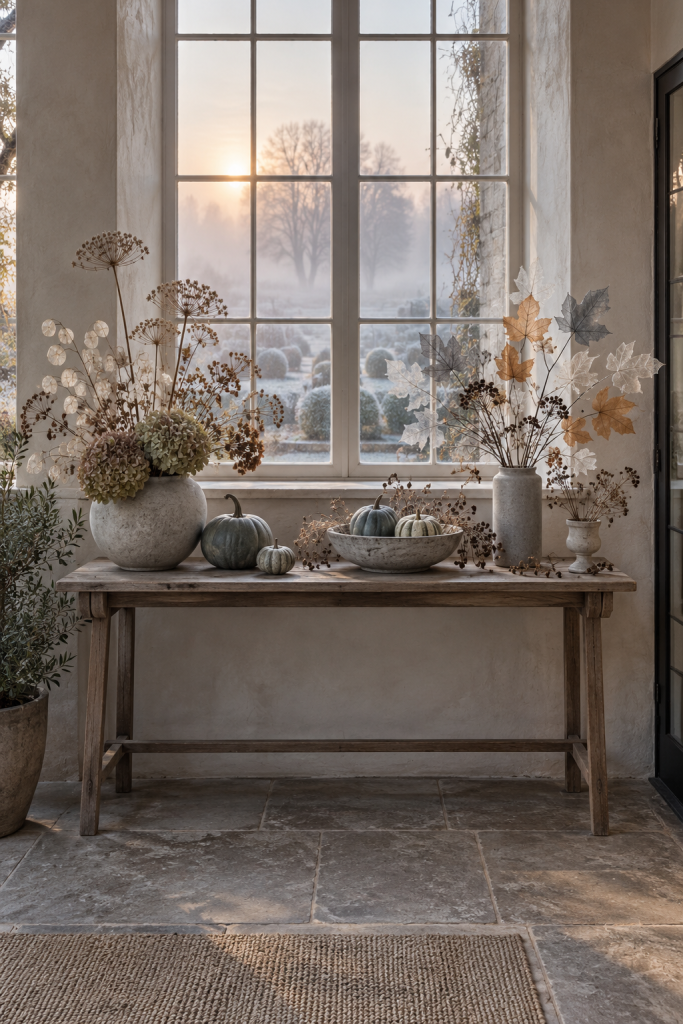
This garden-room console captures the moment when autumn begins to look silvery at the edges. Blue-gray gourds, faded hydrangea, dried seed heads, pale lunaria, and translucent leaf stems sit in weathered stone vessels beneath a tall window. Mist outside softens the sunrise, allowing the arrangement to feel seasonal without the usual orange-heavy palette.
How the Arrangement Suggests First Frost
Color provides the first clue. The gourds are muted slate blue and chalky sage rather than bright green, while the flowers have dried to beige, gray, and dusty olive. Small amber leaves prevent the display from becoming wintry too soon. They read as the last warm notes of fall.
Texture carries more of the theme than literal frost. Matte stone, weathered wood, papery seed heads, and translucent leaves each respond differently to the low light. The clear leaves look almost rimed when the window brightens behind them, yet they remain visibly attached to dark stems. That support detail keeps an unusual decorative material believable.
Three unequal groups give the long console a relaxed rhythm. A broad urn and full botanical arrangement anchor the left. A shallow bowl of small gourds occupies the middle, and a tall narrow vase lifts the right side. A tiny vessel at the far edge acts as punctuation rather than a fourth equal focal point.
The window is essential negative space. Its pale panes frame the display and keep the high stems from merging into a patterned wall. I would avoid hanging additional art here in a real garden room; the changing outdoor view already supplies depth, movement, and seasonal context.
The arrangement also shifts gradually from dense to airy. Broad hydrangea heads and a large rounded vessel establish weight on the left, the bowl lowers the profile in the middle, and fine transparent leaves open the right side. That progression guides the eye without relying on strict symmetry. In a shorter display, keep the same sequence but reduce the number of stems rather than shrinking every object until the texture becomes difficult to read.
Key Pieces to Recreate the Look
Blue-Gray Faux Gourds
Choose several believable sizes and shapes instead of a matching set of identical pumpkins. Chalky blue, muted sage, and pale gray are more useful than saturated teal.
Dried Seed-Head Stems
Umbel-shaped stems and small dark berries create fine branching lines. Look for restrained fullness so individual silhouettes remain visible against the window.
Pale Lunaria Sprays
Round translucent pods bring a light-reflecting botanical texture. Natural dried material or a subtle faux version can work, provided the discs vary slightly.
Stone-Look Vessels
A wide urn, low bowl, and tall cylinder create distinct functions within one material family. Variation in shape prevents the neutral containers from feeling like a retail set.
Translucent Leaf Stems
Clear, frosted, smoke, and pale amber leaves add the first-frost effect. Select wired or rigid stems that visibly hold each leaf rather than relying on unsupported pieces.
Faded Hydrangea Blooms
One or two large heads bridge the tiny seed textures and the rounded gourds. Dusty green-brown petals fit the restrained late-fall palette.
Natural Wood Console
A narrow table with visible grain grounds the pale objects. Straight simple lines and a matte finish let the botanicals remain the focus.
Build the Display from Left to Right
Start with the widest vessel one-third of the way from the left edge. Insert the largest faded bloom low, then place taller seed heads behind it. Turn some stems outward so the arrangement spreads toward the window rather than forming a tight vertical bouquet.
Next, position a shallow bowl near the center and fill it loosely with three to five gourds. Let their sizes vary, and keep at least one rim section visible. A separate larger gourd beside the bowl makes the group look collected instead of packaged.
On the right, use a narrow vase for the translucent leaves. Test the stems against window light before trimming; clear leaves may vanish in the brightest pane, while smoked and amber pieces remain readable. I would rotate the vase until the darkest leaves sit behind the pale ones, which gives the transparent edges more definition without adding another object.
Connect the three zones with only a few low berry or seed stems resting across the surface. They should touch the console and show their natural branches, not appear scattered. Preserve empty wood between groups so dusting and moving individual pieces remain easy.
If the room receives direct sun, protect natural dried botanicals and synthetic leaves from prolonged exposure according to their care guidance. Moving the translucent arrangement a few inches away from the hottest glass can also prevent warping or fading.
Shop Similar Pieces
Find Blue-Gray Decorative Gourds
Compare color variation, stem shape, surface texture, and scale; a mixed group should look related without appearing cloned.
Choosing Dried Botanical Stems
Prioritize branching silhouettes and muted natural tones that will not overwhelm a narrow vessel or block the window.
Stone Vessels in Mixed Shapes
Look for compatible finishes across one wide vase, one shallow bowl, and one taller cylinder rather than an exact matching trio.
Translucent Leaves with Visible Stems
Select supported sprays in clear, smoke, or pale amber, checking overall height and whether the leaves can be positioned individually.
A Narrow Natural-Wood Console
Measure wall width, window height, and walkway clearance before comparing finish; proportion matters more than matching the exact wood tone.
Final Styling Tip
Place small felt pads beneath rough stone-look vessels so they can be shifted for watering nearby plants or cleaning without marking the wood.