
*This post may contain affiliate links for which I earn commissions.*
This inspiration image was created with AI.
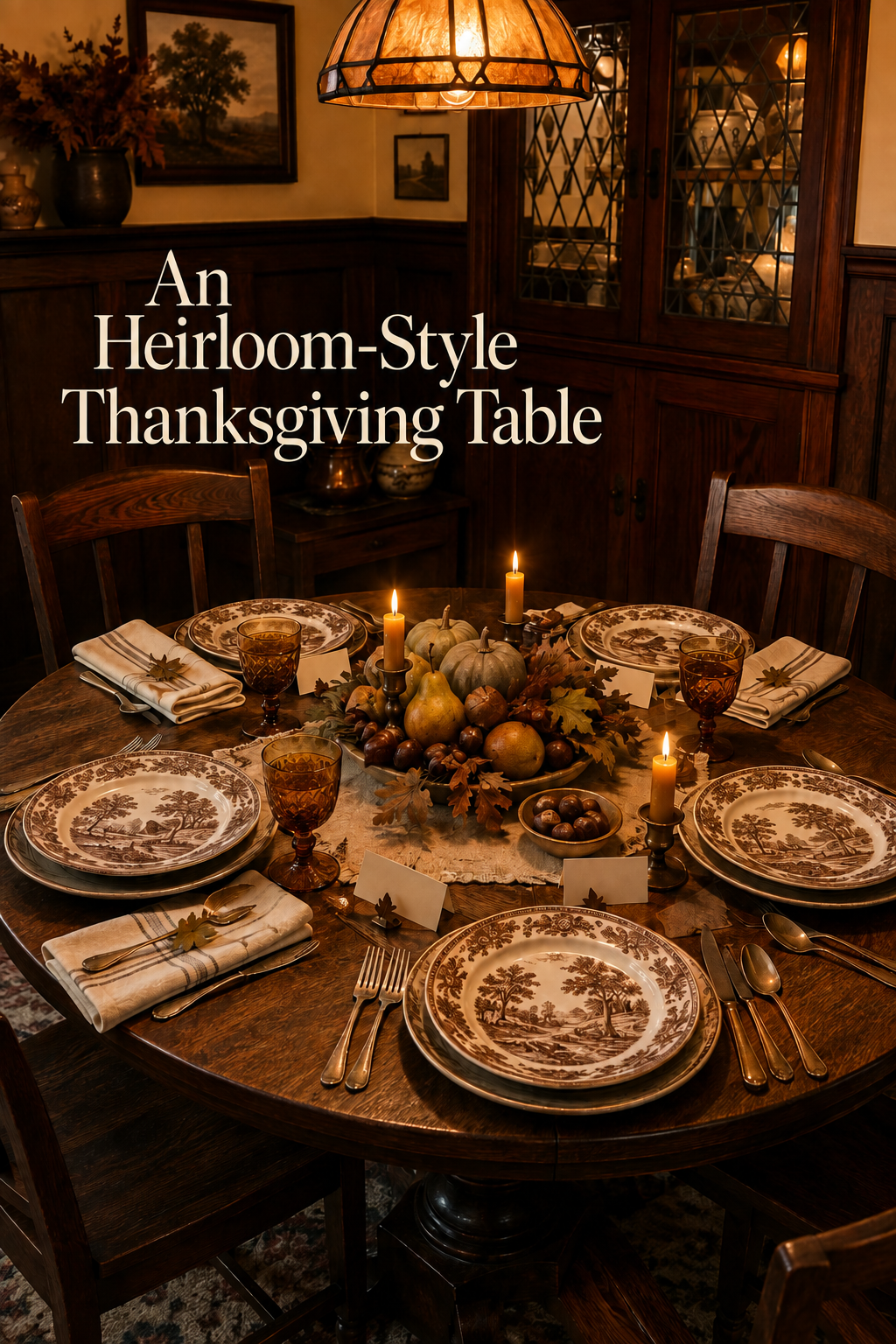
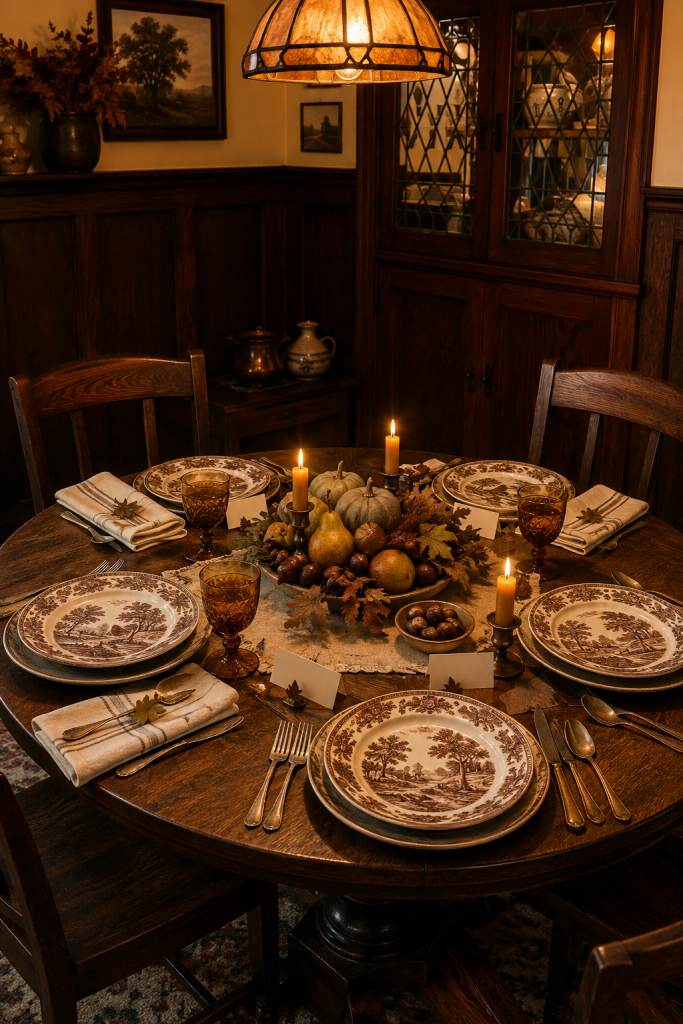
A Thanksgiving table can feel rooted in family tradition without becoming formal or fragile. In this round dining-room setting, brown transferware plates, amber goblets, cream napkins, aged-looking flatware, pears, muted pumpkins, oak leaves, and short tapers build a warm supper-table mood. The dark oak room and glowing pendant deepen the atmosphere, but the table itself remains practical: each place is clearly defined, the centerpiece stays below eye level, and familiar natural materials do most of the seasonal work.
The most useful lesson is not that every plate must match this exact pattern. It is that one expressive tableware choice can carry the decorative character while quieter linens, glassware, and gathered accents support it. That balance makes this heirloom-style Thanksgiving table achievable with a mix of existing pieces, secondhand finds, and a few carefully selected additions.
What Makes This Thanksgiving Table Work
Pattern Identity and Visual Framing: The transferware establishes the table identity immediately. Its brown pastoral pattern is detailed enough to feel special, yet the single-color decoration sits comfortably beside the oak tabletop. Repeating the same plate at every seat creates order around the circular surface. Underplates in a subdued gray-green tone give the patterned rims a clean boundary and prevent them from disappearing into the wood.
Light-Reflecting Glass and Calming Linens: Amber goblets connect the place settings to the room golden light. Their transparent color feels lighter than another opaque brown object, so they add warmth without making the table visually heavy. Cream napkins perform the opposite job: they interrupt the dark wood and patterned dishes with broad, calm areas. A narrow stripe and a single leaf embellishment are enough to make each folded napkin feel seasonal.
Conversation-Friendly Centerpiece Height: At the center, pears, chestnuts, acorns, soft green-gray pumpkins, and dry oak leaves form a low, irregular mound. The edible-looking forms suit a harvest meal, while their muted colors keep them from competing with the plates. Three short candles punctuate the arrangement rather than forming a tall barrier. Keeping this low profile even on a larger table protects conversation across the table without forcing guests to lean around tall obstacles.
Circular Radial Balance: The composition also respects the geometry of a round table. Place settings radiate from the center, and the centerpiece occupies a compact middle zone. Place cards sit just outside that zone, where they are visible without crowding the plates. Nothing depends on a perfectly symmetrical row, but repeated plate, glass, napkin, and candle shapes give the eye a steady rhythm.
Key Pieces to Recreate the Look
Brown Transferware Dinner Plates
Choose plates with a cream ground and a brown scenic or botanical pattern that reads clearly from across the table. A consistent rim color matters more than finding an identical illustration on every piece.
Amber Pressed-Glass Goblets
Faceted or pressed glass catches candlelight especially well. Look for a warm honey or tobacco tint and a stable foot that will not feel precarious on a busy holiday table.
Cream Napkins with a Subtle Stripe
A sturdy linen or cotton-linen napkin adds softness beside the patterned china. Keep any woven stripe narrow and neutral so it frames the setting instead of introducing a second dominant pattern.
Short Tapers and Compact Holders
Use short beeswax-colored tapers in holders with a broad, steady base. Their modest height preserves sightlines and keeps the flame farther from the dry leaves used in the centerpiece.
Antique-Style Flatware
Flatware with a softly aged silver tone complements the old-world tableware without demanding an ornate pattern. Prioritize comfortable handles and complete place-setting quantities before decorative detail.
Pears, Nuts, and Muted Pumpkins
Combine a few weighty fruit shapes with smaller chestnuts or acorns to vary scale. Real produce can work beautifully, while restrained faux pumpkins are useful for assembling the table ahead of time.
Dry Oak Leaves or Realistic Branches
Oak foliage supplies the loose edges that keep the centerpiece from looking like a compact bowl of objects. Select matte, varied leaves rather than a glossy, uniformly colored garland.
How to Style It at Home
1. Set Functional Clearances and Seat Boundaries First
- Chair Alignment: Center each dinner plate directly in front of its chair around the round table.
- Glass and Napkin Placement: Place the amber goblet above the dinner knife, and fold the cream napkin where it will not encroach on guest elbow room.
- Layout Check Before Styling: On a compact round table, establishing every place setting first is far more reliable than building a central vignette and trying to squeeze dinnerware around it afterward.
2. Establish a Contained Harvest Centerpiece Footprint
- Defined Boundaries: Define the central footprint using a narrow runner or a low oval tray, keeping all seasonal harvest accents strictly inside that perimeter.
- Layer Fruit and Produce: Begin with two or three muted pumpkins, nestle pears at varied angles, and scatter chestnuts or acorns into the remaining small gaps.
- Controlled Soft Edges: Allow several dry oak leaves to extend slightly past the base boundary for an organic look, while keeping stems, fruit, and candleholders well clear of the outer plate rim zone.
3. Arrange Staggered Tapers and Plan for Family-Style Serving
- Staggered Candle Triangle: Position the short tapers in an offset triangle rather than a rigid straight row.
- Sightline and Flame Check: View the table from every seated perspective before lighting, trimming or shifting any dry oak leaves that sit close to a flame.
- Shallow Tray Serving Adaptation: When serving family-style with shared bowls on the table, build the entire centerpiece arrangement inside a shallow tray so it can be lifted away in one quick motion once guests sit down.
4. Finish with Restrained Personal Markers
- Single Botanical Accents: Finish each place setting with a small paper place card or a single pressed leaf laid flat across the folded napkin.
- Avoid Marker Clutter: Avoid piling on multiple decorative tags or favors at once.
- Prioritize China Legibility: Because the patterned brown transferware already provides intricate detail, keeping personal markers simple and minimal ensures the place settings remain readable and calm.
Shop Similar Pieces
Choosing Brown Transferware for a Mixed Collection
Match the warm brown color and cream background first; related scenes can vary. Check plate diameter and whether the rim sits comfortably within any chargers or underplates you plan to use.
Find Amber Goblets with a Practical Footprint
Compare base width as well as color. A moderately sized pressed-glass goblet will reflect candlelight while leaving space for flatware, bread plates, and serving pieces.
What to Look for in Cream Table Napkins
Favor washable fabric with enough body to hold a simple rectangle fold. A fine tan or charcoal stripe can echo the vintage mood without fighting the transferware pattern.
Short Candles for Conversation-Friendly Lighting
Confirm the candle diameter fits the holders securely, and choose a height that remains below seated eye level. Battery-operated tapers are a sensible option when dry botanicals or children are nearby.
Select Muted Pumpkins by Shape, Not Quantity
A small assortment of squat green-gray and warm brown forms is more useful here than a large orange set. Look for varied sizes that can nest among pears without raising the centerpiece too high.
Final Styling Tip
Keep an empty platter nearby before dinner begins. When hot serving dishes arrive, move loose fruit and nuts onto the platter so nothing rolls beneath a bowl and the tabletop can change from styled to meal-ready without a scramble.