
*This post may contain affiliate links for which I earn commissions.*
This inspiration image was created with AI.
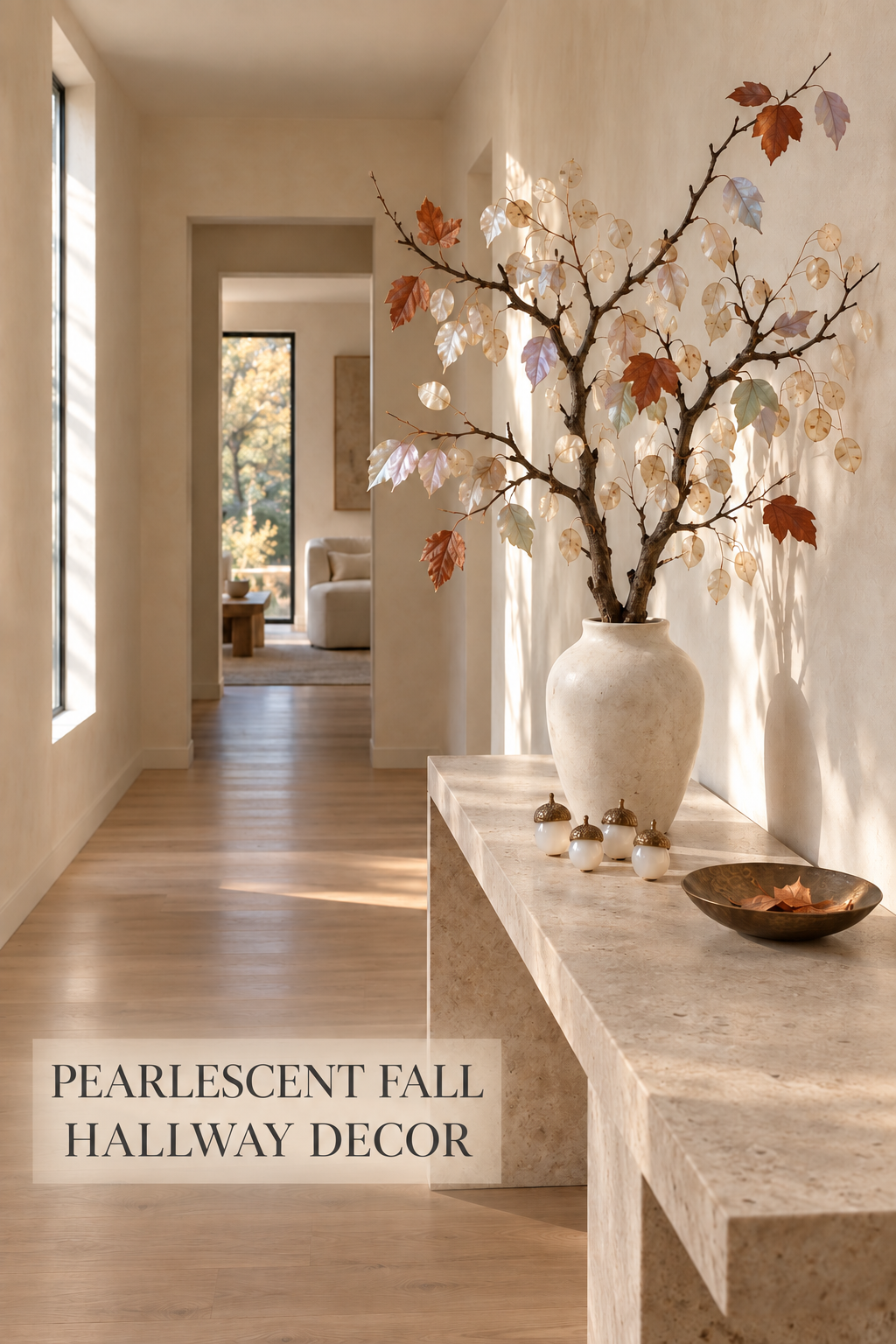
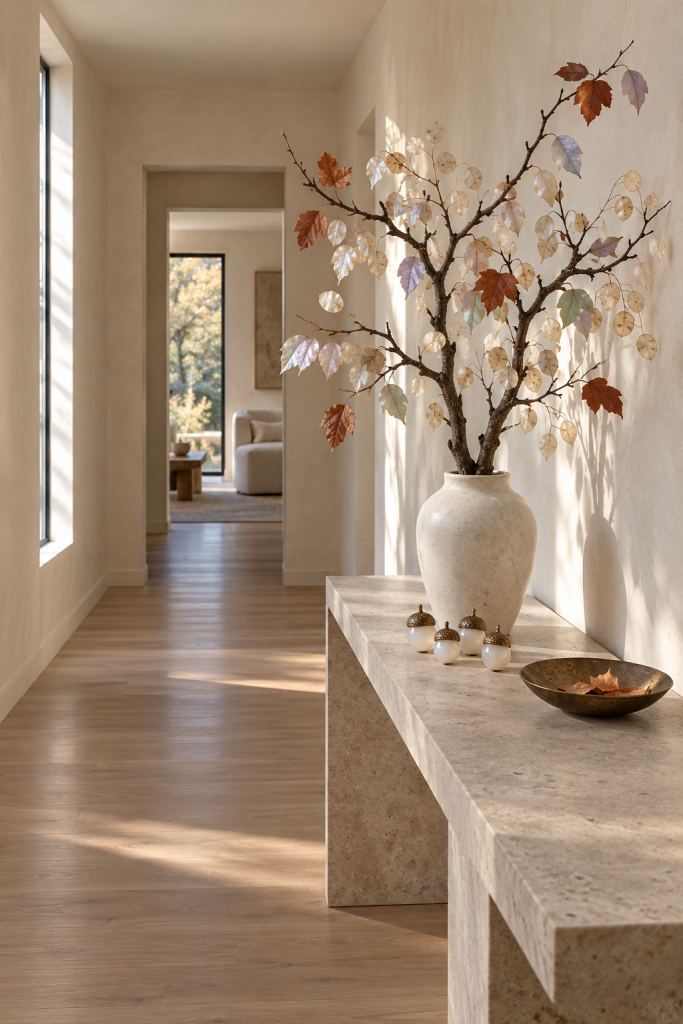
This fall hallway arrangement places a branching silhouette against a cream wall, where morning light catches pale leaves and translucent round seed-pod forms. Copper-colored leaves interrupt the softer pearl, lilac, and celadon tones. A substantial cream vase rests on a stone console, with four pale acorn ornaments and a shallow bronze-toned bowl below the branches.
The passage remains open, and the room beyond the doorway gives the display an everyday residential context. It is a useful direction for fall decorating when a hallway needs one seasonal feature rather than an assortment of pumpkins and garlands.
Why the Branches Suit This Narrow Space
The Wall Receives the Most Delicate Details
The upper arrangement spreads across the wall instead of filling the walking route. Thin branch tips, small leaves, and papery circles show clearly against the plain cream surface. Their shadows create a second, softer outline on the wall when sunlight enters from the left.
Because the background has no competing pattern, the arrangement can contain several leaf finishes without becoming visually crowded. The brown bark is especially useful: it joins the shiny pale leaves and copper accents to one understandable botanical structure.
Small Objects Anchor the Tall Arrangement
The rounded vase makes a substantial base for the uneven branches. Its matte, lightly textured surface contrasts with the smoother acorn bodies. Bronze-colored caps connect those little ornaments to the bowl, which sits lower and farther along the console.
The stone top supplies enough uninterrupted surface to keep the display legible. Pale wood flooring repeats the warmth of the copper leaves, while rectangular doorways and a tall window give the room straight edges around the irregular branch form.
Six Elements to Translate the Hallway Display
An Off-White Vessel with a Stable Base
Look for a broad-bodied vase with a neck that can gather several branch stems. The creamy finish should remain matte or softly textured so it does not compete with the reflective leaves.
Forked Natural-Looking Branches
Choose branches with changes in direction and a few fine tips. Their structure creates the silhouette; a densely leafy artificial spray would fill the open spaces that distinguish this arrangement.
Pale Reflective Leaf Accents
Pearl-white, dusty lilac, and muted green leaves supply the unusual fall treatment. Small craft leaves or suitable faux foliage can approximate the effect without suggesting that pearlescent leaves grow naturally on the branch.
Lunaria-Like Papery Stems
The round translucent forms resemble dried seed pods. Similar papery botanical stems can introduce that light-filtering texture, although the image alone does not establish the depicted plant species.
Pale Acorn Ornaments
Four acorns with white bodies and darker metallic-looking caps repeat the light-and-warm contrast near the vase. A similar ornament in ceramic or glass can serve the role; an exact material match is unnecessary.
A Shallow Warm-Metal Bowl
A low bronze- or aged-brass-toned bowl creates a separate resting point for copper leaves. Choose a subdued surface rather than polished yellow metal if you want to preserve the image’s muted character.
Arrange Branches for the Hallway You Have
Check Width at Shoulder Height
Measure the console depth and the available passage before deciding how large the branch spread can be. A stem that stays behind the table edge near its base may project farther out at eye or shoulder height. Walk past a trial arrangement from both directions and allow extra space for bags, coats, and anyone using the hall.
For a tighter passage, I would turn the main fork toward the wall and shorten the outward-facing side branch. That retains the asymmetrical shape while addressing the part most likely to catch someone moving through the room.
Build the Outline Before Attaching Leaves
Set one main branch into the vessel and assess it from the doorway. Add a second only if the silhouette needs another direction. Secure the stems with a method appropriate to the vase and their weight, and check the complete arrangement for stability on the actual console.
Avoid making the top substantially heavier than the base. Very tall or thick branches may require a different vessel or a lower display location. The rendering is an inspiration source, not evidence that a particular vase and branch combination will remain balanced.
Attach lightweight decorative leaves where a leaf stem would plausibly meet the branch. Place some at different angles so their reflective surfaces do not all face forward. Bring the papery stems through the gaps rather than forming a separate dense bouquet above the vase.
Let the Window Set the Leaf Placement
Examine the arrangement during the hour when the hallway gets useful daylight. Turn individual pale leaves until a few catch the light, while others show their quieter side. Keep copper accents scattered through the outline so they read as autumn foliage rather than one isolated brown cluster.
I would test the pale leaves against the wall before purchasing more: on a very white wall, a slightly lavender or green underside may remain easier to see than another glossy white accent. The aim is a readable branch shape even when direct sun has moved away.
Group the acorns close enough to the vase that they belong to its base, then place the bowl at a comfortable distance along the console. If that surface also holds keys or mail, reserve a separate usable patch and reduce the ornament group accordingly.
Selection Notes for the Most Useful Purchases
Match the Vase Opening to Your Stems
Compare neck width with the number and thickness of branches you intend to use. A vase photo can suggest a generous opening even when its actual dimensions would make the planned grouping difficult.
Inspect Papery Botanical Stems Closely
Look for thin, translucent discs and a branching stem structure. Read the listing to distinguish preserved plant material from artificial stems, and choose according to durability and the way you plan to handle the arrangement.
Find Pearl Leaves with Subtle Color Changes
Favor cream and soft lilac reflections over strongly saturated holographic rainbow finishes. Check that the accents are lightweight and can be attached without bulky fasteners dominating the branch tips.
Compare Acorn Scale with the Bowl
The ornaments should remain a small supporting group beneath the vase. Check dimensions rather than relying on isolated product images, especially if the console is much shallower than the one shown.
Final Styling Tip: Keep a Leaf Repair Envelope
Save a few spare decorative leaves and their attachment materials in a small envelope labeled for this arrangement. A detached accent can then be replaced with the same finish instead of introducing a noticeably different color midway through the season.