
*This post may contain affiliate links for which I earn commissions.*
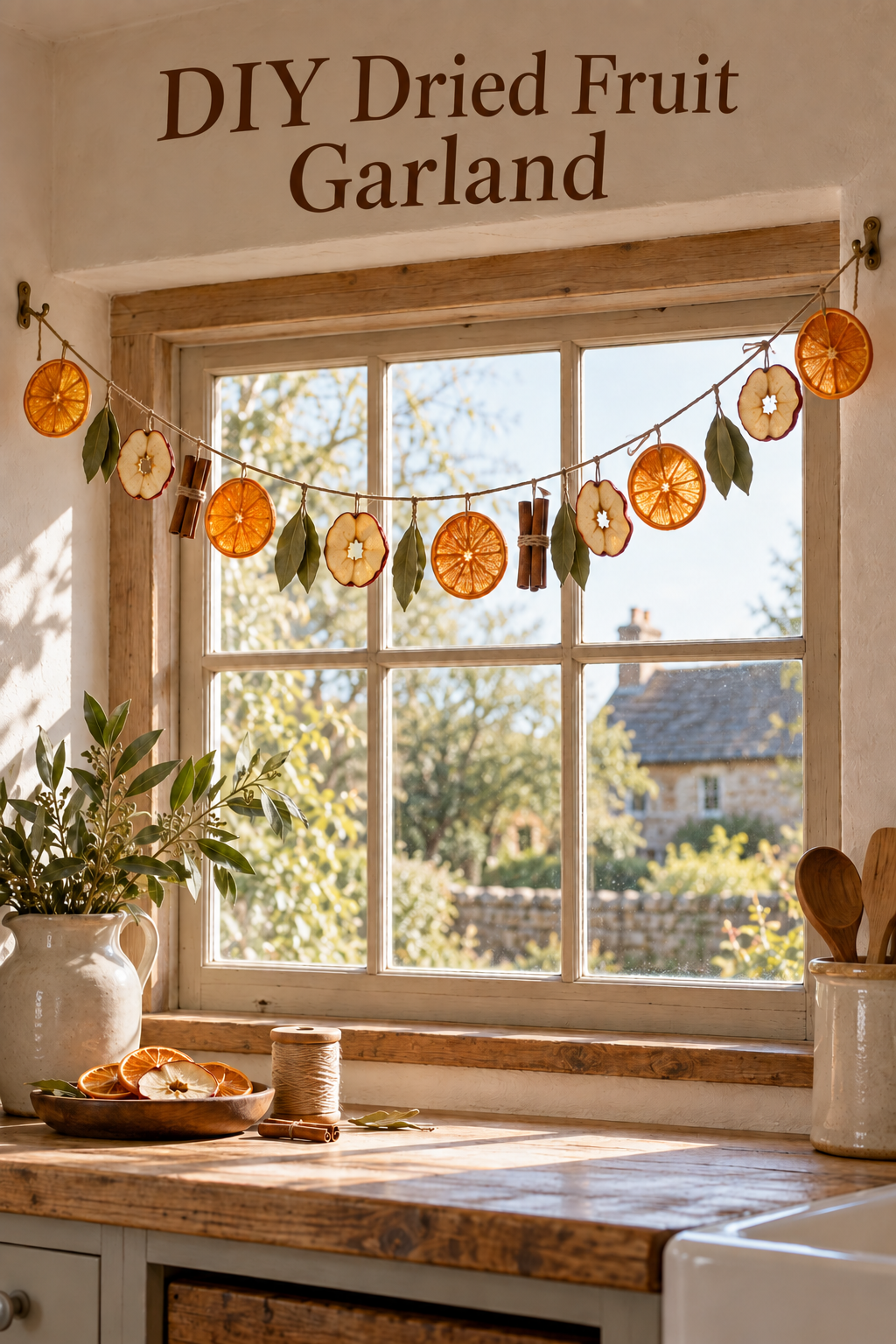
Image created with AI. This image serves as visual inspiration for the project below.
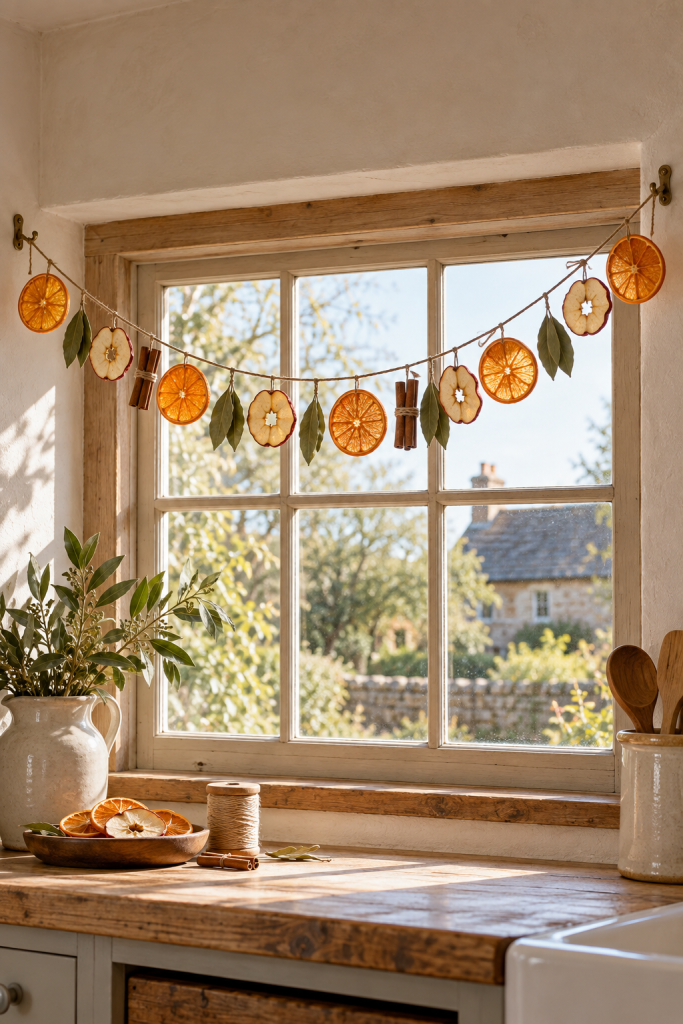
Thin orange wheels catch the window light while pale apple rings, olive leaves and cinnamon bundles give this handmade garland a quieter harvest rhythm. The project hangs from individual ties along one main cord, so each piece remains visible instead of disappearing into a dense string of fruit.
Use it for a fall kitchen window or a Thanksgiving breakfast nook. Its character comes from the contrast between translucent citrus and opaque apple, with small leafy pauses between them.
Materials and Tools
Fruit and botanical accents
Gather fully dried orange rounds, dried apple rings with their skin edges intact, whole dried bay leaves and a few short cinnamon sticks. Choose intact slices with enough firm material near the upper edge to accept a fine thread. Sweetened, sticky apple snacks are unsuitable for this method.
Ready-dried fruit keeps this project focused on assembly. If drying your own, prepare it separately using the instructions for your actual appliance and a reliable fruit-drying guide. Assemble only after the fruit is fully dried and cool.
The main cord and fine hanging ties
Use natural-looking twine for the continuous strand and finer cotton thread for the individual hangers. Add scissors, a fine sewing needle, a protective work mat and a ruler or measuring tape. Suitable existing hooks or removable hanging hardware complete the display; follow the hardware instructions for your wall or trim.
The fine thread matters: pushing coarse jute through a delicate apple ring can split it. The main twine carries the display, while the smaller ties let the slices hang face-forward.
Before You Start
Measure the curve rather than the window alone
Drape an undecorated cord between your intended anchor points before cutting. Allow a shallow downward curve plus enough spare length for the end knots. Check that the lowest ornaments will clear the sill, window fittings and anything you use beneath them.
Sort usable slices
Reject damp, sticky, moldy or badly fractured pieces. Lay the remaining oranges and apples separately so you can compare their scale. A few uneven edges suit the natural finish, but a weak hanging area will create repeated repairs.
Keep this as decorative material, separate from food preparation. Choose a dry indoor location away from steam, flames and heat sources, and out of reach of children or pets who might pull or chew the strand.
Step by Step Instructions
Arrange an orange and apple rhythm
Lay the main cord on your mat in approximately its hanging curve. Place an orange, a small bay-leaf pair, an apple and another orange along it. Repeat that relationship loosely, reserving occasional gaps for cinnamon bundles.
Leave enough open cord that neighboring fruit will not overlap once suspended. Judge the arrangement from a little distance: the pale apple rings should register as a separate motif. Move pieces until neither end looks much heavier than the other.
Make two small holes for each fruit hanger
Support one dried slice flat on the mat. With the fine needle, gently make two holes near its upper edge, spaced apart across sound material and set in far enough that the thread will not tear straight out. Avoid brittle rind cracks and thin broken areas.
Pass a short thread through both holes so the connecting portion lies behind the slice and the two ends emerge toward the top. Bring those ends together above the fruit. This two-point tie helps keep the face oriented toward the room. If a slice crumbles under light handling, replace it rather than tightening a knot around the damage.
Tie the leaves without piercing them
Pair two leaves with their stems aligned and their blades slightly offset. Wrap fine thread around the stems and knot it securely, leaving ends for attachment to the main cord. Handle the leaves at their stems rather than squeezing their brittle edges.
Use leaves with enough stem to hold a wrap. If a pair slides out during a gentle check, exchange it for a sounder pair instead of adding a large visible glue blob.
Bind restrained cinnamon bundles
Group two or three short sticks and wrap twine around their middle several times. Knot the wrap, then carry a separate hanging tie under that wrap so the bundle can hang vertically.
Keep these accents occasional. Their darker solid shape adds punctuation, but too many bundles would obscure the orange-and-apple pattern and increase the weight unnecessarily.
Attach the modules to the continuous strand
Tie each prepared hanger around the main twine at its planned position using a snug double knot. Set the fruit at roughly similar hanging lengths, then shorten any tie that makes an apple overlap the next orange.
Lift small sections of the strand as you work. This reveals how the pieces turn under gravity, which a flat layout cannot show. Retie a crooked module at its hanger rather than twisting the entire main cord. Trim loose ends neatly, retaining enough tail that the knots do not immediately unravel.
Hang first and refine the spacing second
Secure the two cord ends to appropriate hooks, preserving the curve you measured. Do not stretch the strand taut. Follow the fixing instructions and check the completed arrangement gently before leaving it in place.
Step back and look through the whole window area. Move or retie only the modules that touch, hide a leaf pair or collect too closely at the bottom of the swag. The lowest portion needs breathing room because gravity naturally gathers the visual weight there.
Keep the Fruit Dry Between Seasons
Take the garland down by the main cord rather than pulling individual slices. Lay it in a shallow box with tissue between overlapping fruit. Check the pieces before storing and again before reuse; discard anything showing moisture damage or mold. Natural fruit may need replacing even when the twine remains usable.
Shop Materials and Tools
Intact dried fruit rounds
Look for whole decorative orange wheels and unsweetened apple rings rather than chopped potpourri or sticky snack pieces. Listing photos should show the actual cut and edge condition. Buying a little extra gives you room to reject fragile slices without changing the planned rhythm.
Whole bay leaves and short cinnamon sticks
Choose intact leaves with stems, not crushed seasoning fragments. For cinnamon, compare stick length with the fruit diameter so bundles remain supporting accents. Existing pantry supplies may already be sufficient; no special scented embellishments are needed.
Twine with a finer companion thread
A plain natural finish suits the kitchen setting. Select the main cord for easy knotting and choose a smoother, much finer thread for the fruit holes. Thick, scratchy cord belongs on the main strand, not through the apple flesh.
Fixings suited to the display surface
Match the hanging hardware to your trim or wall finish and the completed decoration. Check surface restrictions and removal instructions before purchase. A decorative hook’s appearance alone does not establish its suitability for a particular window surround.
Final Project Tip
Keep a few sound spare apple rings separately in the storage box. Apples are the paler visual counterpoint, so replacing a damaged ring with another orange can gradually change the balance of the strand.