*This post may contain affiliate links for which I earn commissions.*
This image was created with AI to offer inspiration for your own home styling.
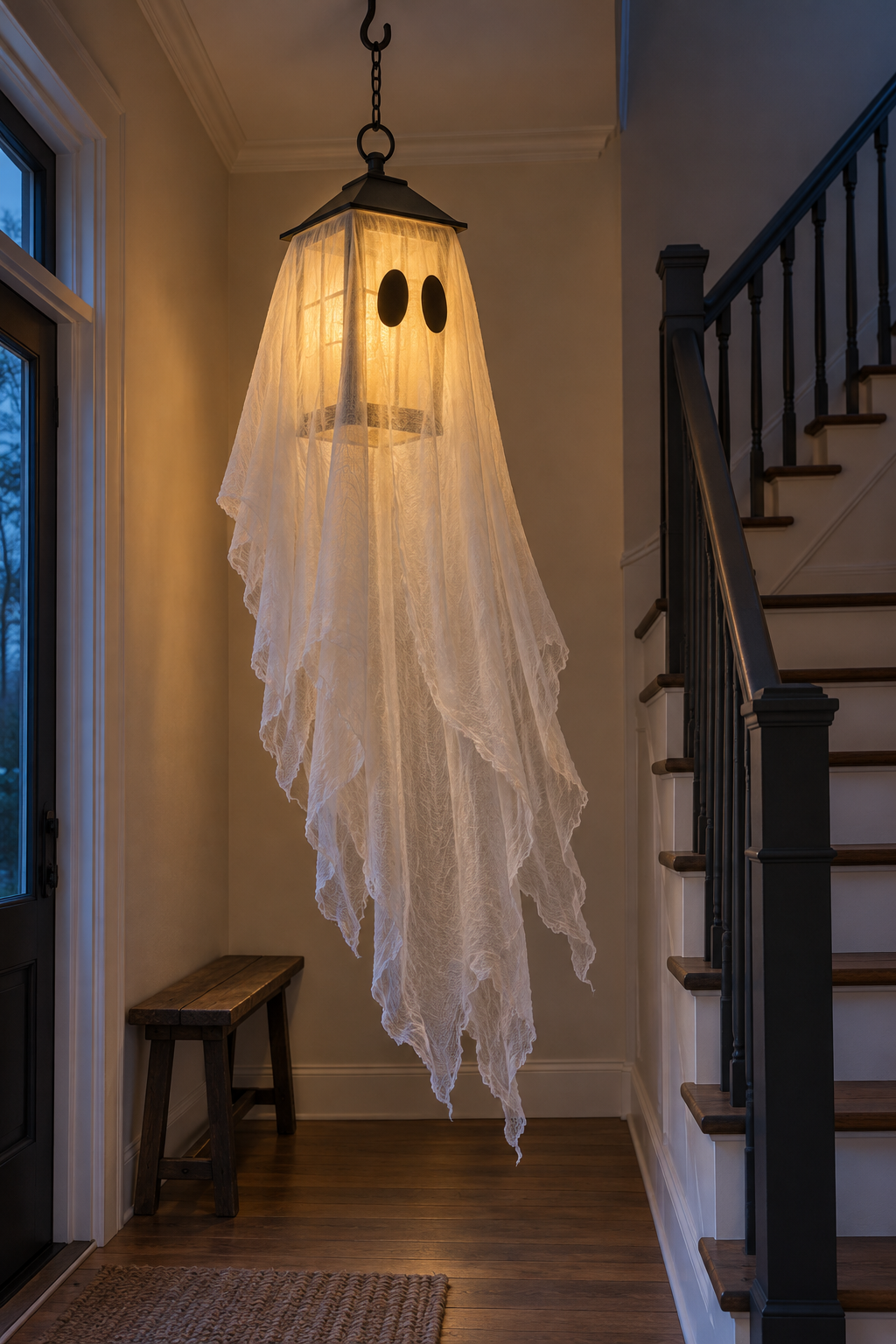
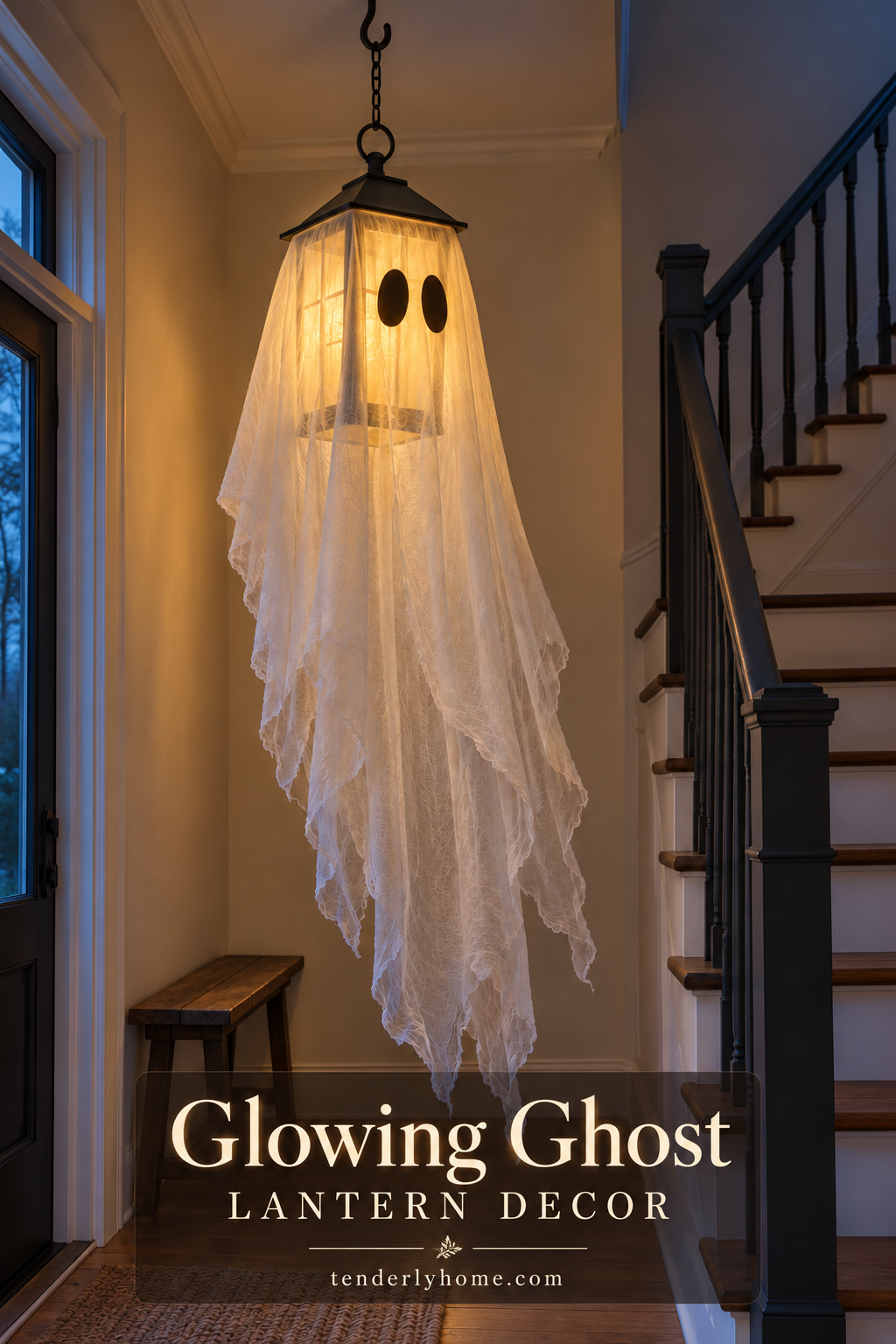
A hanging lantern takes on a different personality beneath a long veil of pale fabric. Two black oval eyes sit over the warm glow, while the charcoal roof and frame still identify the object underneath. In this Halloween inspiration image, the ghost occupies a stairwell corner beside a narrow wooden bench, with cool evening light entering from the left.
The transformation is simple enough to understand at a glance: the lantern supplies the body and light, and the fabric becomes its ghost skirt. A similar effect can work at home when the lantern, draping and hanging position are planned together. Treat the picture as a styling reference, then adjust the length and placement to suit your entrance.
What Makes This Look Work
The lantern remains visible inside the ghost
The dark roof, top ring and vertical frame show through or above the fabric. Those details prevent the subject from becoming an anonymous hanging sheet. The familiar lantern is still recognizable, but the pale veil and oval eyes change how it reads.
Light inside the upper body gives the ghost a clear center. The skirt becomes more transparent farther down, allowing the lantern structure to carry the shape without requiring a stuffed figure or a separate ghost ornament.
Warm light meets a cool evening entrance
An amber glow spreads through the upper fabric against the cooler blue light at the doorway. The contrast makes the ghost prominent without a bright Halloween color scheme. Ivory and charcoal do most of the visual work, so the surrounding room can stay ordinary.
The stair rail repeats the lantern’s dark outlines. That existing architectural detail helps the decoration belong in the entry rather than looking like a party prop placed against an unrelated backdrop.
The skirt supplies the movement
Long folds descend unevenly below the lantern, ending in light, irregular edges. Their differences make the silhouette more convincing than a flat rectangle with two eyes. The fabric has enough transparency for the wall to remain visible behind the lower layers.
The restrained setting helps those folds stay legible. There are no competing Halloween figures in the corner, and the small bench supplies a quiet horizontal shape beneath the much taller hanging subject.
Key Pieces to Recreate the Look
A lightweight lantern with a defined roof
A dark lantern with a visible cap and hanging loop gives the ghost its recognizable body. Choose a construction intended for hanging, since a decorative tabletop handle does not necessarily support a suspended lantern.
A battery-powered LED light
Use a battery light approved for the chosen lantern and suitable for the surrounding fabric arrangement. A soft warm tone is closer to the pictured effect than a bright white beam, and there is no need for a live flame.
Ivory sheer fabric
Loose gauze or another translucent lightweight textile creates the skirt. Select fabric that falls softly instead of standing away from the lantern like stiff netting, and allow the dark frame to remain visible.
Black oval fabric accents
Two plain oval pieces form the face. Matte black material produces an easy-to-read expression without a mouth, printed graphics or added facial features competing with the glow.
Compatible hanging and attachment fittings
The support must hold the lantern and fabric together from a suitable structural point. Small ties or other appropriate removable attachments can help distribute the textile around the rim without interfering with access to the light.
A narrow entry bench
A small wooden bench gives the corner an everyday use outside Halloween. Reuse an existing seat if it fits, keeping it away from the hanging fabric and leaving the walking route clear.
How to Style It at Home
Choose the corner before choosing the length
Walk through the entrance as you normally would, including opening the door, carrying a bag and using the stair rail. Place the hanging decoration outside that route. A corner that looks empty in a photograph may still be needed for a door swing or a turn toward the stairs.
Keep the fabric above the floor and away from shoes, bags and the bench seat. In a tight hall, raise or shorten the skirt rather than pushing it into circulation space. You can preserve the tall ghost silhouette with fewer folds if the hanging point is lower than the one pictured.
Keep the lantern’s identity uncovered
Arrange the fabric around the body so the cap and hanging loop remain distinct. Let some light and frame lines show through the upper section instead of piling multiple opaque layers over the lantern. Test the fabric with the light off and on before deciding how much to use.
Follow the lantern and light manufacturer’s instructions for use and clearance. Fabric should not cover ventilation or controls, and the battery compartment should remain accessible. If the selected product cannot accommodate this treatment, use a different suitable lantern rather than assuming any LED fixture can be wrapped.
Adjust the face while it is hanging
Position the eyes after the fabric has settled into its final folds. Place them on the part that faces the approaching viewer, then check from the doorway and stair landing. A fold running across an eye can distort the face even when the pieces looked evenly placed on a work surface.
Make the eyes large enough to read against the lit fabric, but leave space around them. Temporary placement first gives you room to change the expression without repeatedly marking or stretching the gauze.
Balance the glow without adding another display
Check the lantern at the time of day when the entrance will usually be seen. If the upper body looks glaring and the skirt disappears, reduce the light level when the product permits it or choose a softer compatible light. Preserve enough everyday entry lighting to use the stairs and door comfortably.
The decoration already provides height, a face and a light source. Keep nearby surfaces simple rather than adding a second Halloween scene below it. A bench or existing wood furniture can anchor the corner without requiring extra seasonal purchases.
Shop Similar Pieces
Inspect the hanging loop, not just the color
Read the lantern’s intended-use information and compare its weight with your mounting plan. Look for access doors and battery placement too, because a close visual match is inconvenient if you have to dismantle the ghost whenever the batteries need changing.
Compare gauze in ordinary light
Product photos over dark backgrounds can exaggerate transparency. Check fabric composition, thickness and edge treatment so you know whether the chosen material will make flowing folds or a heavier solid cover.
Select eyes that attach to the textile
Check how black felt or fabric pieces can be secured to your particular gauze. Some adhesive-backed sheets may show through thin fabric or lose their grip, so choose an attachment approach that suits the actual materials rather than relying on a generic craft claim.
Look for a gentle, accessible light source
Compare the light’s dimensions with the lantern’s interior and review permitted use. Convenient controls or a timer may help with everyday operation, but those features should be confirmed for the chosen product rather than assumed from the inspiration image.
Final Styling Tip
Photograph the settled fabric folds before taking the decoration down. A quick reference for the eye position and skirt drape can save adjustments when you hang the same pieces again next Halloween.