*This post may contain affiliate links for which I earn commissions.*
This is an AI-created inspiration image. The suggestions below help translate its visible arrangement into a practical display using similar pieces.
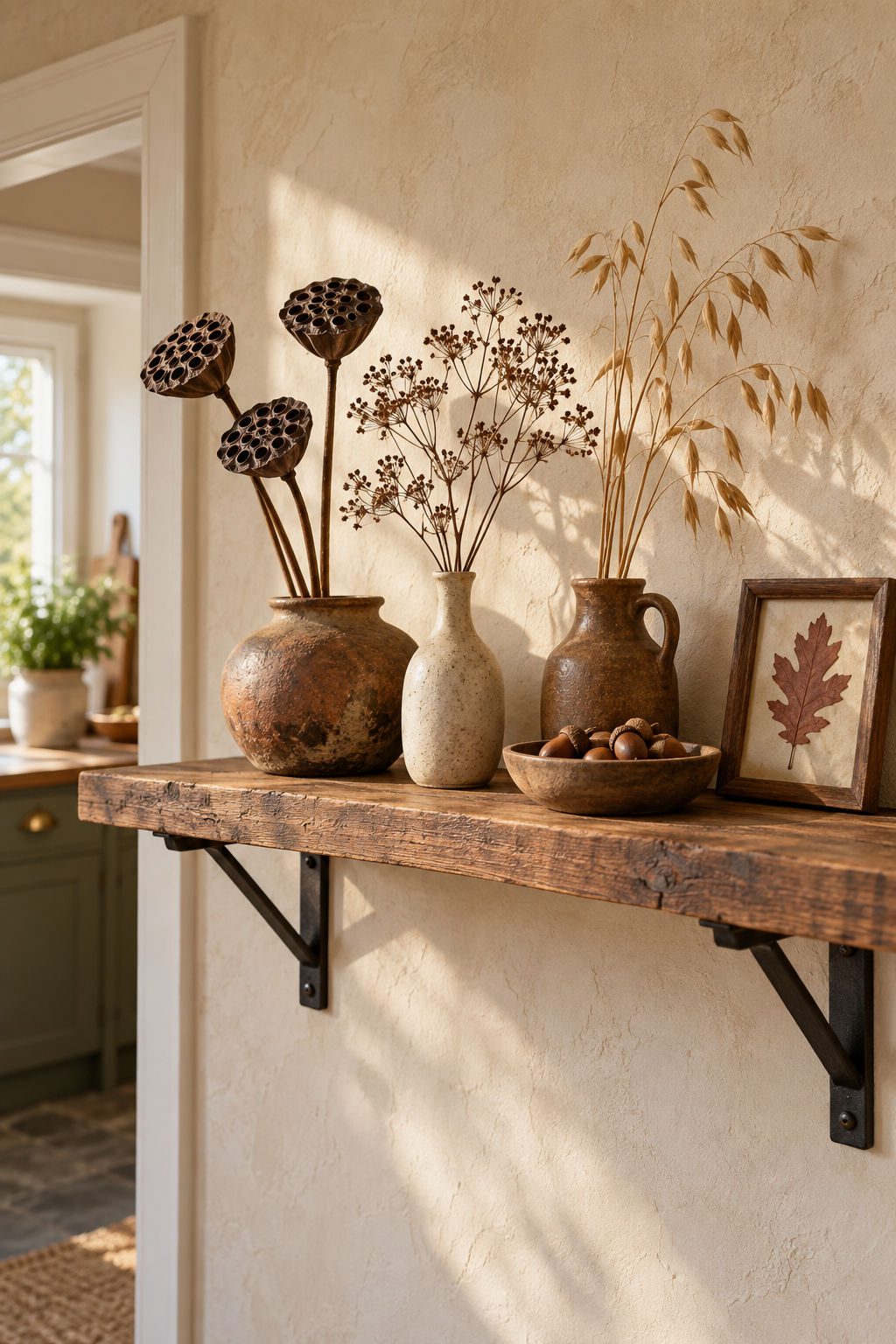
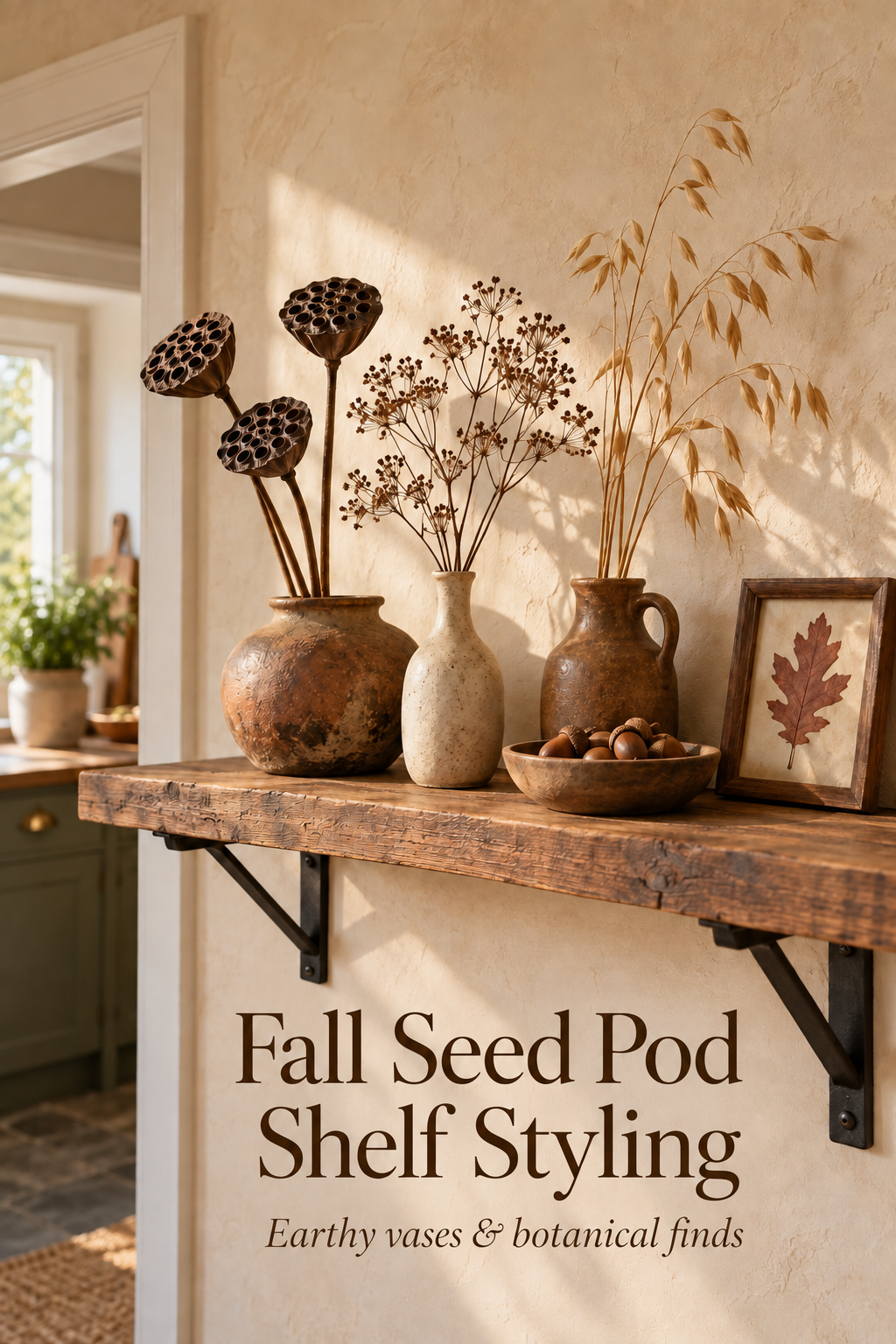
Fall decorating does not always need a pumpkin. In this image, seed pods and branching dried stems make a small wall shelf feel seasonal through their shapes and warm brown tones. Rounded vessels, a shallow bowl of acorns and a framed leaf give the collection a familiar place beside a kitchen doorway.
It is an appealing direction for a shelf that needs a change but cannot hold a large arrangement. The botanical forms provide most of the height, while the containers stay grouped on a single narrow surface.
What Makes This Look Work
Different seed shapes share the attention
The broad, perforated pods, fine branching seed heads and arching oat-like stems are easy to distinguish. Each type has its own vessel, so their outlines do not disappear into a mixed bunch. The contrast comes from shape rather than a bright color or a large flower arrangement.
This is the part worth preserving when you adapt the shelf. You can substitute other dried stems, but choose noticeably different forms and let each group remain recognizable.
Rounded containers soften the shelf’s straight line
The vessels have curved bodies and varied necks, while the frame and shelf provide straight edges. Their muted clay, cream and brown appearances relate to the dried plants without matching them exactly. The pale central vase also separates the darker containers, keeping the group from reading as one large brown mass.
The small bowl introduces a lower level in front of the taller stems. That change in height helps the arrangement feel like a collection of separate finds.
Side light reveals details without extra decor
Morning light describes the holes in the pods and casts fine stem shadows on the textured wall. A plain background makes those details useful; busy wallpaper or a crowded row of neighboring objects would make the delicate shapes harder to see.
The framed leaf gives the eye a flatter, quieter place to pause at the end of the arrangement. It belongs to the same natural theme without repeating another vase of stems.
Key Pieces to Recreate the Look
Sculptural dried seed pods
Pods with broad heads and visible openings provide the strongest silhouette. Choose stems that fit the shelf’s scale and remain supported by the vessel rather than leaning heavily over its edge.
Fine branching dried stems
An airy spray supplies a different texture beside the large pods. The group should be sparse enough that individual branches can be seen against the wall.
Arching seed grasses
Light, drooping seed forms add movement beside the more upright botanical groups. Select stems that curve naturally without reaching into the doorway or brushing someone passing the shelf.
Small earthy vases
A rounded pot, a narrower pale vase and a compact handled vessel create related but different profiles. Matte or softly textured finishes suit the image, but stable bases and usable openings matter more than matching every surface mark.
A shallow acorn bowl
A low bowl contains the small woodland pieces beneath the stems. Keep it modest in size so it does not conceal the neighboring vessels or extend beyond the shelf.
A framed leaf
One pressed leaf or a simple leaf illustration adds a flat botanical accent. A subdued brown frame connects to the other warm tones without requiring a matching set of wall art.
How to Style It at Home
Read the shelf as a working surface
Before arranging anything, check the shelf’s depth, mounting and stated load capacity. Add the weight of the containers as well as their contents, and use installation guidance appropriate to your wall. The brackets in the image are visible, but their appearance alone cannot establish how a real shelf should be mounted.
Keep a display beside a kitchen away from routine splashes, cooking heat and a route where people may catch protruding stems. If the shelf already carries useful kitchen items, decorate only the space that remains available rather than crowding them out.
Match each opening to the stems
Test the pod stems in the broad vessel and the finer branches in a narrower opening. A wide mouth lets stems spread; a narrow neck gathers them more closely. That difference can help you create distinct silhouettes without buying additional filler.
Trim stems gradually, checking the arrangement on the shelf between cuts. Leave enough stem inside the container to support the head. If a top-heavy pod makes the pot tilt, use a broader, heavier container or shorten the arrangement rather than wedging it precariously against the wall.
Place the low pieces after the vases
Set the vessels far enough apart that their bodies remain readable. Then add the bowl where it occupies a low gap and the framed leaf where its outline is not hidden behind stems. Do not reproduce the image’s density if your shelf is shorter.
A secure picture stand or suitable wall attachment can help keep the frame from sliding, depending on the frame and shelf. Avoid balancing it on a narrow ledge. View the arrangement from the doorway as well as from straight ahead, since the busiest overlap may appear only from the side.
Edit the display during ordinary daylight
Inspect it when the kitchen normally gets used. If fine stems disappear against a patterned wall, reduce nearby objects or choose a simpler botanical group. If direct sunlight overwhelms the framed leaf with glare, shift the frame’s angle or place it elsewhere on the shelf.
Contain any loose acorns and remove botanical pieces that shed heavily. Natural dried materials can be fragile, so handle the heads gently and keep the display separate from food-preparation surfaces. A good artificial stem is a reasonable substitute when maintenance would otherwise make the shelf inconvenient.
Shop Similar Pieces
Check the full length of seed-pod stems
Close-up photographs can make a small bundle look substantial. Compare head size, stem length and bundle quantity with your vessel and available wall height. Listings may sell individual stems or mixed packs, so confirm the format before choosing.
Compare openings as well as vase height
A tall vase with an excessively wide mouth can let a few delicate stems collapse outward. Look for opening measurements or a photograph showing the neck clearly. Check the base footprint against the usable shelf depth, and consider the weight of the empty vessel if the shelf has limited capacity.
Choose a leaf display that arrives in the right form
A print, unframed pressed leaf and completed framed piece need different preparation. Confirm what is included and whether the frame can stand on a shelf. The pictured effect depends on a pale background and a distinct leaf outline, not a particular botanical species.
Buy acorns with containment in mind
Compare the size and finish of decorative pieces with the bowl you intend to use. Matte brown acorns relate closely to the natural collection; heavily glittered versions change its character. Check whether caps are attached or supplied separately so you know how much assembly the purchase requires.
Final Styling Tip
Dust the empty containers before refreshing the stems, then lift the bowl and frame off the shelf for a quick wipe. Cleaning in that order avoids knocking fragile seed heads with a cloth while reaching behind the smaller pieces.