*This post may contain affiliate links for which I earn commissions.*
AI-generated image used for home-decor inspiration.
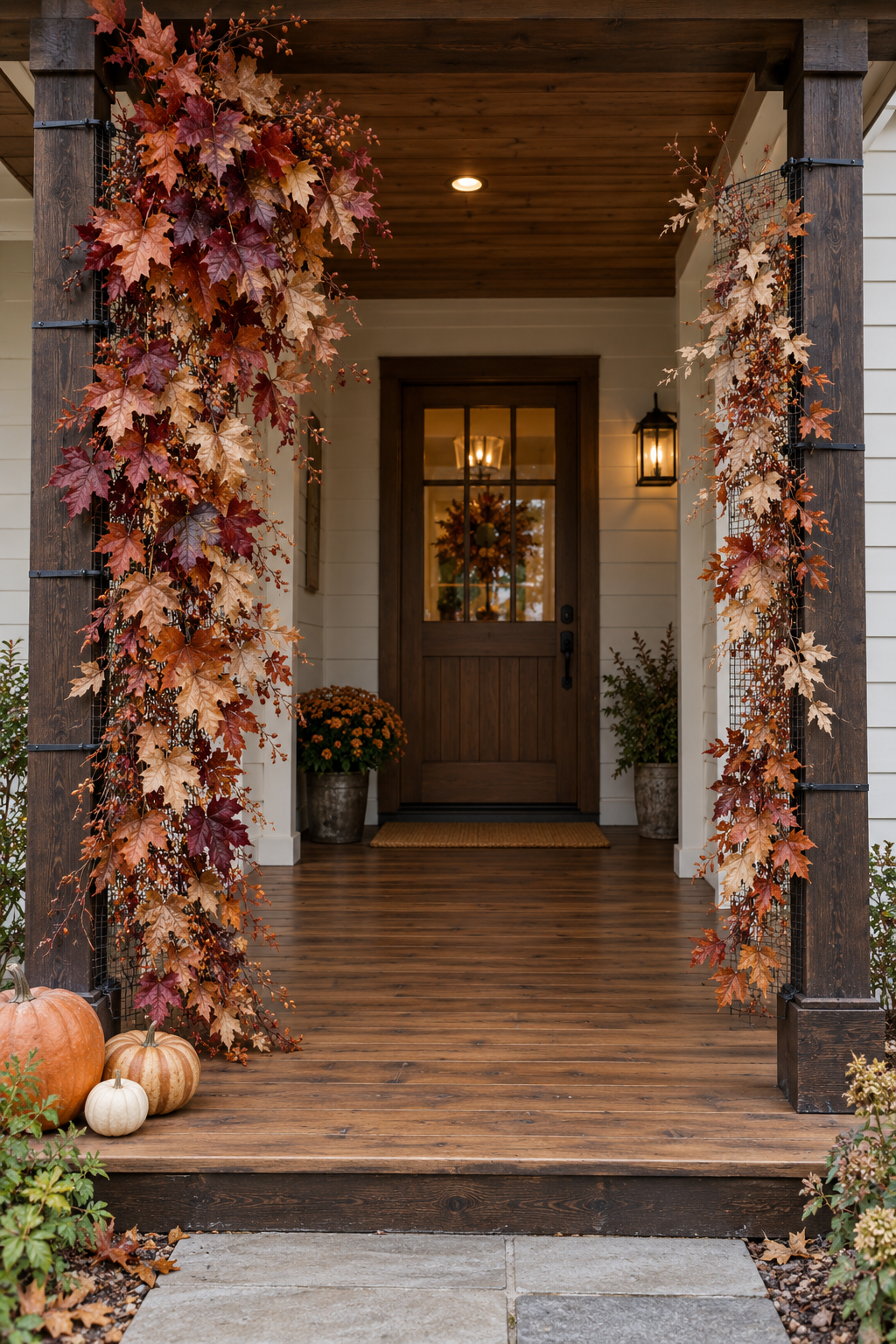
The porch opening becomes the main fall decoration in this image. Copper, wine and pale leaves descend beside the dark timber posts, with pumpkins low at one side and a clear route toward the front door. Open mesh gives the foliage a defined backing while letting the porch architecture show through.
What Makes This Look Work
Two different panels frame one opening
The left panel is fuller and reaches farther down, while the right is narrower and more open. That difference makes the opening feel framed without creating two identical columns of foliage. The upper beam remains mostly visible, so the leaves have a clear relationship to the existing structure.
Both panels sit at the edges. They suggest a seasonal proscenium around the entrance instead of becoming a curtain across it.
Pale leaves keep the dark posts readable
Wine and copper tones echo the timber’s warmth, but the light parchment-colored leaves prevent the decoration from disappearing into the posts. Their pointed silhouettes are large enough to read from the approach.
The mesh appears between scattered stems and along the sides. Those gaps keep the display from becoming a solid wall, and they make the supporting structure understandable at a glance.
Floor space gives the cascading edges room
A low pumpkin group anchors one side of the display. The porch floor between the posts and door stays largely open, which makes the hanging leaves feel more deliberate.
Plants and a doormat sit farther back near the entrance, but the eye first follows the two vertical leaf panels. Additional objects in the center would interrupt that view and make the approach less practical.
Key Pieces to Recreate the Look
Removable open mesh panels
A narrow mesh backing gives the foliage an irregular but controlled outline. Choose an open structure that can be trimmed or shaped for the existing posts, rather than a solid sheet that would hide the porch.
Autumn leaf garlands or sprays
Mixed copper, wine and pale leaves are the main decorative material. Look for distinct leaf silhouettes and stems that can be attached at several points, with enough variation to avoid a flat printed strip.
Surface-compatible post fasteners
Visible straps connect the panels to the timber. Use a removable fastening system intended for the actual post surface, panel material and outdoor conditions; the attachment should be planned alongside the backing.
Small ties for the foliage
Separate ties allow the garlands to be secured to the mesh instead of relying on a single high connection. Choose ties suited to the stem and backing, with a finish that blends into the dark open structure.
A low pumpkin grouping
Rounded pumpkins provide a grounded counterpoint to the long leaf edges. Vary their size modestly and keep the group outside the walking route, where it will not roll into the approach.
A simple entrance mat
A plain mat makes the final doorway easy to locate beyond the decorated opening. Choose one that sits flat in the usable threshold area without requiring the leaf arrangement to extend toward it.
How to Style It at Home
Map the stationary porch edges
Identify the posts or fixed side surfaces that can carry a display. Measure the space they occupy separately from the walking opening. The pictured arrangement depends on those stationary supports; a narrow stoop without posts may call for a smaller side-wall version.
Keep decoration away from the door’s opening path and any handrail people need to use. Look at the porch from the path and from inside the doorway. A panel that seems slender in a photograph may project farther forward when viewed from the side.
Shape the backing before filling it
Hold an unfilled panel against each proposed position to assess its outline. Aim for different lengths while retaining a recognizable pair. The left can be the fuller anchor, with the right offering a lighter response.
Use backing without exposed sharp edges, and finish any trimmed edge according to the material’s instructions. Fasten the panel using a system suited to its size and exposure. The image does not establish the correct number of straps or the load capacity of an attachment, so use the actual products’ guidance.
Avoid pulling mesh across the passage to increase the display width. If a post is too narrow for the intended panel, reduce the panel or choose another location within the same porch rather than sacrificing access.
Build the leaf cascade from the top
Arrange the main garland lengths on the backing before adding small accents. Concentrate more foliage near the upper left, then allow the lower edge to become uneven and lighter. On the other panel, leave wider mesh gaps between leaf clusters.
Secure stems at suitable contact points with the mesh so their weight does not hang from one delicate tip. Let the leaves overlap naturally, but leave enough visible edges for their shapes to remain readable. Shorten a protruding spray if it catches clothing along the route.
Step back after each substantial addition. If the panels begin to look like two dense rectangles, remove a few stems from their inner edges rather than buying more foliage to soften them.
Treat the porch as an outdoor space
A roof gives shelter but does not make every indoor decoration suitable for outdoor use. Select backing, foliage and fasteners for the actual exposure, following their care and installation instructions. Check how wind reaches the opening before committing to long, loose stems.
Set the pumpkins on a stable surface away from the footpath. Keep the mat flat and the steps clear. After installation, walk through carrying a normal bag or delivery box; this often reveals projecting foliage that a still view misses.
Review the display after windy weather. Retie or remove anything that has shifted before restoring the intended silhouette. If conditions repeatedly pull the panels out of position, use a shorter, lighter arrangement.
Shop Similar Pieces
Check leaf color across the whole listing
A garland may combine a few wine leaves with many bright orange ones. Examine close-ups and the full-length view to judge which color actually dominates. Compare leaf size with the backing you plan to use, since tiny leaves can make a tall panel look busy.
Ask how the mesh edges finish
Panel listings may show only the center of the material. Check edge construction, flexibility and intended outdoor use before selecting a backing that will be handled near a passage. The most convenient panel is one you can attach and remove without leaving raw edges.
Match straps to the post surface
Look for fastening instructions that cover your post finish and exposure, including removal. Do not assume a strap, clip or adhesive designed for a smooth indoor wall will behave the same way on stained exterior timber.
Consider pumpkins from more than one angle
Check the base shape and overall proportions, especially for a cluster beside a post. A round-looking front photograph can conceal a narrow base or exaggerated stem that is awkward in a compact corner. Choose pieces that can sit steadily without additional staging.
Final Styling Tip
Keep a few compatible foliage ties with the stored panels rather than in a general tool drawer. Small repairs during the season become easier when the correct ties are immediately available, and the display can stay open and orderly after adjustments.