*This post may contain affiliate links for which I earn commissions.*
This image was created with AI to offer inspiration for decorating at home.
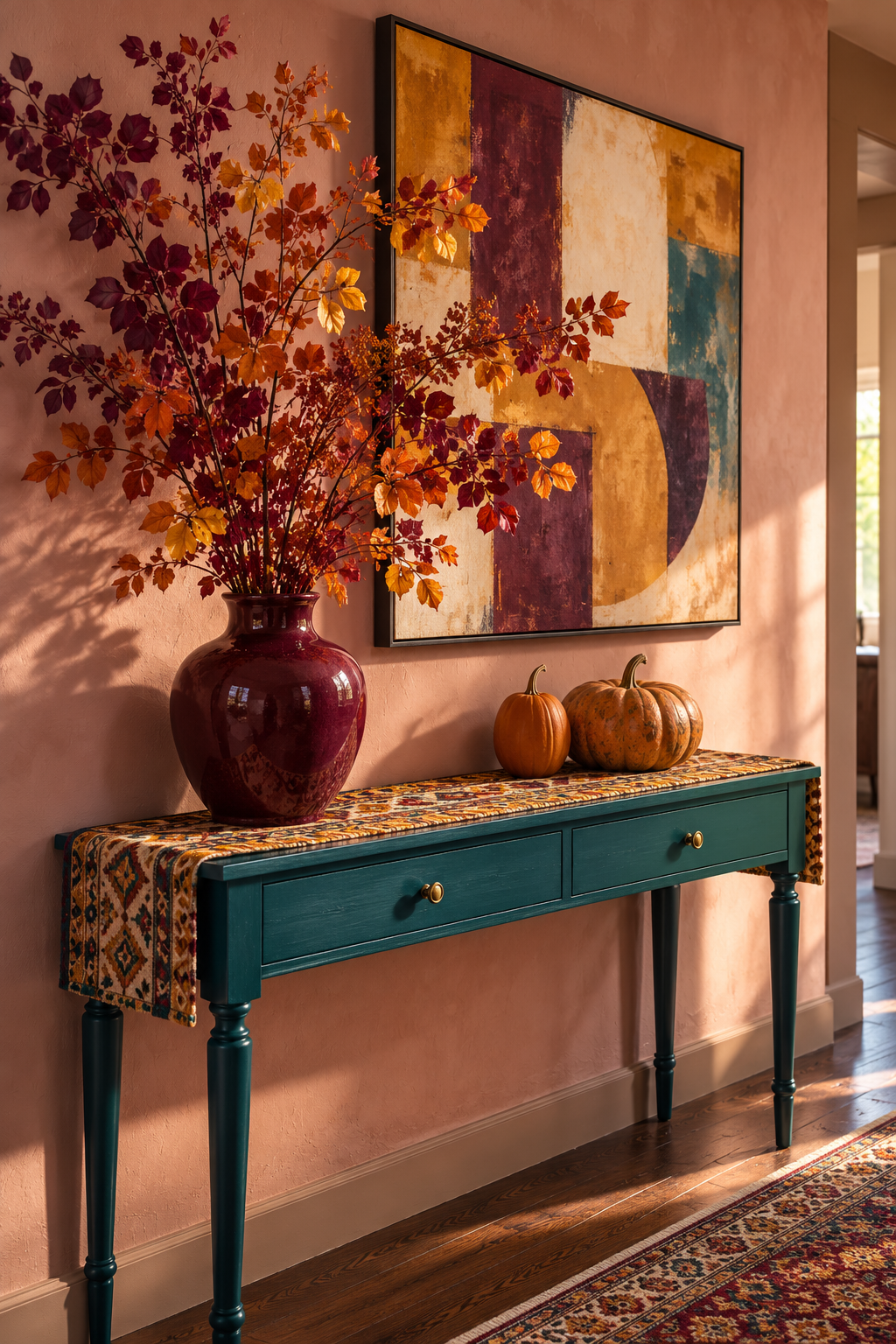
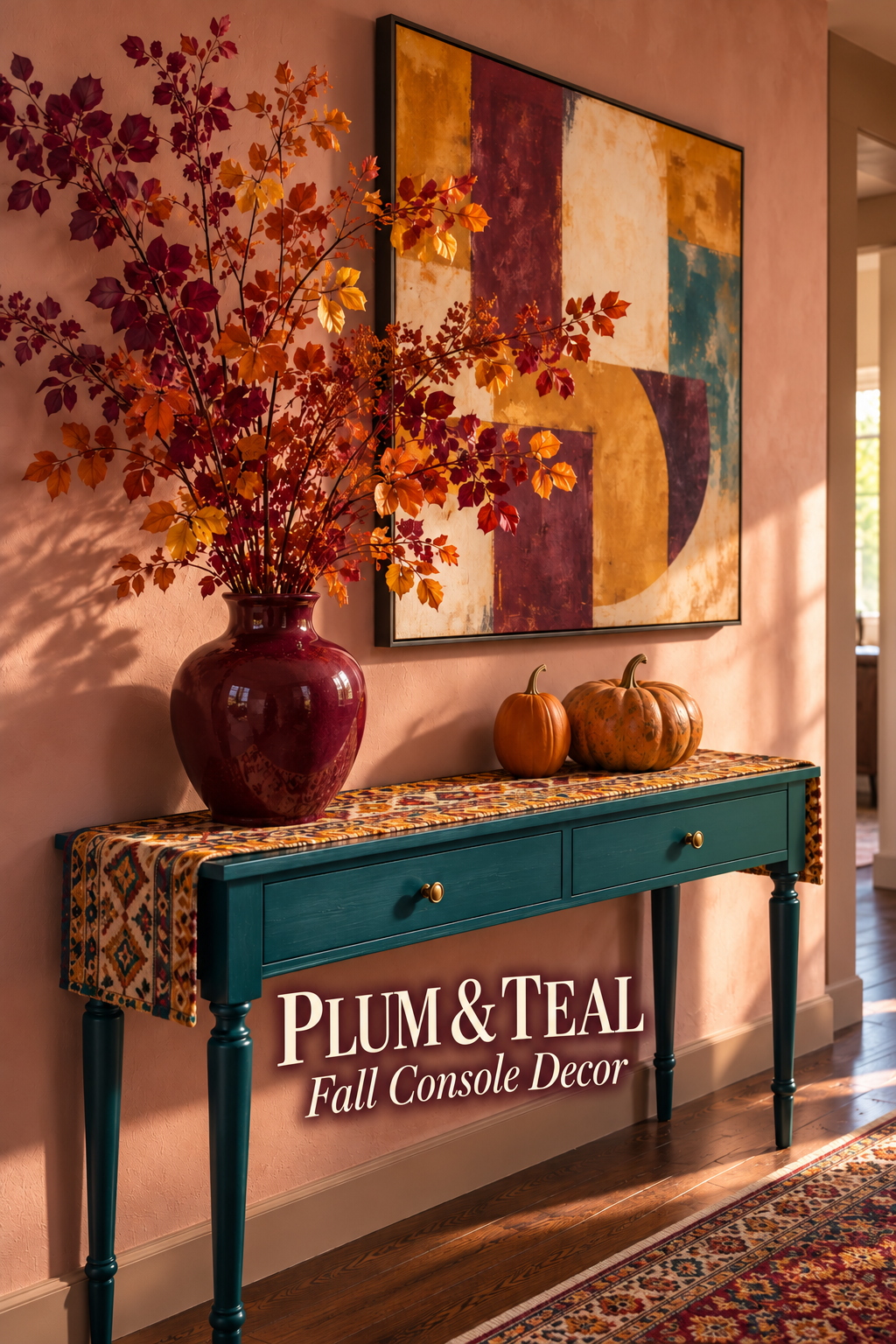
Tall burgundy and rust leaves rise from a glossy plum vase above this teal console. A narrow patterned runner carries the autumn colors across the top, while two pumpkins sit beneath a broad abstract print. Warm light catches the leaves and stretches their shadows across the rosy wall.
The appeal comes from using a few substantial pieces with different jobs. The branches provide height, the artwork fills the wall, and the pumpkins bring the arrangement back down to the tabletop. You can adapt that relationship to an existing hall table even if its finish and proportions differ from the example.
What Makes This Look Work
Plum carries the eye upward
The vase connects the dark leaves to the console rather than leaving the foliage as a separate crown overhead. Its rounded shape also contrasts with the thin stems and narrow table legs. The darkest color appears in a compact mass below and smaller patches above, which keeps the arrangement from looking top-heavy in the photograph.
The artwork gives the branches a backdrop
Large blocks of cream, ochre, plum, and teal remain readable behind the irregular leaf shapes. The branches overlap part of the print, but broad areas of the artwork remain exposed. A highly detailed picture would create a much busier meeting point between the foliage and wall.
Small pattern stays close to the tabletop
The runner uses a tighter motif than the artwork, so the two patterns can coexist without looking like competing versions of the same print. Its short draped ends soften the console edges. The plain drawer fronts give that patterned strip a clear boundary.
Key Pieces to Recreate the Look
A narrow teal console
A painted table provides the continuous teal band beneath the arrangement. Slim legs keep the hall feeling open, and drawers offer a place to put everyday items that would otherwise interrupt the display.
A rounded plum vase
The glossy vessel forms a substantial base for the branches. Look for a rich wine or aubergine finish and a shape with enough body to support the intended stems, rather than choosing by color alone.
Burgundy and rust leaf branches
An assortment of branching stems creates the broad, uneven outline. Artificial, preserved, or freshly cut foliage can suggest the look, but choose one approach according to the maintenance and vase requirements you can accommodate.
A narrow patterned runner
Warm ochre and rust details connect the textile to the leaves and pumpkins. The cloth should be narrow enough that it reads as a band on the console instead of concealing most of the furniture.
Ochre pumpkins
One slimmer pumpkin and one broader ribbed form provide a low grouping at the opposite end. Natural-looking finishes suit the foliage better than a highly reflective novelty coating here.
A broad abstract print
Simple blocks of autumn color link the table and wall. Choose artwork with some generous pale areas so the branches can overlap an edge without making the whole composition difficult to read.
How to Style It at Home
Judge the branch spread from the hallway approach
Stand where you first enter the hall, then check the outer tips from the direction you normally walk. A branch can look well contained from the front while projecting into the passage. Turn the vase or shorten a side stem before committing to the arrangement.
Keep the widest part over the table or toward the wall rather than toward the doorway. In a particularly narrow hall, use fewer branching stems with more upward movement. You can retain the tall silhouette without extending the leaves into shoulder space.
Fit the vase to the stems before adding the runner
Try the empty vessel on the console and arrange the stems on a protected surface. The vase should stay steady when the branches are placed off center. If a tall spray pulls it sideways, choose a heavier, broader vessel or reduce the spread rather than relying on the surrounding objects to hold it up.
For fresh branches, use a watertight vase or a properly fitted waterproof liner. For artificial stems, follow their bending and trimming guidance. Move the arrangement onto the textile only after you are comfortable with its balance and any water containment.
Hang the art for the wall and test the overlap
Plan the print’s position with a paper outline or removable layout marks suitable for your wall. Then place the filled vase beneath it and check how much of the image disappears behind the foliage. Preserve an uninterrupted area of the artwork on the side away from the vase.
The print needs its own appropriate wall fixing. Do not use the branch arrangement to brace a loosely leaning frame. If you prefer leaning art, use a suitable stable arrangement and restraint for the actual frame and furniture rather than copying the photograph’s overlap alone.
Keep one everyday landing place available
The inspiration shows a dedicated decorative surface, but a working hallway may need a place for keys or mail. Reserve a small area before spreading out the runner and pumpkins. That can be a clear end of the table or an accessible drawer, depending on how you use the entry.
Move the pumpkins closer together if daily items begin creeping between them. A compact seasonal group is easier to maintain than a display that needs to be rearranged every time someone comes home. Keep drawer handles and fronts free of trailing textile.
Shop Similar Pieces
Check the console’s depth and anchoring needs
Measure the clear passage with the proposed furniture in place, including handles and any protruding legs. Follow the console manufacturer’s assembly and anchoring guidance. A narrow top is useful in a hall, but it still needs enough depth for the vase’s entire base.
Buy branches by their opened shape
Stem length alone does not show how much space a spray occupies. Look for photographs of individual branches, note whether stems can be bent, and compare the leaf finish in close views. Several identical sprays may need careful turning to avoid an obvious repeated fan shape.
Read the vase’s opening measurement
The opening affects how closely the stems gather, while the body and base affect stability. Check water suitability separately from appearance if you plan to use fresh foliage. A decorative ceramic vessel is not automatically guaranteed to hold water without a liner.
Compare the print’s finished dimensions
Distinguish the artwork size from the outer frame size, especially when shopping for a narrow wall. Look at the complete framed piece rather than only a cropped image of the design. A broad composition with quiet space will accommodate the branch overlap more easily than dense linework.
Final Styling Tip
Lift the vase when dusting instead of sliding it across the runner. A heavy vessel can drag the cloth and shift the pumpkins toward the edge, even when the arrangement looked settled a moment earlier.