
*This post may contain affiliate links for which I earn commissions.*
This inspiration image was created with AI.
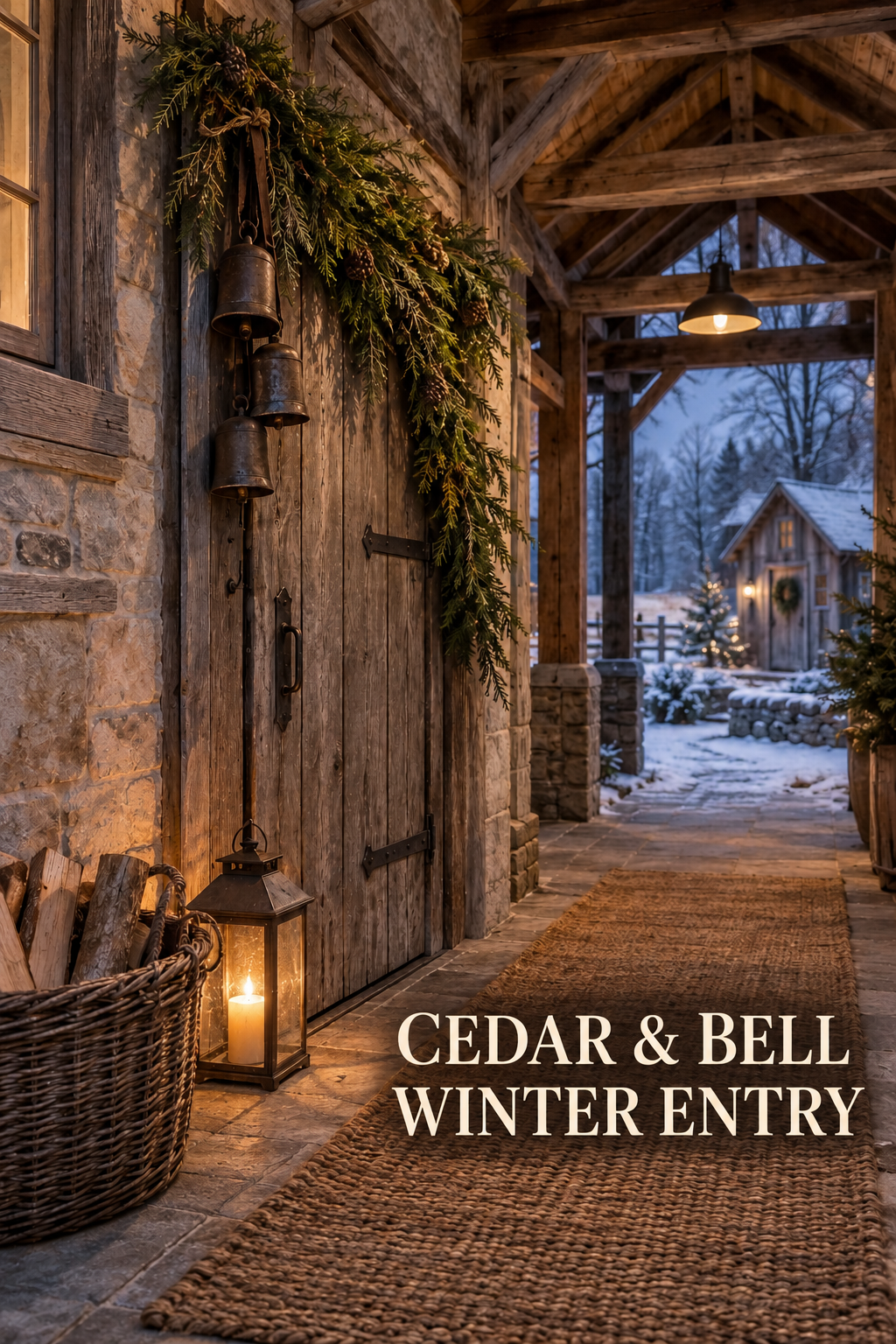
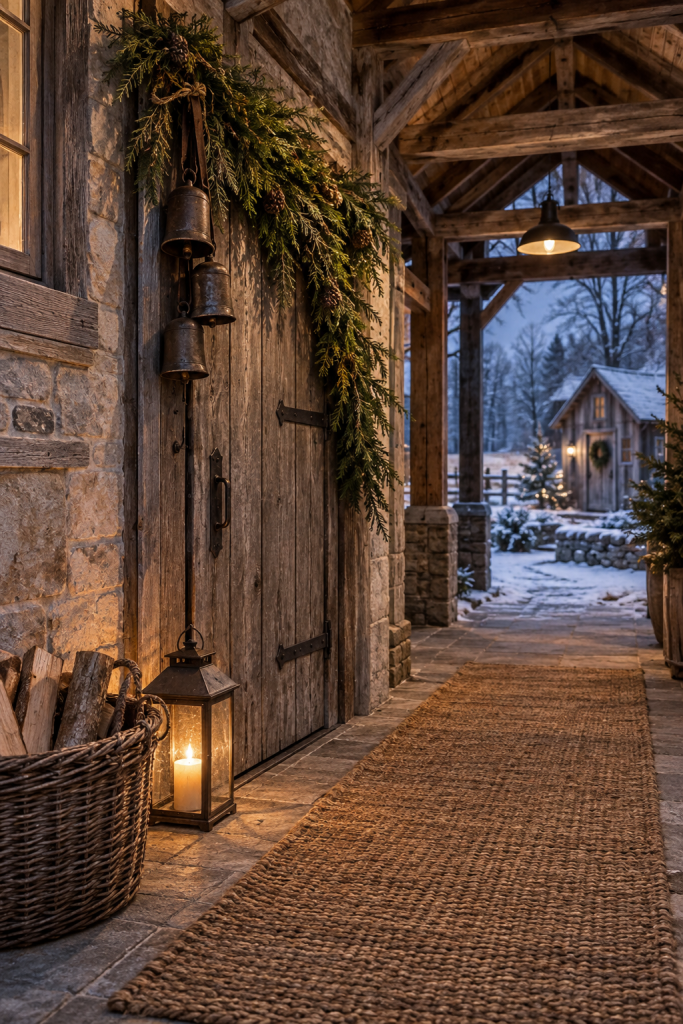
A covered breezeway offers room for winter decor, but it also has to handle wet shoes, firewood, deliveries, and people moving in both directions. This timber-and-stone passage keeps that practical job visible. A long cedar swag and three iron bells mark the plank door, while a floor lantern and wicker log basket stay tucked against the wall. A plain coir runner leads toward the snowy yard and the warmly lit outbuilding beyond.
Why the Entry Feels Welcoming Without Blocking the Route
The main decoration is vertical. Cedar begins above the door and falls along the left edge, following the height of the heavy timber opening. The bell cluster hangs within that green frame instead of projecting into the walkway. This concentrates the seasonal detail where the stone wall and weathered planks meet, leaving the long center of the breezeway visually quiet and physically clear.
Warm and cool light give the passage its sense of arrival. Amber illumination washes the stone, catches the bell rims, and glows inside the floor lantern, while the open end of the breezeway remains blue with snow and dusk. The overhead fixture repeats the warm tone farther down the route. None of these lights needs to be overly bright; their job is to identify the door, threshold, and walking surface.
Rough textures make the spare arrangement feel complete. Drooping cedar, dark patinated metal, split logs, woven willow, weathered boards, stone pavers, and coarse coir all belong in a sheltered outdoor setting. For a narrower entrance, I would preserve the wall-mounted greenery and the runner, then choose either the lantern or the log basket. Two floor pieces are not worth compromising a comfortable approach.
Key Pieces to Recreate the Look
Long Loose Cedar Swag
Choose flexible greenery long enough to cross the door top and descend on one side without reaching the handle. Irregular tips, visible branch direction, and a matte deep green will look more natural against rough timber.
Graduated Iron Bells on a Strap
A cluster of three related sizes creates a distinctive vertical accent. Look for a dark aged finish, free-moving clappers if sound is desired, and a substantial leather, rope, or metal support.
Stable Outdoor Lantern
Select a broad-based metal lantern with enclosed sides and enough room for a compatible flameless pillar. An aged black or bronze finish relates to the door hardware without disappearing against it.
Narrow Wicker Log Basket
A tall-sided basket contains split wood and adds a warmer woven surface beside the stone. Measure its depth carefully so handles and logs remain behind the edge of the walking lane.
Low Profile Coir Runner
The long natural runner defines the center route and catches debris. Choose a width that leaves visible flooring at both sides, with an edge low enough to clear doors and reduce tripping.
Weather Resistant Mounting Hardware
Use hooks, anchors, and ties rated for the swag’s combined weight and the actual wall or door material. Dark hardware can recede against timber, but it should remain accessible for seasonal removal.
Warm Exterior Lighting
A sheltered overhead fixture provides dependable path light, while the lantern adds a lower glow near the door. Verify outdoor ratings for the exposure level and avoid cords crossing the runner.
How to Style It for Everyday Use
Map the circulation zone before hanging anything. Open the door fully, mark the hinge arc, and walk the route carrying a box or laundry basket. Place the swag on the fixed wall side or beyond the hardware, then trim branches that brush the handle, shoulder line, or window. Bells should be able to move without striking glass, stone, or the door face.
Keep floor decor within one wall-side strip. Set the log basket nearest the storage or firewood destination and the lantern closer to the door, but leave separation between them so neither looks wedged in place. I would temporarily outline the planned footprint with painter’s tape before ordering a basket. Width measurements alone do not reveal how far curved handles or angled logs will protrude.
Center the coir runner on the natural line of travel rather than on the architectural opening if those lines differ. Flatten curled corners, add a suitable nonslip layer on smooth stone, and confirm that the runner drains and dries in the protected location. At the snowy end, leave enough exposed floor for wet footwear to transition without soaking the full length of the textile.
Use lighting to reveal hazards as well as decoration. An outdoor-rated flameless candle is safer than an open flame beside dry greenery and wood. Check that the lantern does not throw a confusing shadow across a step, and position the overhead bulb so the bell cluster cannot conceal the door handle after dark.
Shop Similar Pieces
Choosing Cedar for a Tall Doorway
Match the needed drop and flexibility before judging fullness. A loose, asymmetric swag with wired branches is easier to shape around hinges and trim than a dense garland made for a mantel.
Find a Secure Hanging Bell Cluster
Inspect the connection between each bell and its strap, along with the total hanging length. Three dark bells in graduated sizes should read clearly without reaching the handle or swinging into the wall.
Look for a Sheltered Outdoor Lantern
Prioritize a stable base, enclosed panels, corrosion-resistant construction, and room for an outdoor-rated LED pillar. A hinged door that opens easily will make battery changes simpler in cold weather.
A Log Basket That Stays Out of the Way
Measure the full exterior depth, including handles, and compare it with the wall-side allowance. A narrow upright basket can hold useful logs while occupying less walking space than a broad hearth-style carrier.
Select the Right Coir Runner
Confirm finished width, thickness, backing, and covered-outdoor suitability. The closest visual match is a plain natural weave, but safe door clearance and a flat, noncurling edge should determine the final choice.
Final Styling Tip
After a windy or icy night, check the lower cedar tips, bell strap, runner corners, and lantern door before using the passage. A thirty-second reset prevents a loosened seasonal detail from becoming an obstacle.