*This post may contain affiliate links for which I earn commissions.*
This image was created with AI and is presented as decorating inspiration.
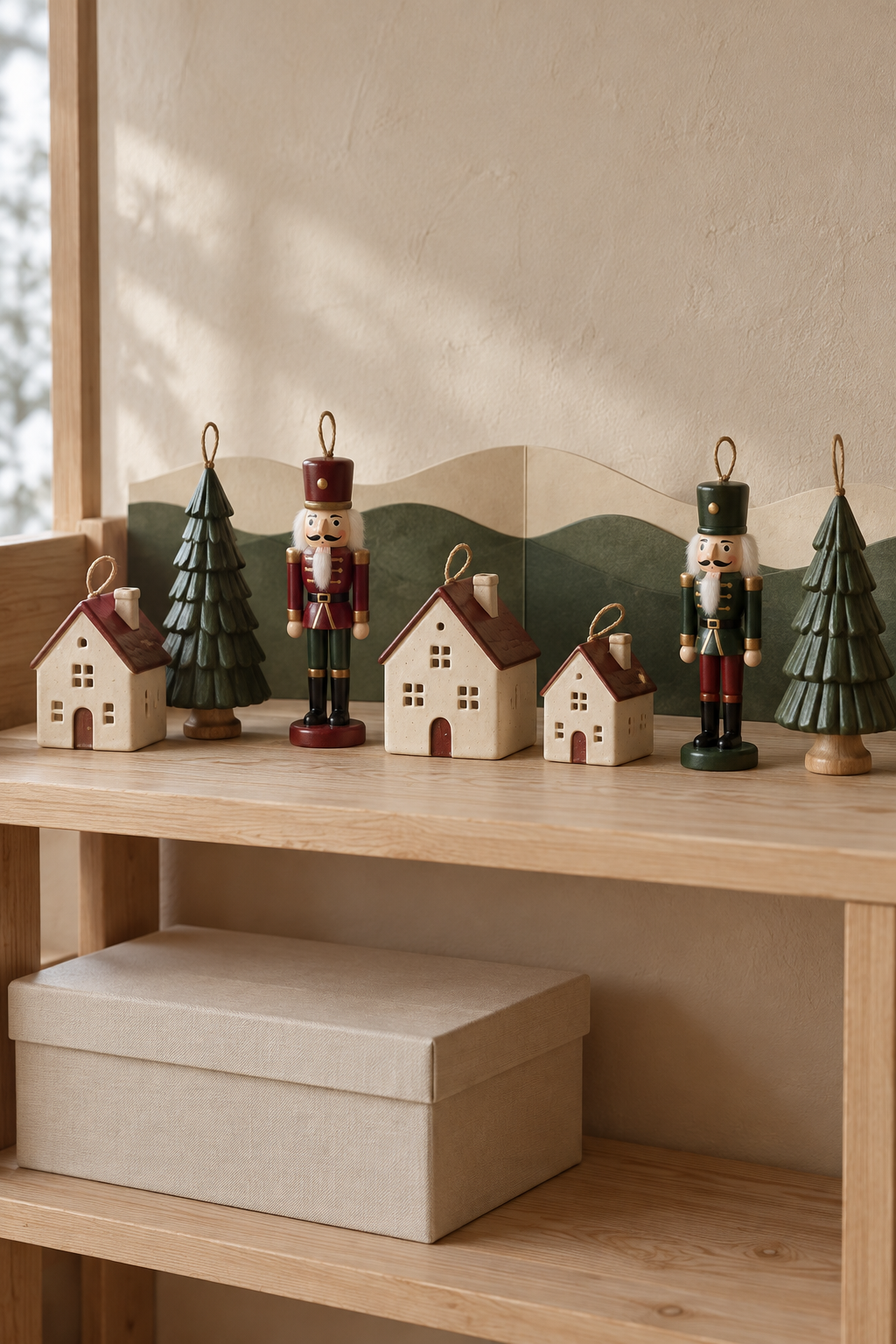
Small house ornaments, painted soldiers, and dark green trees form a little Christmas scene across an open wooden shelf. A folded landscape behind them gives the collection a setting, while the pale box below keeps the rest of the furniture quiet. The result offers a way to enjoy individual ornaments without hiding their details among tree branches.
You can adapt the arrangement using pieces you already own. Start with ornaments that can stand securely, then add a simple backdrop only if the collection needs help reading as one scene. The useful idea is the relationship between the shapes, rather than finding an identical seven-piece set.
What Makes This Look Work
A low horizon joins separate ornaments
The cream and green hills run behind the display without covering the taller figures. Their broad shapes connect the houses and trees into one landscape. Because the scenery stays simple, the small windows, rooflines, and painted uniforms remain easy to see.
The folds also give the backdrop depth without turning the shelf into a large installation. A flat print could provide a similar connection in a shallow space, although it would lose the gentle changes of plane shown here.
Dark vertical shapes break up the pale houses
The green trees and tall soldier figures interrupt the row of low cream houses. Their different heights keep the display from becoming a continuous strip of roofs. Oxblood details repeat across the uniforms and houses, linking the two families without making every object identical.
This is a useful balance for a mixed collection: repeat a few colors, then let silhouettes vary. Buying a matching item for every gap would make the shelf feel more like a store display than a seasonal arrangement at home.
The lower shelf gives the scene room
One pale storage box occupies the lower level. That quiet surface matters because the upper shelf already contains fine details and several hanging loops. Additional signs, greenery, or patterned baskets below would compete with the miniature scene. The warm wood and cream wall provide enough texture around it.
Key Pieces to Recreate the Look
Small house ornaments
Choose pale houses with readable rooflines and restrained red-brown accents. A flat underside is useful for shelf display; an ornament designed only to hang may need a separate stable stand or a different placement.
Miniature nutcracker ornaments
Compact soldier-style figures bring the upright shapes and painted details. Look for deep red and green clothing and a base that sits level, rather than a large floor nutcracker that overwhelms the houses.
Green tree ornaments
Tree forms supply a dark outline beside the cream buildings. Sculpted, matte-looking trees suit this scene, but simple painted wood silhouettes can work when their scale fits the other pieces.
Cardstock landscape backing
Cream and subdued green paper can create a low hill backdrop with folded support. Use card firm enough to hold its shape, and keep the hills broader and simpler than the objects in front.
Low open wooden shelving
An existing open shelf can provide the same display surface. Check that its usable depth accommodates both the ornaments and their backdrop without pushing fragile pieces toward the front edge.
Plain cream storage box
A closed box makes the lower shelf useful without introducing another motif. Choose a quiet finish and a shape that leaves some visible wood around it, so the lower level remains lighter than the scene above.
How to Style It at Home
Measure the actual shelf first
Use the available depth, width, and clearance above the shelf to set the scale of the collection. Measure the widest ornament bases and allow room behind them for the paper folds. If the furniture is shallow, omit the freestanding backdrop or use a flat backing secured appropriately for that surface.
Place the display where it can be viewed without frequent reaching over the objects. A narrow passage or heavily used drop zone may be better suited to fewer, less fragile ornaments. Follow the shelf manufacturer’s load and installation guidance for the furniture you use.
Arrange silhouettes before adding scenery
Set the tallest tree and soldier forms in place, then fit the lower houses between them. Let a few small gaps remain. You should be able to distinguish each roof and base from the adjacent piece when standing at your usual viewing distance.
Turn the ornaments slightly only where it reveals their details. A hanging loop can fall behind its ornament instead of stretching across another object. If an ornament cannot stand reliably, remove it from the row and use it on the tree rather than balancing it against a neighbor.
Make the hills support the collection
For a simple paper version, cut a broad, shallow hill profile into the upper edge of cream cardstock. Fold the sheet into a loose zigzag so its bottom edge stands along the back of the shelf. Add a smaller green hill layer in front, with its own folds, keeping both pieces low enough to leave the tallest heads and tree tips clear.
Dry fit the backing before making permanent creases. If it tips, broaden the folds or switch to a flat backing; do not rely on delicate ornaments to prop it up. The paper should remain scenery rather than become the largest object on the shelf.
Edit the lower level last
Put everyday storage back on the lower shelf after the Christmas arrangement is settled. A pale closed box works well, but there is no need to buy one if your existing storage is already simple. Remove brightly printed packaging and loosely piled items from the immediate view.
Check the arrangement in daylight and in the room’s usual evening lighting. If fine details disappear after dark, improve the room lighting instead of adding a tangle of wires through a compact ornament row.
Shop Similar Pieces
Check house bases as well as roof colors
Compare the actual dimensions and underside shown in listing photos. Some house ornaments have rounded bottoms or long hanging hardware that makes them awkward to display upright. A flat-based miniature house can be a practical substitute when the hanging version does not suit your shelf.
Find figures that belong at ornament scale
Confirm whether the listing describes hanging ornaments, tabletop miniatures, or full-size nutcrackers. Photos without a scale reference can be misleading. Look at the painted finish and the width of the base as carefully as the stated height.
Choose trees by silhouette
A solid green tree with tiered branches will read differently from a fuzzy bottle-brush tree. Either can create a woodland setting, but the firmer silhouette is closer to this image. Avoid buying a large assorted set if most pieces would have no place in the arrangement.
Compare paper colors together
Product photos can shift ivory toward white and forest green toward bright emerald. Check color descriptions and sample images where available, and choose paper weight according to the folds you plan to make. The backdrop needs enough firmness to stand while still creasing cleanly.
Final Styling Tip
Photograph the arrangement before packing it away. Keep the flat paper scenery with that photo so next year’s setup starts with the spacing that worked, while leaving room to change one or two ornaments.