*This post may contain affiliate links for which I earn commissions.*
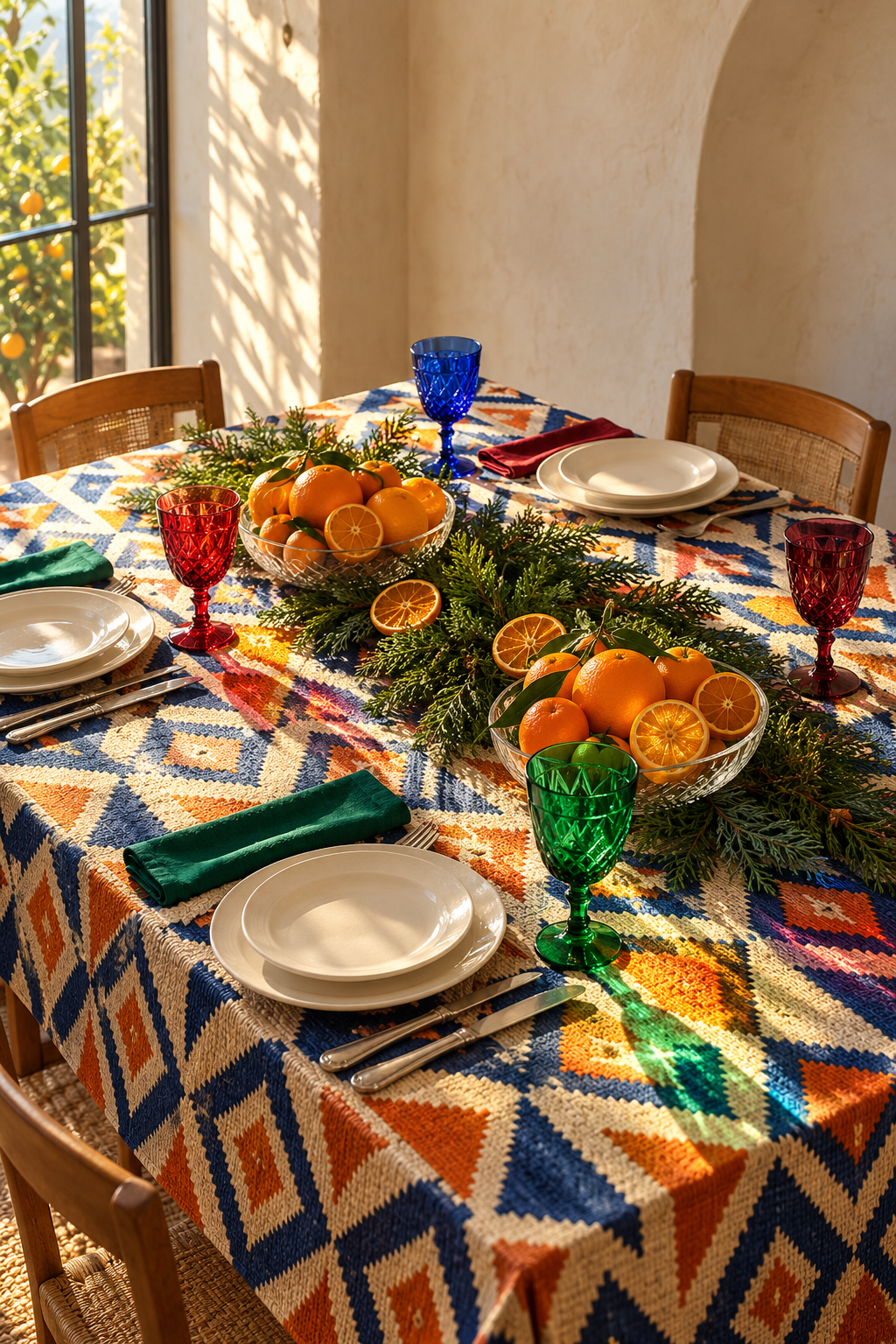
This image was created with AI to offer inspiration for your own holiday table.
Orange slices, jewel-colored goblets, and winter greenery give this Christmas table a sunny, generous feel. A blue-and-orange geometric cloth carries the pattern, while cream plates make each place setting easy to pick out. The strongest detail is the colored light falling across the fabric beneath the glasses.
You can borrow the citrus-and-glass pairing without replacing your whole dining setup. Start with your everyday dishes, then decide whether the cloth or the glasses will be your main addition. The idea works especially well for a Christmas breakfast or lunch when the table catches daylight.
What Makes This Look Work
The oranges connect the centerpiece to the cloth
The fruit repeats the orange shapes in the geometric textile, so the centerpiece belongs to the table rather than looking like a separate arrangement placed on top. Whole citrus gives the bowls volume; sliced rounds expose the smaller segments and translucent centers.
Colored glass changes the surface beneath it
Ruby, blue, and green goblets make a stronger impression than a matching clear set would here. Sunlight passes through them and produces small pools of color on the cloth. The effect depends on the light available, but the glasses still provide distinct color when the sun moves away.
Dark greenery gives Christmas a clear place
The low evergreen arrangement stretches between the fruit bowls and separates their bright orange contents from the busy fabric. Its loose tips soften the repeated diamonds. Because the foliage stays low, the table feels ready for conversation rather than arranged around an upright floral display.
Key Pieces to Recreate the Look
Translucent colored goblets
Look for jewel colors that remain transparent when held toward a window. Faceted or textured surfaces suit this example, while a shared stem height can make glasses from different sets feel related.
A blue and orange geometric tablecloth
A cloth with cream between the colored shapes leaves some quieter areas beneath the plates. Choose a pattern large enough to read around your dishes, rather than one that disappears as soon as the table is set.
Shallow clear serving bowls
Low bowls gather the citrus without hiding it behind a deep rim. Transparent sides also let the fruit remain visible from seated eye level.
Whole citrus and dried orange rounds
Oranges and smaller citrus create a relaxed mix of sizes. Dried slices can be used as decorative accents; keep a separate supply of fresh fruit if you also want to offer it to guests.
Evergreen sprays
Loose real or artificial sprays are easier to shorten for a breakfast table than a thick predecorated garland. Choose foliage with flexible side branches that can lie between the bowls.
Cream dishes and plain cloth napkins
Simple plates keep the place settings legible against the pattern. Ruby and emerald napkins pick up the glass colors without introducing another print.
How to Style It at Home
Reserve the middle for decoration and serve from elsewhere
Set out the plates, cutlery, and glasses before adding anything to the center. Sit at the table and check that elbows, napkins, and glass bases have enough room. Then place the bowls in the space that remains.
If the table is narrow, use one fruit bowl and shorter foliage rather than squeezing two bowls between full place settings. Put serving dishes on a nearby counter or sideboard, so the decorative center does not compete with the meal.
Use a tray while arranging the greenery
Build the foliage on a shallow protective tray or narrow washable base before moving it onto the cloth. That makes it easier to collect dropped needles or moisture and keeps decorative stems separate from dishes and fruit intended for eating.
Angle a few tips toward the bowls, then tuck the cut ends underneath. Stop when the two fruit groups feel connected. The cloth should still show between the sprays instead of disappearing beneath a solid green runner.
Check the glass colors at the time you will eat
Try a goblet in the actual dining spot during breakfast or lunch. Direct sun can make a rich green glass seem vivid, while the same glass looks almost black in a dim corner. Choose the glasses for the room you have rather than relying on a brightly lit product photo.
You do not need to reproduce the exact colored shadows. If the window faces away from the sun, let the transparent glass and orange slices provide the color on their own. Avoid moving drinks into awkward positions just to catch a beam of light.
Keep the fruit arrangement easy to remove
Nest whole citrus loosely inside the bowls, then add decorative dried rounds where they can be seen. Skip loose piles across the guests’ eating areas. A contained arrangement is quicker to lift when you need room for coffee, dessert, or a second course.
If you use fresh foliage, keep cut ends and any treatment residue away from food. Treat the dried slices among the greenery as decoration, and wash edible fruit separately before serving it.
Shop Similar Pieces
Compare how the goblets are colored
Check whether the color is part of the glass or applied as a surface finish, and follow the listed care instructions. A set sold for drinking should have usable rim and capacity information; decorative vessels are not a substitute for drinkware. Look through customer photos for color in ordinary daylight.
Check the tablecloth against the tabletop
Use your table’s actual length and width to work out the drop on every side. A centered product photograph can hide a cloth that is too short at the ends. Also check laundering instructions, since a fruit-filled lunch table needs a cloth you can clean comfortably.
Choose bowls by their opening and base
The top diameter determines how much fruit is visible, while the base determines how much space the bowl occupies between place settings. Avoid very narrow feet that make a broad bowl feel precarious when someone reaches past it. Use bowls intended for food contact if the fruit will be eaten.
Look closely at artificial greenery tips
Photos of the branch ends tell you more than a distant picture of the whole garland. Favor varied tips and a restrained finish over shiny molded foliage or heavy glitter. Check whether the stems can be separated or shortened before buying a long garland for a small table.
Final Styling Tip
Keep one clean napkin aside for a quick glass-polishing pass just before guests sit down. Side light makes fingerprints especially noticeable on dark colored goblets, and a brief wipe restores the transparent color that gives this table its character.