*This post may contain affiliate links for which I earn commissions.*
This image was created with AI to offer inspiration for your own home styling.
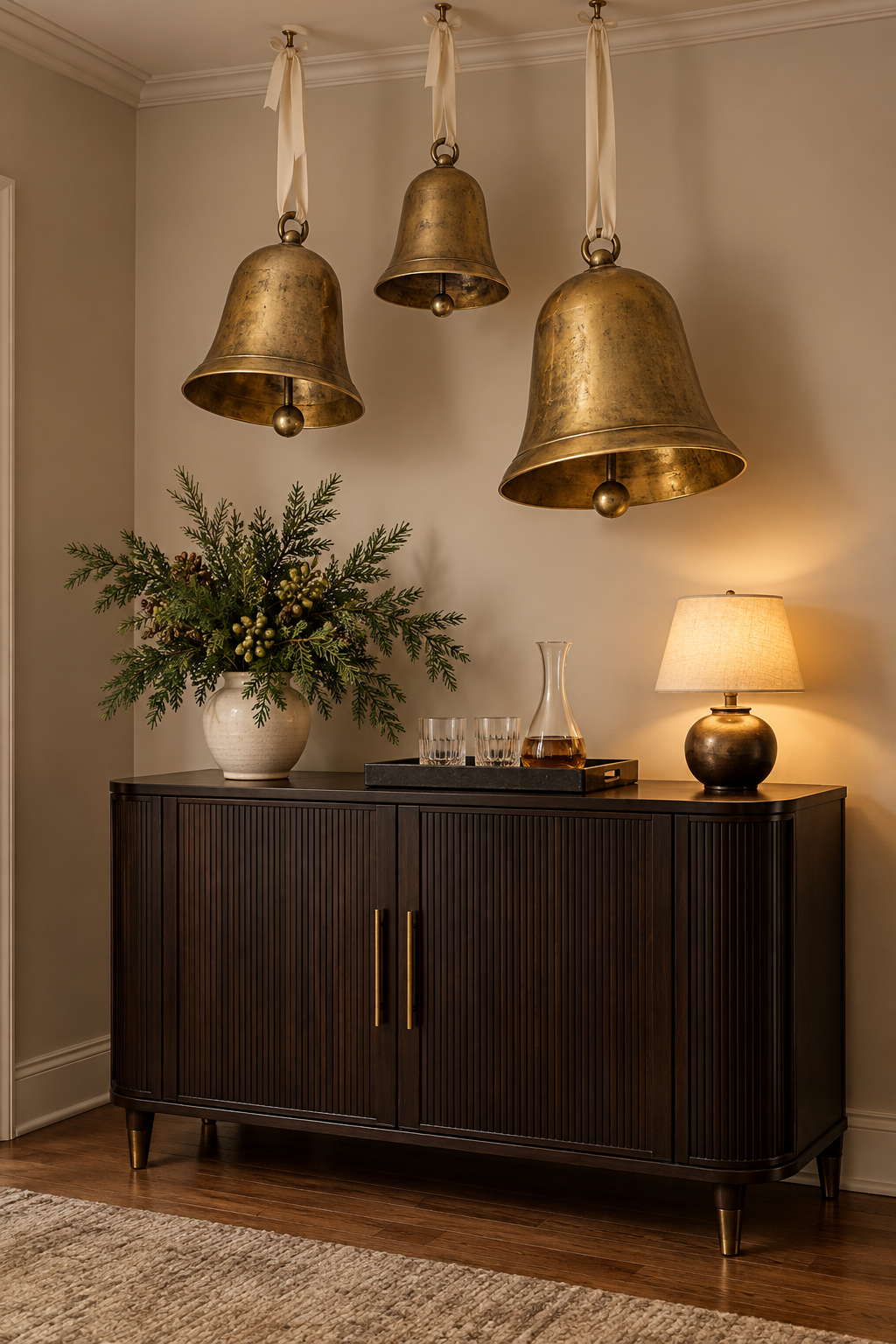
Gold-toned bells take the place of a usual wall picture in this holiday vignette. Cream ribbons stretch toward the ceiling, while a dark drinks cabinet holds a leafy arrangement, a tray of glassware and a warm lamp. The display feels substantial without spreading Christmas decorations across every surface.
What Makes This Look Work
Bell mouths give the hanging forms depth
The open rims and rounded clappers make these forms read as bells rather than plain gold ornaments. Their different sizes and heights let each outline remain visible. The largest bell occupies one side of the group, with a smaller shape higher in the middle, avoiding the stiff effect of a matching row.
The aged-looking finish also matters. Soft patches of darker gold catch the lamp glow unevenly, giving the broad surfaces something to show beyond their silhouette.
Cream ribbon separates metal from the ceiling
The long pale ribbons are part of the composition, not just hidden support. They connect the bells to visible upper attachment points and repeat the light shade of the vessel and lampshade below.
A fine metallic chain would make a different impression. Here, the ribbon keeps the vertical lines broad and soft, so the hanging arrangement does not compete with the cabinet’s narrow fluting.
A usable cabinet anchors the spectacle
The cabinet remains a clear, horizontal base under the larger forms. Greenery fills one end, the lamp sits at the other, and the central tray gives the glassware its own place. Those ordinary functions explain why the display belongs in a home dining area.
Keeping most decoration above the cabinet also leaves its doors accessible. That balance is especially useful when holiday decor must share space with everyday storage.
Key Pieces to Recreate the Look
Lightweight gold-toned decorative bells
Look for hollow decorative forms with readable flared openings and a subdued aged finish. These are the central feature, so choose their proportions before selecting smaller accessories; their real weight and attachment fittings matter as much as their appearance.
Cream hanging ribbon
A ribbon with enough width to remain visible can echo the pale accents below. Select it around the bell’s actual hanging fitting, and confirm the intended use rather than assuming any gift ribbon can carry the chosen object.
A compact dark cabinet
A brown or espresso-toned cabinet creates a grounded base for the gold. Similar vertical texture is appealing, but a plain cabinet can work if its top has room for a lamp and a small serving area.
A pale rounded vessel
The light vessel separates the greenery from the dark furniture. A rounded shape with a narrow enough mouth to contain the stems supports the compact arrangement without requiring a huge bouquet.
Evergreen stems
Fine branching foliage breaks up the solid bell surfaces. Choose greenery that can spread sideways above the vessel while leaving the central tray usable, rather than a tall cone that would collide visually with the bells.
A small shaded table lamp
The lamp supplies a warm pool of light at cabinet height. A compact rounded base and simple cream shade relate to the bell curves without becoming another oversized object.
A restrained serving tray
A dark tray gives the clear glasses and carafe a defined footprint. Handles can make it useful for serving, provided the loaded tray can be lifted without catching the surrounding decor.
How to Style It at Home
Choose the wall before the bells
Stand in the usual view of the cabinet and check how much wall and ceiling are actually visible. A low ceiling or a narrow cabinet may suit one bell beside the vignette rather than the pictured group.
Use temporary paper outlines to compare sizes. Hold them at proposed heights before making holes or ordering large pieces. A silhouette that looks generous from across the room can feel intrusive when you stand close to pour a drink. Include the open cabinet doors and the person using the top in that trial.
Match the suspension to the real objects
The image suggests a hanging arrangement but cannot establish the weight or installation requirements of a retail bell. Use decorative bells intended for the placement, and follow the product and mounting-system instructions for the actual combined load.
A ribbon can cover a suitable support where the product permits it; it should not conceal a guessed attachment. If ceiling mounting is unsuitable, adapt the idea with smaller bells on a properly supported wall display or stand them on the cabinet instead. The useful relationship is between broad bell forms and a dark base, not a requirement to copy every ceiling connection.
Arrange the vertical group before the tabletop
Decide on the hanging positions first. Separate the rims and clappers in your main viewing angle so the forms do not merge into one gold mass. Vary height enough to reveal each bell, then check the side view for unexpected overlap.
Keep hanging pieces clear of head movement, cabinet use and the lamp. Avoid placing greenery where it could brush the lamp or hang into the serving area. If a larger bell forces everything else into a narrow corner, reduce the bell scale rather than compressing the whole cabinet top.
Give serving and lighting their own space
Set the tray where it can be reached comfortably. Leave a strip of empty surface around it so a glass can be put down without hitting stems. Place the vessel to one side and turn its branching foliage away from the tray.
Position the lamp after those working areas are established. Route its cord where it will not catch in cabinet doors, and follow the lamp’s clearance guidance. Switch it on during the arrangement check: a finish that looks quiet in daylight may reflect strongly in the evening.
Shop Similar Pieces
Compare bell weight with the fitting
A product photograph does not distinguish lightweight decorative construction from a heavy working bell. Check the listed material, weight and hanging hardware together, and inspect whether the clapper and rim resemble the desired silhouette. A smaller verified bell is preferable to a dramatic listing with unclear mounting information.
Look at ribbon width beside the bell loop
Product close-ups can make a narrow ribbon look broader than it is. Compare its dimensions with the bell’s attachment opening, and check whether the material will fold through that fitting without bunching into a bulky knot.
Choose a vessel around the stems you have
Inspect the opening and base proportions, not only its front profile. A very wide mouth may require additional arranging support, while a tiny opening can restrict the lateral spread that makes this cabinet arrangement work.
Assess the lamp with its shade attached
Compare total assembled height and shade width with the usable cabinet depth. A compact base does not guarantee that the shade will clear the wall, greenery or hanging decorations. Also check where its switch sits so daily use does not require reaching through the display.
Final Styling Tip
Before the season ends, photograph the hanging positions and label the ribbon lengths when taking the display down. The next setup will be easier if the height order can be restored without measuring the entire arrangement again.