*This post may contain affiliate links for which I earn commissions.*
Image created with AI. Use this scene as inspiration for your own botanical Christmas display.
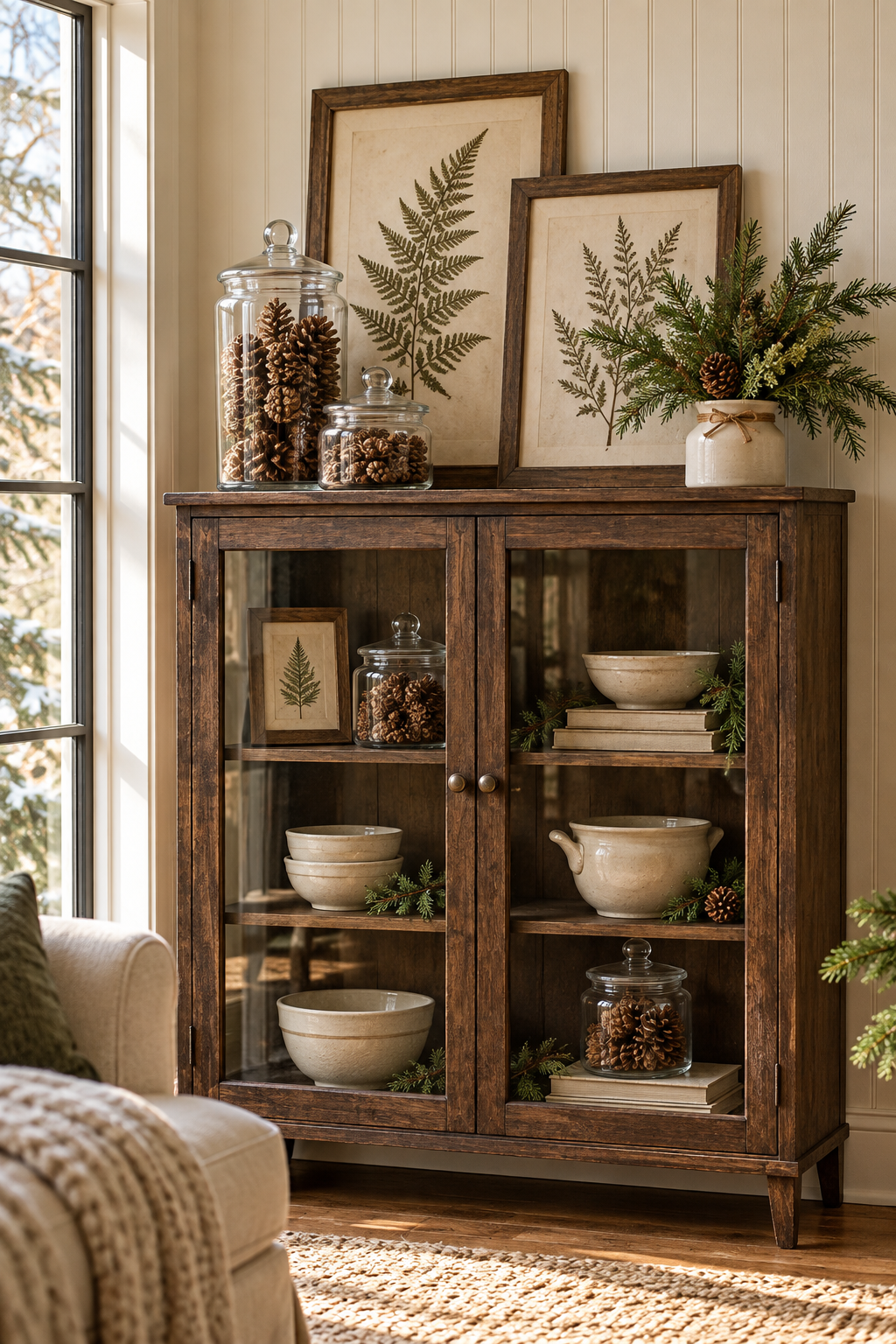
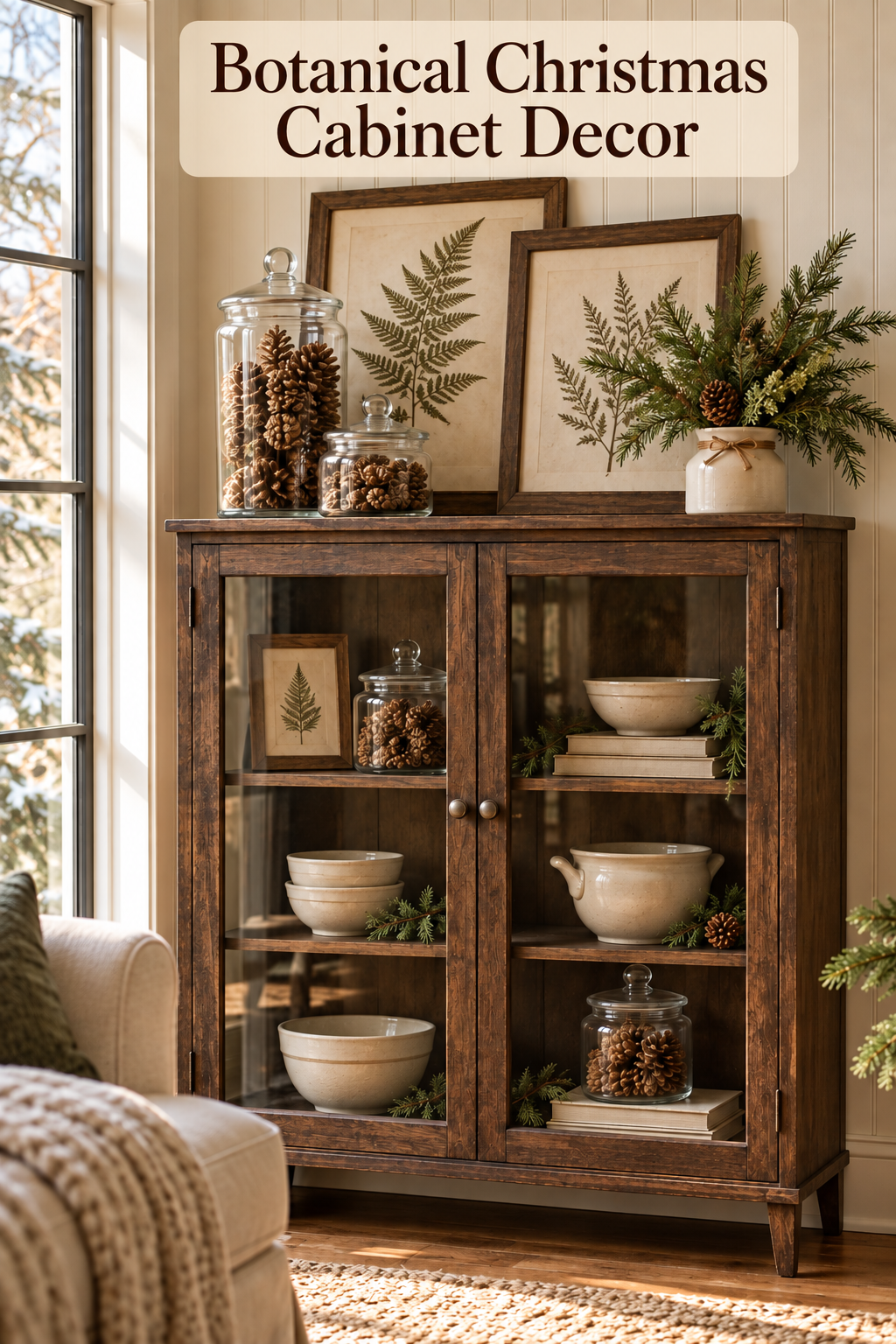
A glass-front cabinet can hold more than everyday dishes at Christmas. In this botanical scene, fern studies rise above a dark cabinet, pinecones sit inside clear jars, and loose evergreen branches bring the season to a collection that still feels at home in a living room.
The useful idea is the combination of enclosed specimens and open greenery. You can borrow that contrast with a cabinet you already own, a few nature-themed pictures, and containers suited to its shelves. The pieces do not have to match exactly to tell the same woodland story.
What Makes This Botanical Display Work
Fern outlines give the collection a subject
The large botanical pictures establish a clear focus. Their pale backgrounds reveal individual branching shapes, while the smaller framed study inside the cabinet repeats the theme at a different scale. That connection makes the arrangement feel collected rather than assembled from unrelated Christmas accessories.
The pictures also provide height without requiring a tall vase. Because their surfaces are relatively flat, they leave room in front for smaller objects. This is useful when a cabinet top is shallower than a dining sideboard.
Clear glass keeps the cones visible
The jars turn a loose natural material into distinct displays. Their transparent sides let the pinecone shapes show, and the different jar proportions keep the group from becoming a row of identical cylinders. Against the dark cabinet, the glass highlights separate the containers from the wood.
The closed doors carry that transparent quality down through the cabinet. You can see the arrangement inside while the door frames divide it into manageable sections. The repeated glass surfaces link the upper display to the shelves below.
A pale vase balances the dark storage piece
The small light-colored vase holds a branching evergreen arrangement beside the frames. Its rounded, solid form differs from the tall clear jar, and the foliage overlaps the botanical subject without covering every picture. Cream-colored dishes on the shelves echo the vase and lighten the cabinet interior.
The seasonal effect comes largely from the greenery and cones. Keeping the remaining objects quiet allows this display to feel festive without red ornaments, figurines, or a second competing theme.
Key Pieces to Recreate the Look
Botanical pictures in brown frames
Choose fern or leaf studies with readable silhouettes and plain pale backgrounds. Brown frames connect them to the cabinet, but a little variation in width or finish can keep them from looking like a newly purchased set.
Clear lidded display jars
A taller jar and a lower, wider one give the cones different settings. Use shapes that leave enough clear glass around the contents to show what is inside, rather than heavily patterned containers that obscure the specimens.
Natural-looking pinecones
Plain brown cones carry the woodland theme. A mix of shapes can be effective, provided the group stays contained and the largest cones fit through the jar opening without being forced.
A short ivory vase
The light vase offers a quiet base for the greenery. A compact body helps keep the botanical pictures dominant, while an opening suited to a few spreading branches gives the arrangement a natural outline.
Loose evergreen stems
Branching stems soften the rectangular cabinet and frames. Choose a small group with visible individual tips, and avoid a dense premade bouquet that hides the neighboring picture.
Glass-front storage
An existing glazed cabinet is a good starting point. Its shelves allow the theme to continue below the main arrangement, so you can leave the top relatively focused instead of squeezing every accent onto one surface.
How to Style a Cabinet at Home
Work with the doors closed first
Clear the cabinet top and look at the shelves through the closed doors from your usual seating position. Note which sections are easy to see and which are interrupted by wooden rails. Place the most recognizable specimen where its outline will remain legible through the glazing.
Then open the doors and check the practical shelf depth. Keep jars and frames back far enough that the doors close naturally, and preserve access to dishes you actually use. A holiday display should not make ordinary storage awkward for the whole season.
Build a top group with uneven heights
Start with the pictures, using stable easels or secure support appropriate to their size and your cabinet. Add a tall jar beside them, then a lower jar nearby. The difference in height should let each lid and frame edge remain distinct.
Place the greenery at the other end and trim or bend suitable stems so they do not cover the entire smaller picture. Step back before adding anything else. A few separate outlines often communicate the collection more clearly than a continuous band of decoration.
Let the shelves alternate their emphasis
Use one shelf for a small botanical accent and another for practical pale ceramics. You do not need to repeat every top-of-cabinet ingredient inside each door. Slight differences between shelf groups make the display feel more like useful household storage.
If you include books beneath an accent, use a level, stable stack and keep any loose greenery clear of paper you want to protect. Skip the stack entirely when it makes an object difficult to lift out.
Keep real greenery easy to manage
Place fresh stems in a suitable watertight container and protect the cabinet finish from moisture. Check them as they dry and remove fallen needles before they collect in door tracks or on dishes. Faux stems can be a practical alternative when the cabinet is difficult to reach.
Use the amount of foliage that your surface can accommodate. Extending branches toward a window may look appealing in a scene, but they should not interfere with curtains, a window handle, or the passage beside the cabinet.
Shop Similar Pieces
Check the artwork before choosing the frame
Compare the botanical image, background tone, and orientation as well as the outer frame dimensions. A listing photograph may include extra display props, so confirm which framed pieces are actually included and whether hanging or standing hardware is supplied.
Jars that you can fill and clean
Look for a usable opening, a stable base, and a lid you can remove comfortably at shelf height. Check the stated material and dimensions; a small vanity jar or plastic canister may create a different effect from the clear display glass shown here.
Choose greenery by its branch shape
Product close-ups should show the individual tips and how widely the stems can spread. Compare stem length with the vase and the neighboring artwork, rather than assuming a full bouquet pictured in a listing will arrive as one ready-made arrangement.
A vase suited to the surface
Check the actual base width, opening, and finish before buying. If you plan to use fresh greenery with water, confirm that the vessel is intended to hold water; a decorative ceramic shell may need a separate liner.
Final Styling Tip
View the cabinet once from the seat where you spend the most time. If daylight reflections hide the small botanical picture behind a door, move that picture within the shelf or adjust its angle slightly. That small change can make the collection readable in everyday use, not just from the photograph’s viewpoint.