
*This post may contain affiliate links for which I earn commissions.*
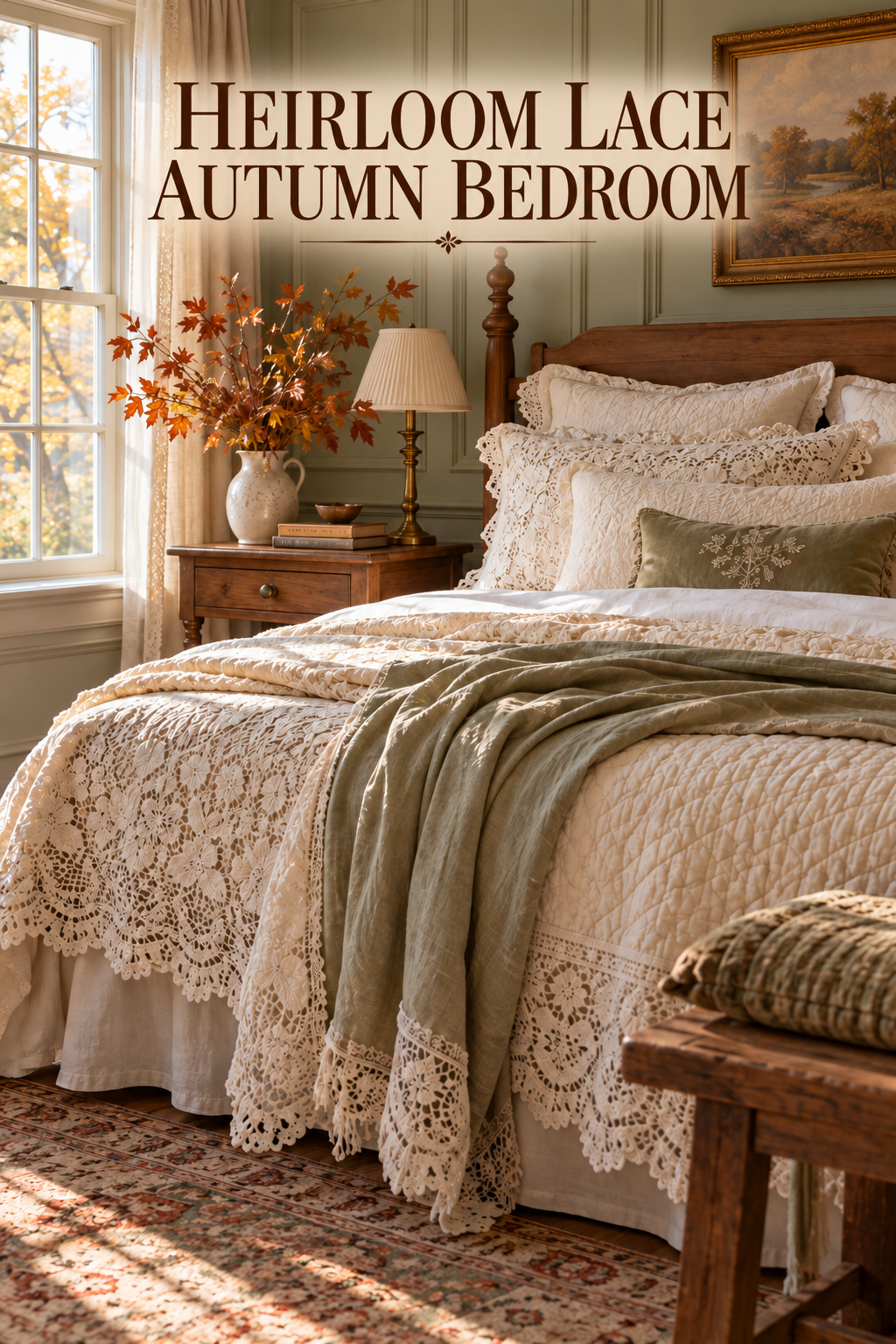
The image was created with AI. The suggestions below translate its visible styling into choices for a real guest room; they do not identify the rendered bedding as a specific retail set.
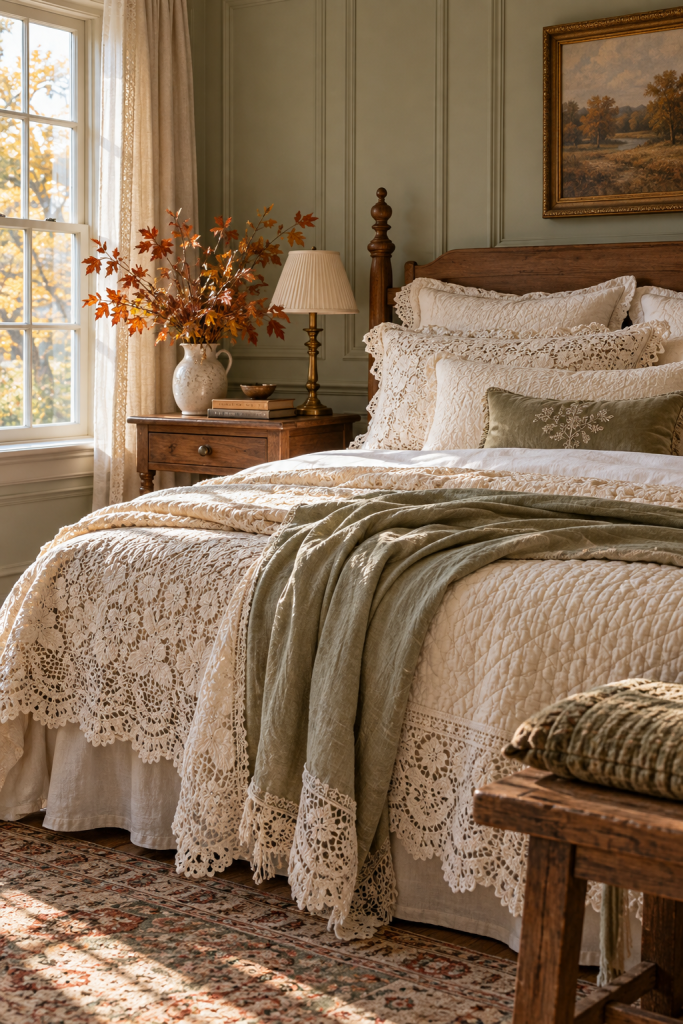
The bed in this autumn inspiration image is dressed in pale lace and quilted textures, with a sage throw folded loosely across its foot. A vase of russet branches provides the seasonal cue beside the window. Rather than using pumpkins or overt fall signs, the room lets daylight, textiles, and one branch arrangement carry the change in season.
What Makes This Look Work
Lace becomes the main texture
The lace is visible on pillow edges and across the bed, so the pattern remains readable even where the fabric folds. Its cream tone keeps the many openings and floral shapes from feeling busy. Against a warm wood bed, pale lace can be the decorative feature without an additional printed duvet competing for attention.
Sage interrupts the cream gently
The throw brings a muted green band across the lower half of the bed. That color also appears in a small cushion, but the room does not rely on perfectly matched fabric. The slight difference in texture between throw and lace keeps the layers distinct when seen from the doorway.
Branches mark the season at one edge
Russet leaves in a pale vase are placed on the bedside table, away from the sleeping surface. Their height balances the bedposts and the window without putting fragile foliage above pillows. Morning light makes the leaves a clear autumn accent while the rest of the room remains useful year-round.
Wood and daylight keep the layers grounded
The headboard, nightstand, and bench provide solid, simple shapes beneath delicate textiles. Light from the window reveals the raised quilt pattern and lace edges. That contrast is why adding another heavily patterned object is unnecessary: the materials already provide more than enough detail.
Key Pieces to Recreate the Look
Cream quilted coverlet
Choose a washable coverlet with enough body to hold soft folds. A subtle stitched pattern gives texture without making the lace hard to read.
Lace-edged pillow shams
These place the heirloom detail near the headboard where it is most visible. Look for a secure, comfortable edge rather than stiff trim that might scratch a sleeper.
Lace layer or bedspread
A lace top layer creates the broad patterned area across the bed. Check that its drop suits the mattress and does not drag where guests walk.
Muted sage throw
One green textile breaks up the ivory. A flexible, midweight fabric drapes more naturally than a rigid quilt and can be moved to a chair when the bed is used.
Sage accent cushion
A small cushion echoes the throw without adding another print. It should be easy to remove at bedtime and should not crowd the sleeping pillows.
Pale ceramic vase
The light vessel keeps the autumn branches prominent. Choose a base with enough weight to steady tall stems on a narrow nightstand.
Russet faux branches
Artificial stems provide the leaf color without dropping foliage near bedding. Flexible branches let you control height and keep the lamp and window unobstructed.
How to Style It at Home
Begin with the usable bed
Make the bed with the quilted coverlet first and check that it can be turned down easily. Add the lace layer over it, allowing some quilt texture to remain visible. Avoid piling multiple heavy covers onto a guest bed, especially if the room temperature varies.
Frame the pillows without a wall of cushions
Stand the lace shams against the headboard, then place one smaller accent cushion in front. Guests should be able to clear the bed in one movement. If the headboard is short, use fewer large pillows so the wood remains visible.
Drape the green layer asymmetrically
Fold the sage throw loosely across the foot, leaving a corner of the lace in view. The diagonal is enough to break up a broad expanse of cream. Smooth the center of the mattress so the arrangement still looks comfortable rather than staged beyond use.
Keep branches clear of the lamp
Set the vase on the side of the nightstand furthest from a lamp or frequently used outlet. Rotate the stems until no leaf blocks the lamp switch or window opening. If the surface is too narrow, use a low arrangement on a dresser instead.
Shop Similar Pieces
Review care labels for the coverlet
Check laundering requirements, weight, and dimensions after shrinkage. Bedding that can be cleaned between guests matters more than reproducing an exact stitched motif.
Inspect the lace finish
Compare how the trim is sewn to the shams and how the top layer handles regular use. Soft edges and reinforced seams help the look survive more than one season.
Feel the sage throw
Choose a fabric that drapes over the foot of the mattress without slipping off immediately. Compare undertones in daylight against the cream bedding.
Check the vase footprint
A weighted base and modest diameter are useful on a busy bedside table. Measure the remaining space for a phone, book, or water glass before buying.
Final Styling Tip
Keep a clear spot beside the bed for a guest’s own belongings. If the branch arrangement takes that last space, move it to the dresser and let the bedding remain the room’s focal point.