
*This post may contain affiliate links for which I earn commissions.*
This inspiration image was created with AI.
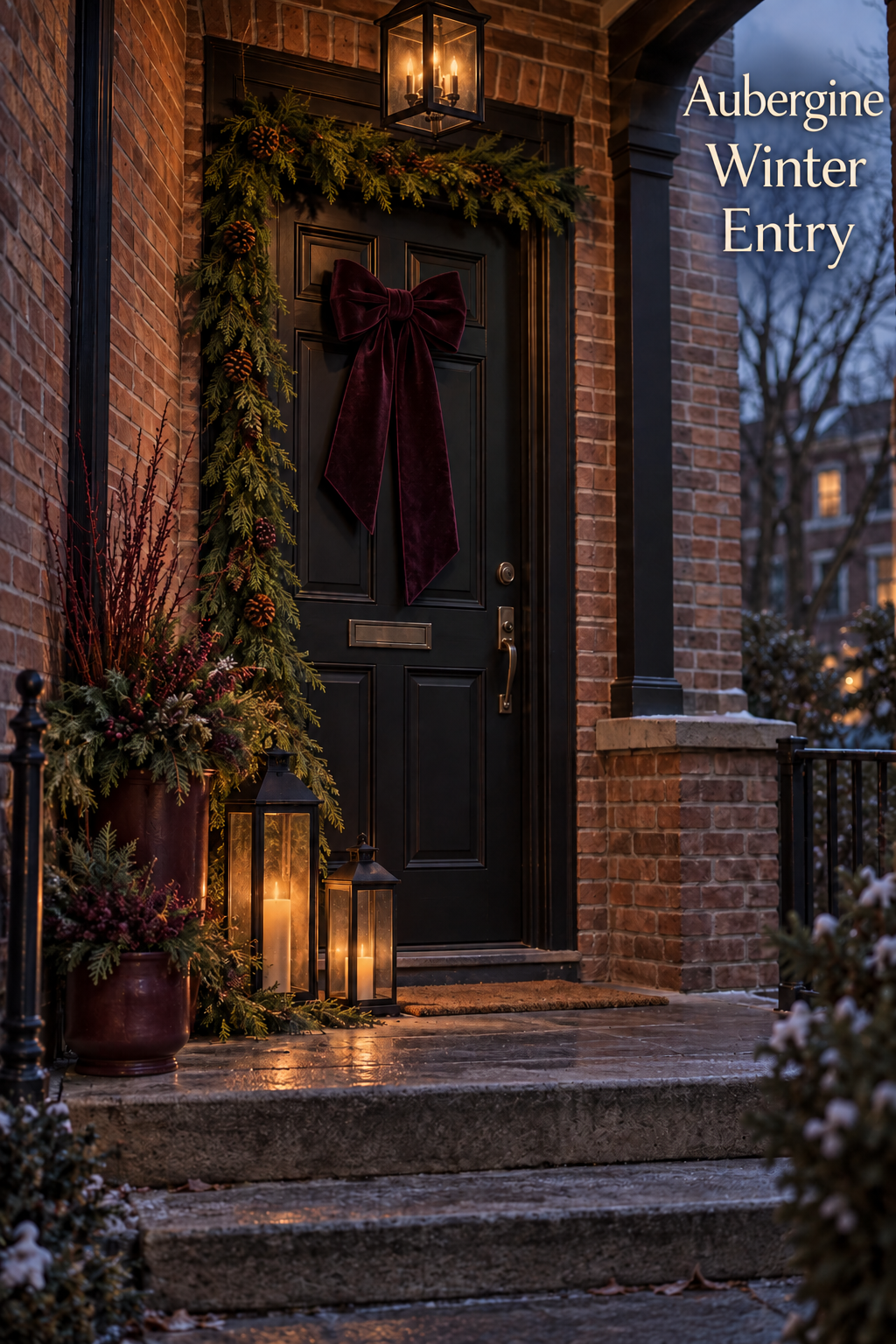
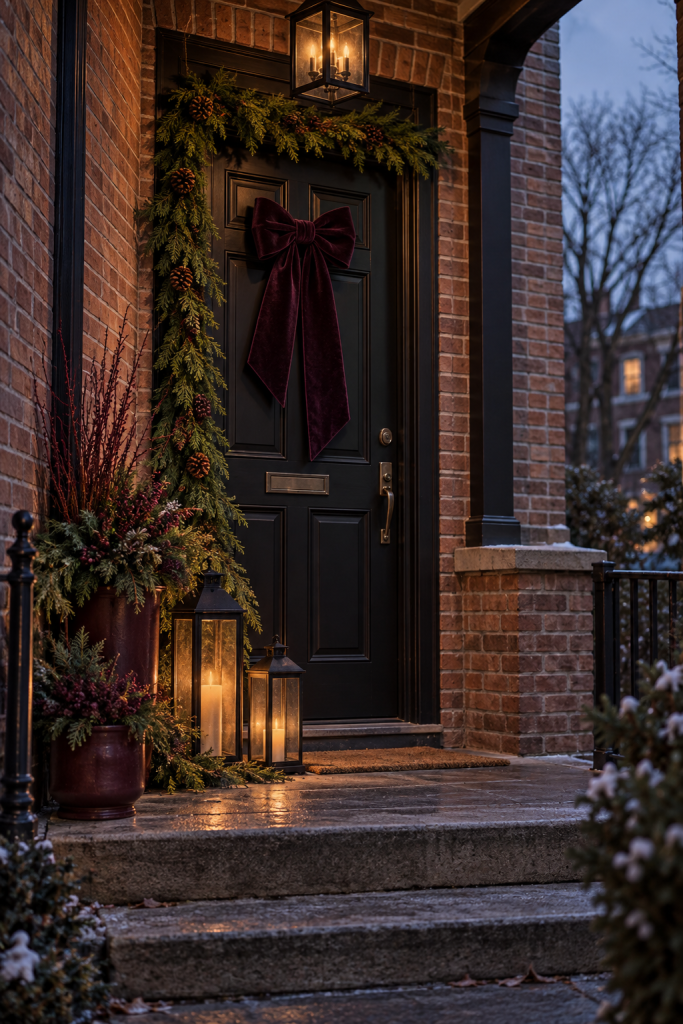
Aubergine velvet brings unexpected depth to a winter entry, especially when it is paired with a black door, old brick, cedar, and warm lantern light. In this compact townhouse scene, one large bow supplies the focal point while greenery, wine-toned planters, and a small lantern group stay concentrated on one side. The result feels dramatic without sacrificing the usable threshold.
This is a useful alternative to bright red holiday porch decor. The color still feels festive, but its cooler undertone connects naturally with black paint, evening sky, and weathered masonry. It can also remain in place after Christmas when the arrangement avoids overtly themed signs and novelty figures.
Why This Winter Entry Feels Rich but Usable
The palette does most of the expressive work. Aubergine and wine tones sit close to burgundy but feel cooler and more shadowed, which suits blue-hour light. Matte black architecture gives the colors a crisp edge, while brick and cedar prevent the scheme from feeling too formal.
Asymmetry is equally important. The planters and lanterns form a vertical cluster on the hinge-side edge of the stoop, leaving the latch, mat, and approach readable. The garland continues that line up and across the door frame. Because the right side stays comparatively open, the entry has breathing room and the bow remains the unmistakable focal point.
The arrangement uses a deliberate sequence of heights. Bare wine-colored branches begin close to the floor and rise toward the garland, while the two lanterns occupy the middle and lower levels. That progression connects the ground display to the door surround without requiring decoration on both sides. The porch ceiling light already provides an architectural glow above the bow, so another hanging ornament would be unnecessary.
Key Pieces to Recreate the Look
Wide Aubergine Velvet Ribbon
A generous ribbon width makes a door bow visible from the sidewalk. Choose material intended for the conditions at your entrance and confirm how it should be protected or stored.
Natural Looking Cedar Garland
A flexible garland can follow the door trim without projecting far into the opening. Sparse branching often looks more believable than an extremely dense molded strand.
Dark Metal Lanterns
Two or three lanterns in graduated sizes create a contained pool of light. Select stable outdoor-suitable designs and follow the lighting product instructions.
Wine Toned Outdoor Planters
Deep red-brown or aubergine containers repeat the bow color at floor level. Their footprint should suit the landing without narrowing the walking route.
Winter Branch and Evergreen Fillers
Upright bare branches extend the composition, while cedar or fir-like foliage softens the planter rim. Use materials appropriate to local weather exposure.
Low Profile Doormat
A simple mat defines the doorway without adding another motif. It should lie flat and remain clear of the door swing.
How to Build the Entry Around Clear Access
Stand inside and open the door fully before placing anything. Mark the swing area and the path a visitor naturally follows from the step to the handle. The mat, lanterns, and planters should remain outside those zones. Also check the view through any peephole, camera, sidelight, or nearby window before the arrangement becomes difficult to move.
Secure the garland with exterior-appropriate hardware recommended for the actual trim material. Begin at the upper hinge-side corner, continue across the head of the door, and allow only a short return on the latch side. I would avoid framing both vertical sides on a compact stoop because the extra volume can crowd the handle and make the doorway feel narrower. Step back after each attachment point and correct any sag before adding the next section.
Attach the bow to a suitable hook or hanger rather than relying on the ribbon tails for support. Shape the loops after the bow is mounted, then trim or fold the tails so they cannot catch beneath the door. From inside, open and close the door several times while watching the tails and the garland return near the latch.
Place the taller planter behind the lantern group and the smaller planter slightly forward. This creates depth while keeping the light visible. If the landing is shallow, use one planter rather than squeezing in two. I would protect the clearest step edge first, since a narrower display with visible footing is more welcoming than a fuller display that asks visitors to navigate around it.
Test the arrangement from the bottom step at night. If the doorway hardware disappears, move one lantern outward rather than adding more lights. Check that light does not produce distracting glare in a door camera or window. Use only candles or lighting devices appropriate for the lanterns and location, and keep greenery at the clearances required by the actual products.
Finally, view the entrance in daylight. Lantern cords, battery boxes, clips, and planter supports that disappear at dusk may be obvious in the morning. Reposition or conceal them only in ways approved for the actual products and mounting surfaces. The objective is not to hide every practical component, but to keep the display tidy and secure from both viewing conditions.
Shop Similar Pieces
Look for Weather Suitable Velvet Ribbon
Match the deep aubergine color first, then consider width, edge structure, and the maker’s guidance for moisture and outdoor display.
Choose a Flexible Cedar Garland
The strand should bend around trim without bulky joints and should have enough open branching to reveal the black door frame.
Compare Outdoor Lantern Construction
Prioritize stable bases, enclosed light sources, and clear indoor or outdoor use guidance. Graduated sizes are useful, but safe placement matters more than exact matching.
Find Planters with a Compact Footprint
Measure the usable non-traffic side of the landing and select containers that provide height without extending into the approach.
Final Styling Tip
After windy or freezing weather, check the bow attachment, garland fasteners, planter stability, and mat edges before relighting the display or welcoming visitors.