
*This post may contain affiliate links for which I earn commissions.*
This inspiration image was created with AI.
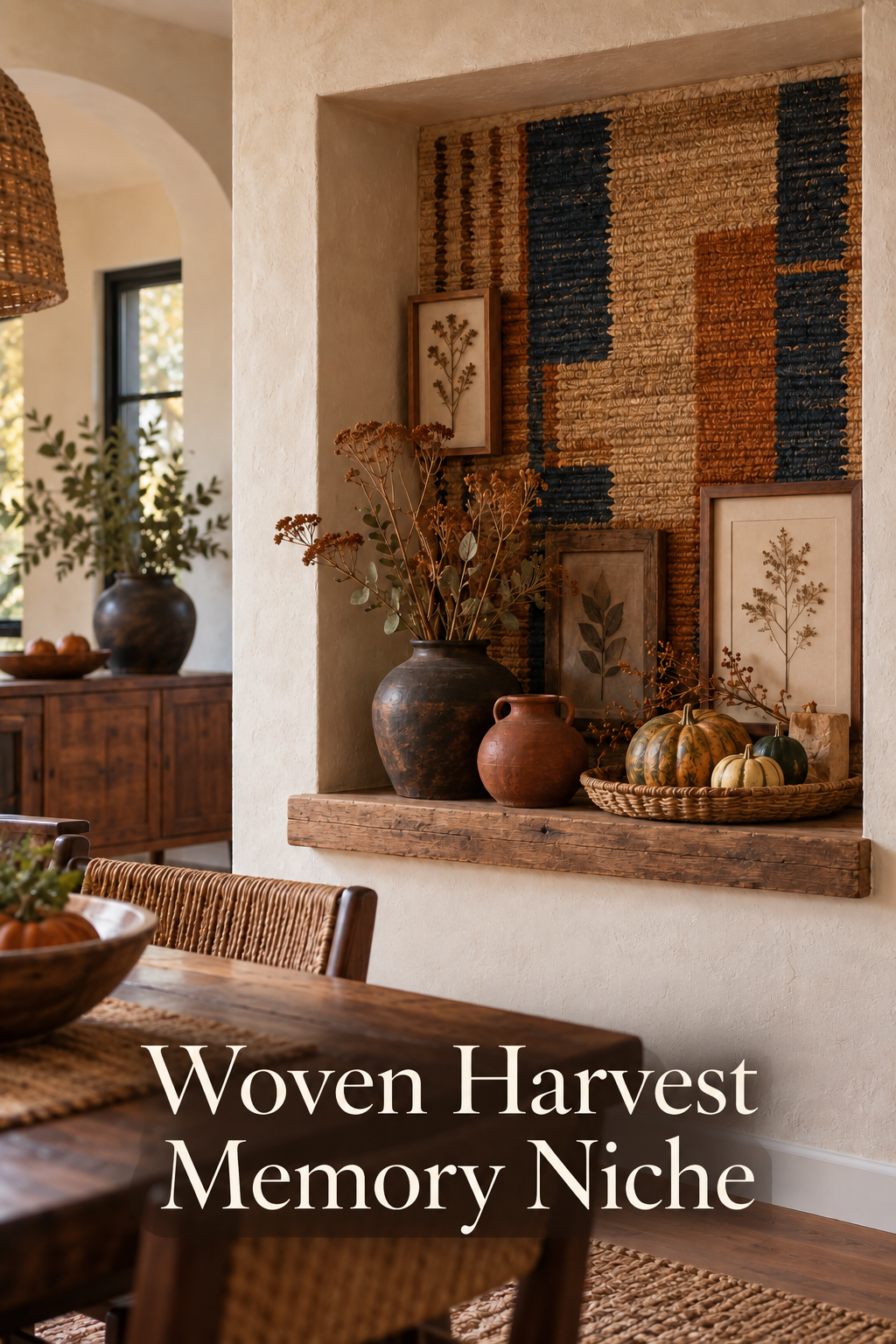
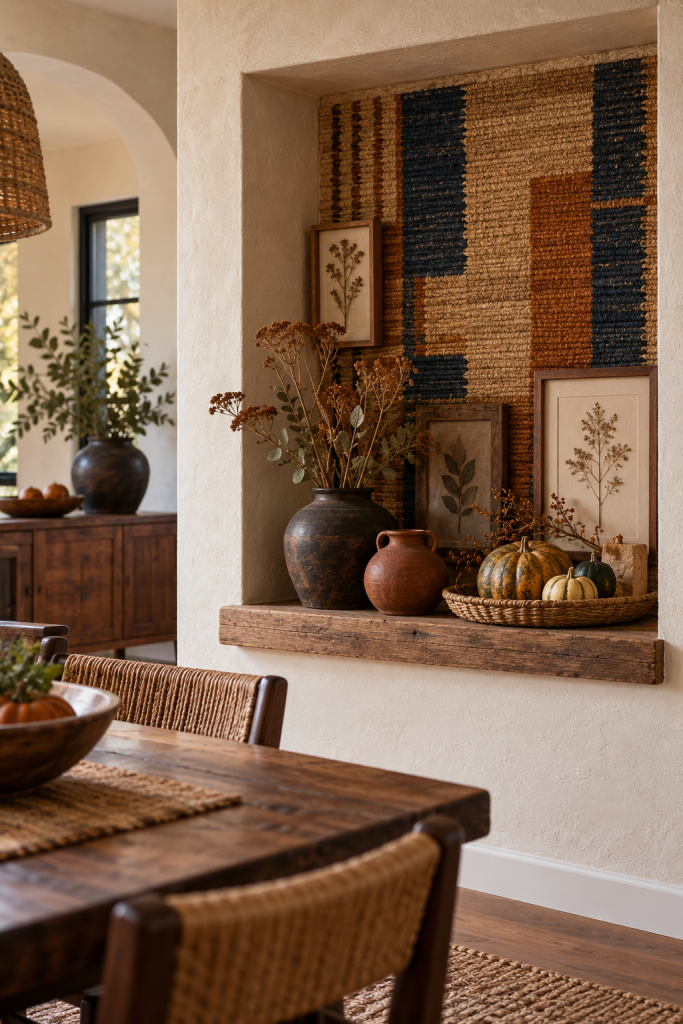
A recessed wall can carry the seasonal atmosphere of a dining room without claiming the dining table. Here a boldly patterned woven backdrop sits behind modest botanical frames, earthen vessels, dried stems and a basket of gourds. The arrangement has the gathered, tactile character of an artisan display and enough empty space around its edges to let each element register.
What Makes This Look Work
The recess gives the display its boundary
The plaster opening frames the arrangement before any decorations are added. Its thick sides and sturdy lower ledge create a clear foreground and background. That built-in boundary is why the tapestry can be visually strong without making the dining area feel crowded.
A textile backdrop carries the palette
Broad bands of dark blue, warm brown and natural fiber bring color into a largely neutral room. The pattern stays behind the smaller objects, so it reads as one continuous surface rather than a collection of competing accents.
Botanicals connect the keepsakes to harvest
The framed plant studies and loose stems repeat leaf and seed shapes at different scales. A few gourds add an unmistakable Thanksgiving cue. The display stays more restrained than a shelf filled from end to end with seasonal objects.
The textile does not have to fill the entire depth of a real niche. If the wall is shallow, hang a narrower panel so its edges remain visible and the frames can sit on the ledge rather than press into the cloth. A frame placed in front of a deep, textured weave needs a stable easel or its own wall fixing; leaning it precariously against a gourd is a poor substitute.
Choose the strongest woven pattern first, then let that piece determine the artwork and vessel colors. Here the blue blocks provide a dark anchor while warm brown repeats in the stems and smaller vessel. A second equally bold textile would split attention. In a compact room, a single patterned surface is usually enough to make the niche the focal point.
Key Pieces to Recreate the Look
Woven wall textile
Choose a flat piece with a distinct large-scale pattern; fine details may disappear behind the frames. Check how its hanging edge can be secured inside a recess.
Botanical artwork and frames
Mix frame sizes but keep the artwork subdued enough to sit against a patterned backdrop. Use lightweight frames and mounting suited to the wall.
Low-profile vessels
An earthen or matte-finish vessel gives dried stems a stable base. A second smaller shape adds variation without blocking the artwork.
Dried branches and seed stems
Select a few stems with different silhouettes. Trim them so their tops stay inside the niche and do not brush against the textile.
Basket or shallow tray
A shallow woven container groups the gourds and keeps them from rolling across the ledge. It should leave space in front of the frames.
Decorative gourds
A small mix of shapes establishes the harvest season. Look for sound stems or a realistic faux finish rather than an identical matched set.
How to Style It at Home
Measure the niche before shopping
Record the clear width, depth and usable shelf length. Leave visible plaster around the textile so the recess still looks architectural. Confirm that any mounted piece can be removed without damaging the wall.
Anchor the textile and place the largest frame
Secure the backdrop first. Position one frame off center, then use smaller botanical studies to balance it. The artwork should not depend on the stems to stand upright.
Build a low foreground
Set the largest vessel to one side and group the gourds in a tray on the other. Keep the lower ledge visible between them; that gap helps the arrangement feel collected rather than packed.
Check the dining-room sightline
Sit at the table and look toward the niche. If a branch hides the main artwork or projects into the room, shorten or remove it. The seasonal display should not interfere with chairs or circulation.
For a real Thanksgiving gathering, keep the display separate from serving dishes and seating. A ledge above a sideboard can work if guests have a clear route to food and drinks. If it is behind the dining chairs, allow for chair backs when they are pulled out. The attractive front view in an image does not show every clearance needed in use.
Dried materials are easiest to maintain when stems are grouped by height and secured in a vessel with a sufficiently weighted base. Avoid placing loose stems where a door, fan or passing guest could disturb them. Preserved botanical prints offer a similar visual connection to harvest if real dried arrangements are too fragile for the space.
To adapt the idea without an actual architectural niche, use a narrow console beneath a wall-hung textile. Keep the same three layers: patterned background, framed botany at mid-height, and a low harvest grouping in front. This creates depth without pretending that a freestanding shelf can bear the same arrangement as a built-in ledge.
If the textile has a handwoven origin, follow its care guidance and avoid direct contact with damp plant matter. Faux gourds or a lined shallow basket can reduce transfer to the cloth and shelf. This is particularly useful if the display stays up from early fall through Thanksgiving rather than appearing for one dinner.
Shop Similar Pieces
Backdrop with secure hanging
Check textile width and weight against the recess and mounting points.
Frames that can be mixed
Compare profile depth and hanging hardware, not only frame finish.
Vessel with a stable footprint
Prioritize base width and opening size for the intended stems.
A shallow gathering basket
Check diameter and lip height so the gourds remain visible.
Final Styling Tip
Before guests arrive, remove any dried stems that shed directly over the dining area; a quick trim keeps the ledge tidy through the gathering.