
*This post may contain affiliate links for which I earn commissions.*
This inspiration image was created with AI.
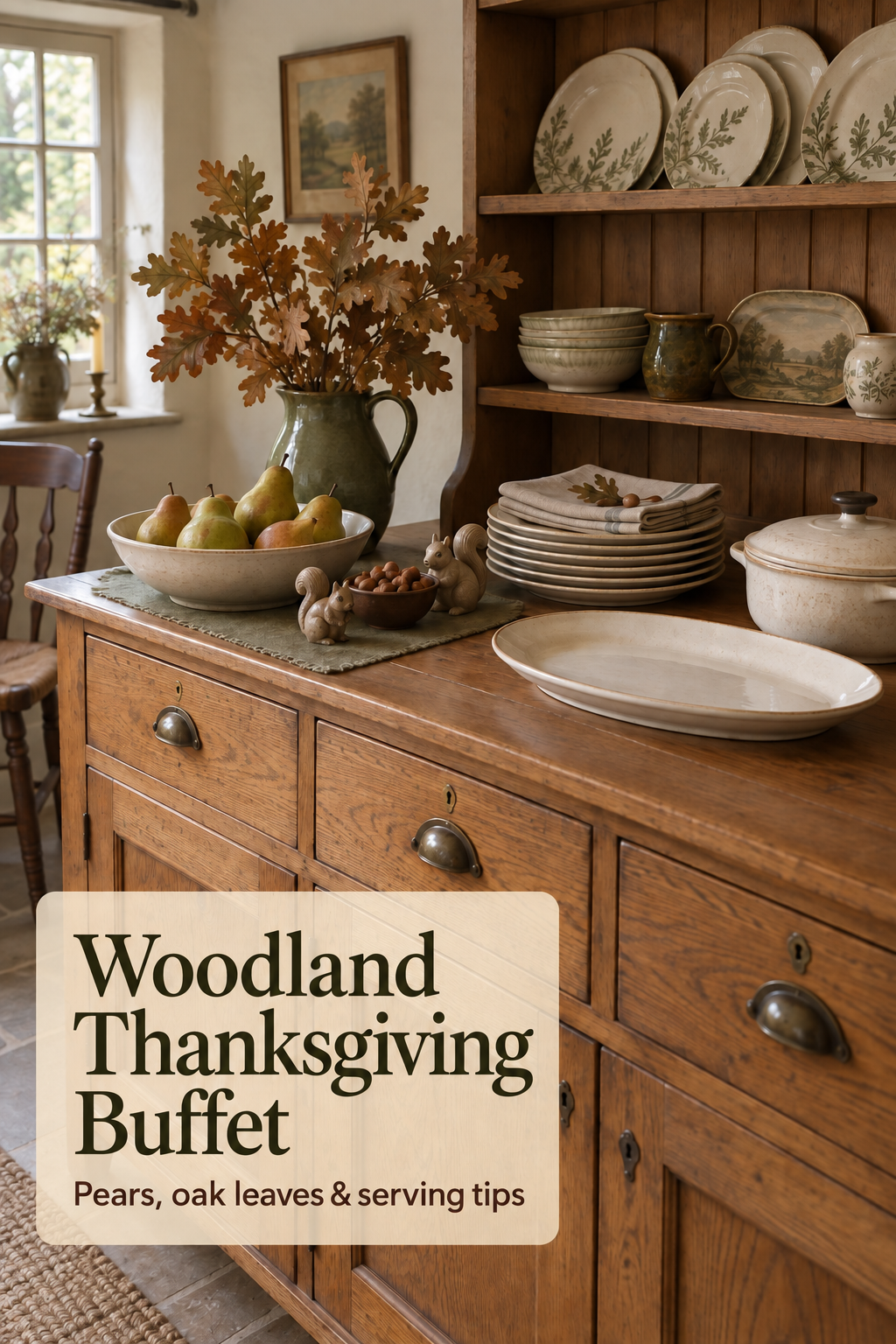
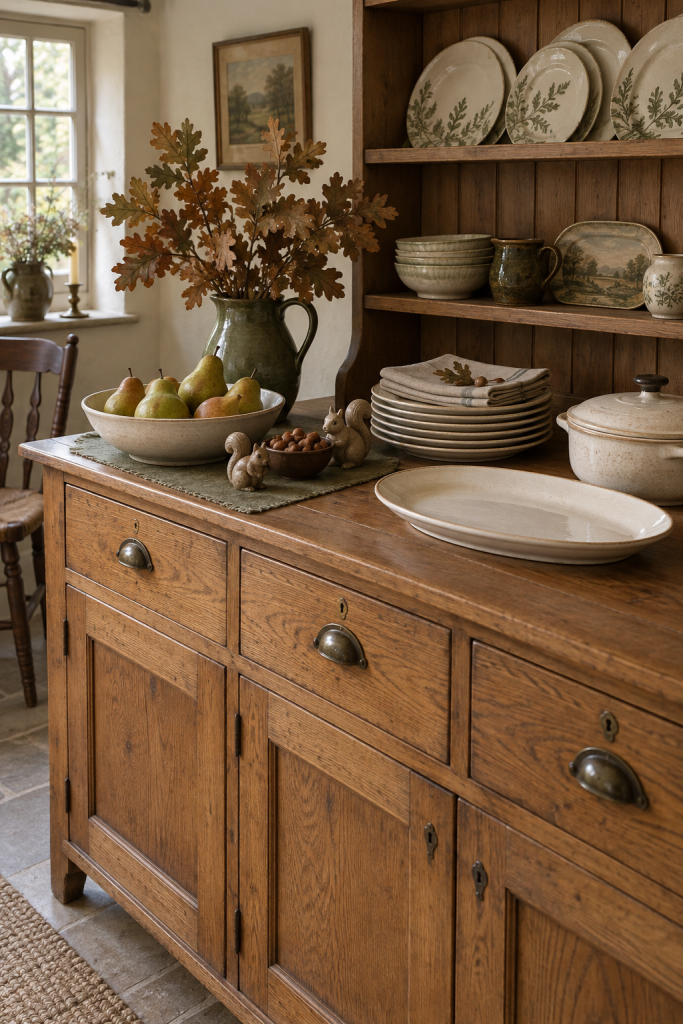
Brown oak leaves spread above a bowl of green pears, while two small ceramic squirrels gather beside a dish of acorns. The oak dresser behind them holds botanical plates and softly glazed bowls. This Thanksgiving buffet idea brings woodland detail into a familiar dining-room piece without filling every inch with seasonal decorations.
The arrangement offers a useful starting point for a harvest serving area. Its character comes from a few recognizable shapes, warm pottery and the grain of the furniture, so a similar interpretation can work with dishes and linens already at home.
How the Dresser Connects Harvest Decor and Everyday Dishes
Oak Leaves Establish the Upper Shape
The branches rise from a green pitcher and spread toward the window rather than forming a tight bouquet. Their lobed leaves make the woodland reference clear, and their brown tones relate to the dresser. Open spaces between the stems allow the cream wall to show through, keeping the arrangement readable against the busy plate shelves.
Pears Give the Lower Group a Softer Outline
The pale bowl gathers the fruit into a low, rounded shape. Green and russet skins offer gentle variation against the brown leaves. Beside it, the darker acorn dish and small squirrels create a separate miniature scene. The grouping stays near the left side, leaving the oval platter on the right visually distinct.
Repeated Ceramics Make the Display Belong
Botanical plates above, stacked dinnerware below and the cream casserole share an aged-looking, understated finish. They connect the Thanksgiving accents to normal dining-room storage. Even the moss-colored textile is limited to the decorative grouping, allowing the oak counter to remain visible around the serving pieces.
Six Pieces for a Woodland Harvest Buffet
A Shallow Cream Fruit Bowl
Choose a broad bowl with a gently sloping rim so pear stems and rounded shoulders remain visible. A speckled or softly irregular surface suits the pictured pottery better than a bright, highly polished finish.
An Olive Pottery Pitcher
The handled vessel gives the branches a substantial base. Look for a wide foot and an opening that lets several stems separate naturally rather than forcing them into one upright bundle.
Brown Oak Leaf Branches
Lobed leaves supply the clearest forest reference above the counter. Natural-looking preserved or artificial branches can serve this role, provided their leaves vary slightly in direction and the stems fit your vessel securely.
Small Ceramic Woodland Figures
Two squirrel ornaments bring a storybook note at bowl height. Keep their scale modest and their coloring close to the wood so they read as details within the arrangement instead of dominating the buffet.
A Separate Acorn Dish
A small dark bowl contains the loose accents and gives the figures something to gather around. Use decorative acorns for this portion and keep them separate from any fruit intended for eating.
Cream Serving Ware and Flax Napkins
An oval platter, stacked plates and folded napkins establish the counter’s dining purpose. Similar cream tones are enough to connect mismatched pieces; identical sets are unnecessary for the relaxed dresser style.
Arrange the Counter Around Your Serving Plan
Mark the Space Needed for the Meal
Set out the actual platters and casserole dishes before placing decorations. Include room for hands to lift lids and reach serving utensils. The image suggests a division between the woodland cluster and the serving end, but your menu should determine how much counter each needs.
For a narrow buffet, I would move the plate stack to the dining table and keep just one empty platter on the counter during setup. That preserves the woodland vignette while giving a hot dish somewhere to land when guests arrive.
Shape the Branches Below Shelf Level
Position the pitcher where its handle and leaf outline remain visible. Trim or rearrange stems so they do not catch on the plate shelf. If using artificial branches, bend them gradually from the base and let some leaves face sideways; a flat fan pointed straight at the viewer will feel less natural.
Place the Fruit and Miniature Accents
Fill the bowl loosely, allowing individual pears to remain identifiable. Place the acorn dish alongside it with the figures facing different directions. Keep each ornament fully supported on the textile, and tuck the textile’s edge back if it hangs near a drawer pull.
The napkins in the image carry a leaf and acorn accent. For an actual meal, remove those loose decorations before using the napkins and keep anything collected outdoors away from serving surfaces. A botanical napkin pattern can provide a similar reference without loose pieces.
Check the View from the Dining Table
Sit where a guest would sit and look at the dresser. Adjust any branch that blocks the window or competes with wall art. Open the drawers you expect to use so fabric, figures and dishes do not interfere with normal access.
I would retain the dresser’s existing shelf dishes rather than add a second seasonal collection above the buffet. Their botanical decoration already supports the theme, and leaving them in place keeps the project focused on the counter rather than requiring a full room restyle.
Buying Details That Matter for This Arrangement
Check the Bowl’s Usable Depth
For a pear display, compare interior depth as well as overall diameter. A deep mixing bowl may hide most of the fruit, while a very flat dish can let it roll. Choose a form that holds the fruit securely with its upper half visible.
A Pitcher with Room for Branches
Look at the vessel opening and base in listing photographs. A narrow neck may restrict the branching shape, and a small foot may become awkward with long stems. The olive color is useful, but a balanced vessel matters more than matching its exact shade.
Woodland Figures with Quiet Finishes
Seek small freestanding ceramic ornaments with clearly defined feet or bases. Avoid highly glossy, brightly painted figures if you want the pictured effect. Check their height against your fruit bowl so the animals remain a supporting detail.
Select Oak Stems by Leaf Shape
Choose lobed leaves in tobacco, muted copper and olive-brown rather than uniformly bright orange foliage. Product photos that show the complete stem help you judge whether it can fit below your shelves without extensive cutting.
A Small Detail Before Putting the Buffet Away
Photograph the shelf arrangement before removing dishes for serving. When the meal is finished, that quick reference makes it easier to return leaning plates and small bowls to their original positions without repeatedly handling them.