*This post may contain affiliate links for which I earn commissions.*
Image created with AI. Let this woodland entry inspire a botanical Christmas treatment for your own doorway.
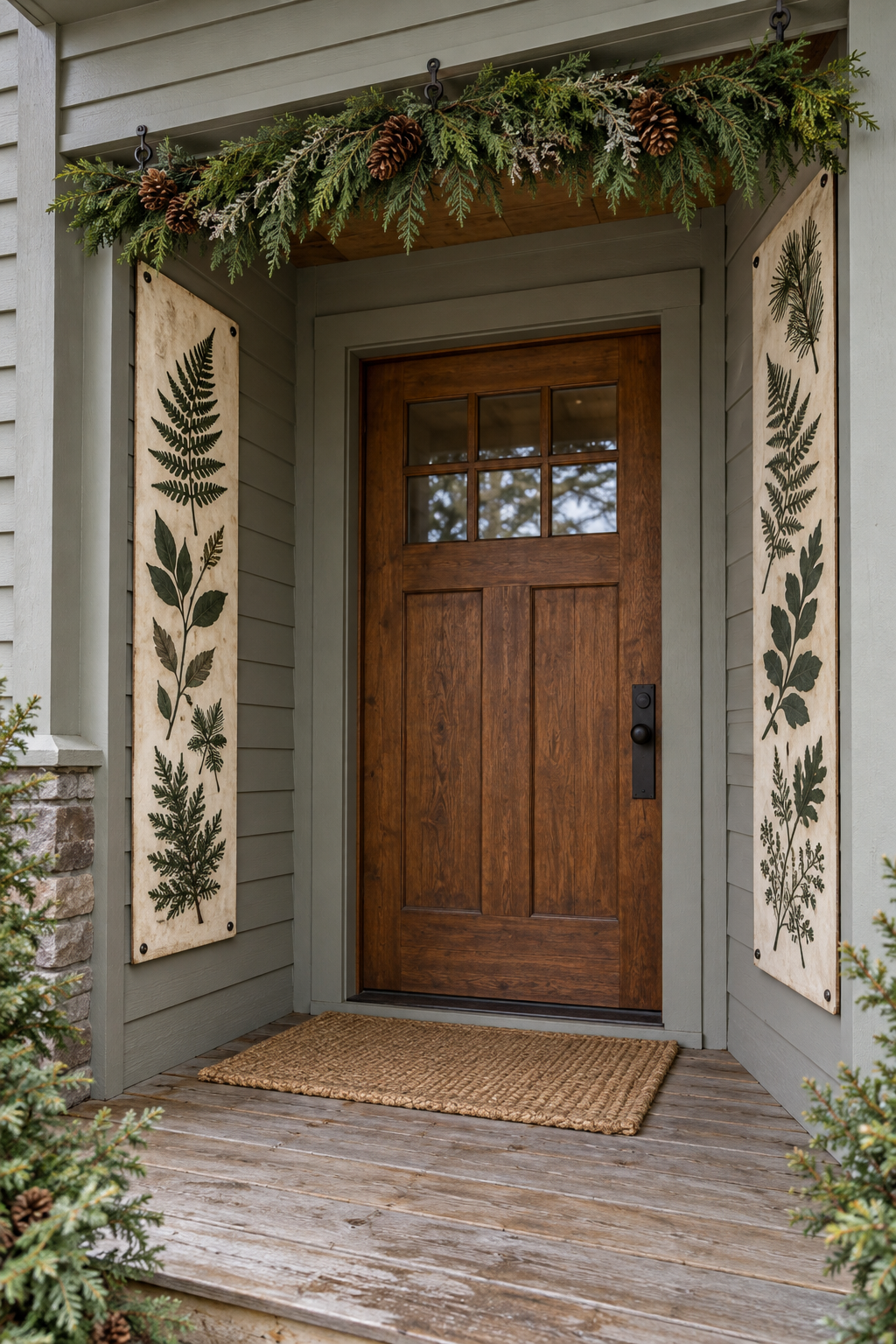
The side walls of a recessed doorway can become part of the Christmas display. Here, tall botanical panels turn those narrow surfaces into a woodland collection, while evergreen branches and pinecones follow the header above a simple wooden door. The porch floor stays open, so the entrance still feels ready for everyday arrivals.
This approach suits an entrance with a genuine recess and sheltered side walls. The decorating idea is to use the architecture you have: flat vertical accents along the reveals, a shallow seasonal line overhead, and a clear route through the center. A porch without those surfaces will need a smaller adaptation rather than an artificial extension of the doorway.
What Makes This Woodland Entry Work
The recess becomes a frame for botanical specimens
The long pale panels occupy the side walls inside the opening. Their separate fern and leaf silhouettes read like a collected series, giving the entrance an observation-station character without signs or labels. The doorway becomes the frame around that collection, rather than a background for one large ornament.
Because the panels lie close to the walls, their height can be prominent without filling the threshold. Their placement also brings the design closer to someone approaching the door. Small botanical details can be noticed at arrival even when they are less visible from the street.
The branch header connects the two sides
The greenery runs above the opening, carrying the eye between the vertical panels. Pinecones interrupt the branch texture with recognizable woodland forms. Visible hooks at the upper edge give the overhead decoration a believable connection to the porch.
The header is shallower than a full garland wrapped around the entire door frame. That restrained depth leaves the upper door area readable and keeps the botanical panels from competing with a second, heavier surround.
Brown and gray keep the entrance grounded
The warm wooden door, muted gray siding, and plain textured mat establish an ordinary domestic setting. Pale botanical backgrounds brighten the recess, while the foliage supplies the strongest color. This combination allows the seasonal treatment to feel distinct without repainting the door or changing the porch furniture.
The open floor matters to the composition. It gives the vertical display room to stand out and makes the entrance feel approachable, particularly when the porch is compact.
Key Pieces to Recreate the Look
Tall botanical wall accents
Choose narrow fern or leaf artwork that can sit flat on the available side-wall area. For outdoor placement, select pieces whose manufacturer confirms suitability for the actual exposure; a paper print made for an interior wall is a different product.
A shallow evergreen header
A restrained branch garland can supply the horizontal connection. Look for foliage with individual branching tips and enough flexibility to follow the existing header without bulging into the opening.
Pinecone accents
Brown cones reinforce the collection theme above the doorway. Use a garland with suitable attached cones, or separate accents designed to attach securely, so they remain part of the overhead arrangement rather than loose objects balanced on a ledge.
Surface-appropriate mounting hardware
The panels and greenery need supports chosen for your actual walls and header. Existing sound hardware may be usable, but verify its condition and intended purpose instead of copying the appearance of a hook in an inspiration image.
Concealed greenery fasteners
Outdoor-suitable ties or fastening components keep the branch line aligned with its supports. Choose a subdued finish that disappears into the foliage, with no sharp or dangling ends in the approach.
A plain entrance mat
A simple brown textured mat echoes the door and porch boards without introducing another motif. Pick a mat suited to the exposure and the working clearance of your door, rather than choosing solely by its color.
How to Adapt the Idea to Your Entrance
Check the recess before buying panels
Measure the usable side-wall areas and note trim, door hardware, switches, and anything else that must remain accessible. A tall narrow panel can work well, but its full thickness and mounting arrangement need to fit within those surfaces.
If the doorway has only one usable wall, keep the botanical accent there and let the header supply the connection to the other side. Do not add freestanding structures just to force the paired arrangement into an entrance that lacks the space.
Set the overhead depth around door movement
Open the door through its normal range and check what happens above it. Keep foliage, cone attachments, and fastening ends out of the swing, closer, and handle access. On an outward-opening door, this can require a more compact header than the picture suggests.
Use hardware and installation instructions appropriate to the actual assembly, weight, wall material, and exposure. When you cannot confirm a sound overhead fixing point, move the seasonal greenery to a secure side-wall arrangement or omit the overhead element.
Choose the specimen rhythm before mounting
Arrange the intended botanical accents at ground level first. Look for a mix of broad leaves and finer branching silhouettes, while keeping the backgrounds related. The panels should read as one collection without needing identical illustrations.
Check the view from the approach as well as from directly beside the door. A darker botanical shape may remain clearer within a shaded recess than a very faint print. Adjust the artwork selection before making permanent mounting decisions.
Leave the landing ready for arrivals
Keep the center clear of planters, loose branches, and decorative containers. Position the mat so it lies flat and does not catch the opening door. Consider where a visitor will stand while someone opens it, especially if the entrance has steps immediately in front.
Inspect the display after windy or wet weather. Remove loose greenery or damaged fasteners promptly, and bring pieces indoors when their product instructions or condition call for it. Shelter from a porch roof does not by itself establish outdoor suitability.
Shop Similar Pieces
Botanical art made for its location
Compare the full panel dimensions, mounting method, stated material, and exposure instructions. Product photos showing artwork on a porch do not establish its weather suitability. If a close flat botanical panel is unavailable, a suitable narrow outdoor botanical accent can preserve the theme with a different surface treatment.
Check garland depth as well as length
A long strand can often be arranged along a header, but a bulky one may overwhelm a shallow recess. Compare the foliage spread, attachment points, and unlit construction if you want the quiet daylight treatment shown here. Verify outdoor-use guidance for the specific product.
Match supports to the real surface
Review fixing instructions for painted siding, wood, masonry, or whichever surface your entrance actually has. Confirm the complete installed load and exposure conditions; an adhesive or hook suitable for one smooth surface may be unsuitable for another.
Let the mat fit the door
Check pile height, backing, size, and placement instructions before choosing the closest brown texture. The door must operate freely over or beside the mat, and the mat should remain stable on your particular porch floor.
Final Styling Tip
Take a quick photograph from the approaching path after installation. If a porch post hides most of one botanical panel, shorten or reposition that accent within its usable wall area. The collection will feel more intentional when its strongest silhouettes are visible before a guest reaches the threshold.