
*This post may contain affiliate links for which I earn commissions.*
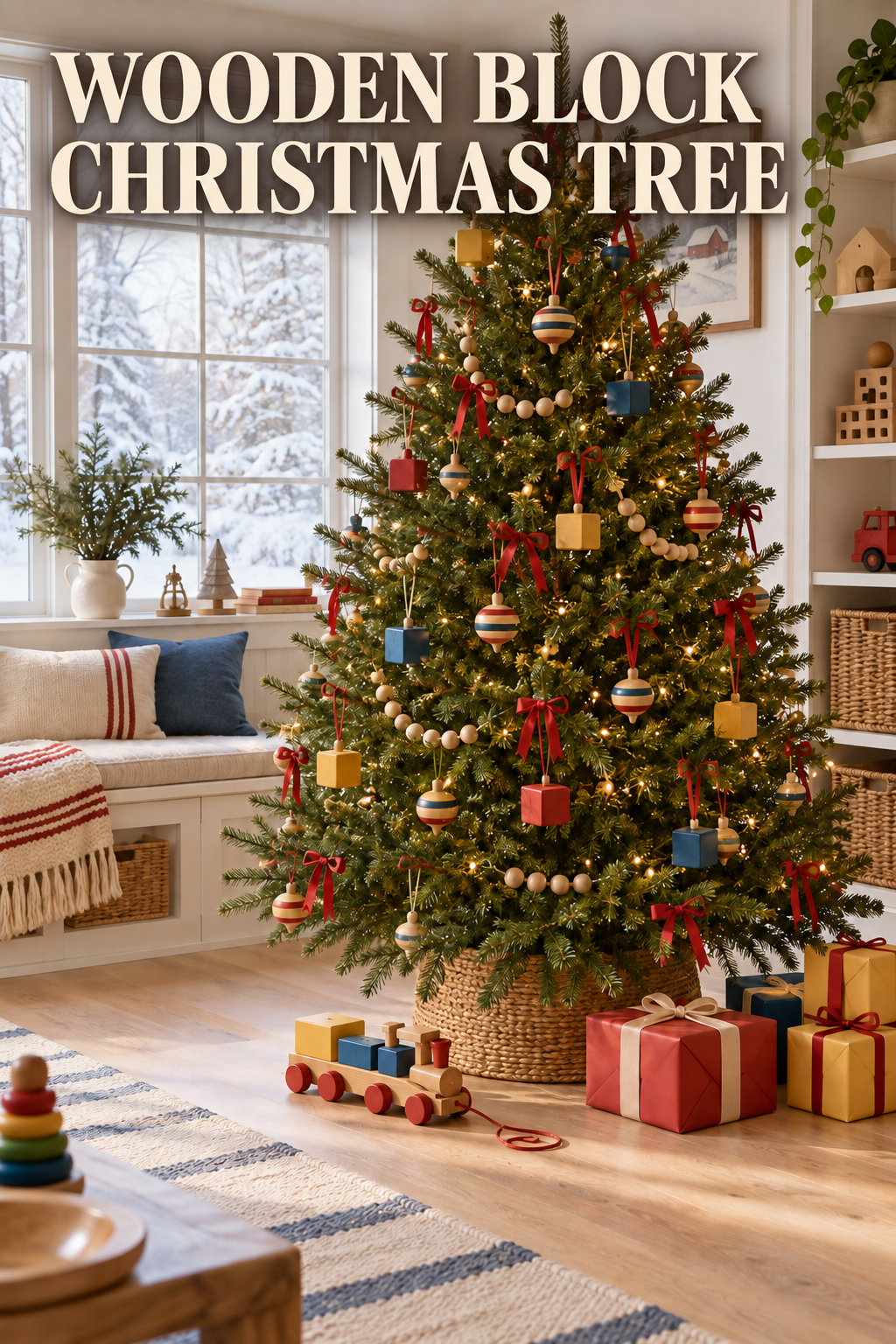
This is an AI-generated image offered as visual inspiration. Its strongest lesson is how repeated shapes can create a playful Christmas theme while still looking at home beside everyday storage and textiles.
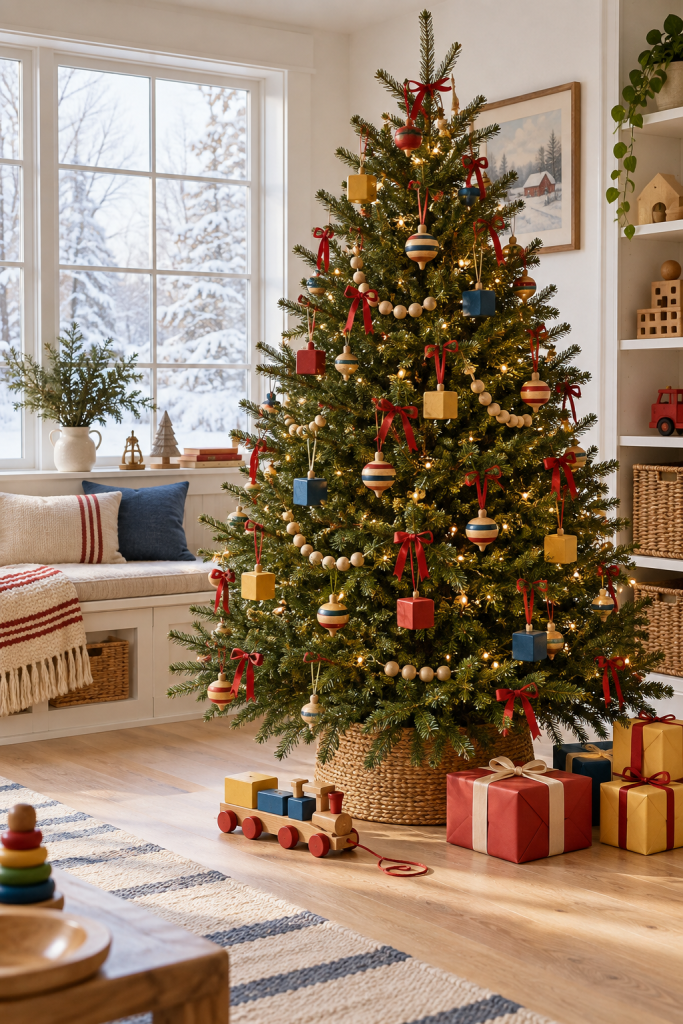
A playroom tree does not need cartoon characters to feel joyful. This one takes its cues from traditional building blocks and spinning tops, using simple geometric ornaments in red, blue, yellow, and natural wood. Warm lights and a full green tree soften the primary colors, while woven baskets and a window bench keep the room calm.
What Makes This Look Work
The cube ornaments are large enough to register from across the room, yet they are spaced between round striped tops and small red bows. That mixture prevents the tree from becoming a wall of square color. Natural wood bead garlands travel in loose arcs and provide a quieter interval between saturated ornaments.
The surrounding room supports the tree instead of imitating it. Blue and cream cushions repeat two ornament colors, but the cabinetry, rug, and baskets stay neutral. I would keep the nearby shelves mostly restrained for the same reason; a fully packed toy display beside this tree would compete with its silhouette.
Daylight reveals the wood grain and matte painted surfaces, while warm micro lights deepen the green branches. Wrapped parcels repeat the color blocks at floor level, creating a visual base. The small pull train is placed outside the tree basket, leaving the main walking route open.
Key Pieces to Recreate the Look
Plain Wooden Cube Ornaments
Select solid or hollow wooden cubes without letters, logos, or printed characters. A mix of red, blue, and mustard should look matte rather than plastic.
Carved Spinning-Top Ornaments
Rounded striped tops break up the block geometry. Check that each has a secure eyelet or cord and is light enough for natural branches.
Natural Wood Bead Garland
Unfinished or lightly stained beads create breathing room between brighter pieces. Medium beads are visible without becoming heavy-looking loops.
Narrow Red Velvet Ribbon
Small tied bows add softness and repeat the red consistently. Narrow ribbon is easier to scale to the ornaments than wide wired tree ribbon.
Warm White Tree Lights
Choose a warm, steady light color that will not turn the primary palette harsh. A green wire blends most naturally into dense branches.
Woven Tree Collar
A basket-style collar connects the tree to the room’s storage baskets and hides the stand without adding another pattern.
Color-Block Gift Wrap
Solid red, mustard, and navy papers extend the palette below the branches. Limit patterns and use cream ribbon for contrast.
How to Style It at Home
Test the largest cube on a strong inner branch before decorating the whole tree. Hang heavier shapes closer to the trunk and lighter tops near branch tips. Step back after every few ornaments to distribute red, blue, and yellow rather than making equal rows.
Drape bead garland after lights but before cubes, letting each swag rest on several branches. Add bows last so they can fill awkward gaps. In a small playroom, I would use fewer parcels and keep them tight to the collar, preserving the open floor area shown beside the window bench.
Anchor tall furniture and keep fragile ornaments above easy reach where appropriate. The wooden pull train can remain a separate floor accent, but its cord and wheels should stay outside walking paths. A washable rug nearby makes the setup more forgiving during everyday use.
Adapting the Idea to a Real Room
Spacing matters more than ornament count on a shape-driven tree. Rotate each cube so one face catches the window light, and turn neighboring spinning tops in different directions. Leave small pockets of undecorated greenery between clusters. Those pauses let the eye recognize the individual toy forms and keep the tree from feeling like a retail display.
The window bench offers a useful palette check. Cream upholstery and a navy cushion echo the ornaments without extending every bright color into the room. If existing playroom textiles are already colorful, choose only two painted cube colors and let natural wood become the third. This adjustment preserves the theme while respecting what is already in the space.
Think about how the room functions after the lights are switched off. Secure ornament cords, keep the pull-toy string coiled, and avoid placing presents where storage drawers open. I would also reserve the lowest sturdy branches for soft or solid-wood pieces rather than brittle ornaments. The result can remain festive during daily play instead of requiring constant resetting.
A consistent finish makes simple shapes feel intentional. If the cubes are newly painted, select low-sheen colors and leave some ornaments in natural wood so every surface does not reflect the lights equally. Small variations in stripe width on the tops are welcome, but repeat the same red ribbon throughout. Before hanging anything, sort ornaments into color groups on the floor. Work around the tree in thirds, placing one color at a time, then correct any dense patches. This method is easier than moving many finished ornaments after the branches are full. Keep the window side slightly lighter so daylight can pass through the silhouette.
Shop Similar Pieces
What to Look for in Wooden Cubes
Compare weight, corner finish, and hanging hardware; lightweight cubes with smooth edges are kinder to branches.
Shop Similar Spinning-Top Ornaments
Seek painted wood, simple horizontal stripes, and multiple shapes rather than identical glossy pieces.
Choosing Wood Bead Garland
Look for a flexible strand long enough to form relaxed swags without pulling branch tips downward.
Find a Woven Tree Collar
Measure the stand at its widest point and choose a collar whose natural tone matches nearby baskets.
Final Styling Tip
Store cube ornaments in a divided box rather than loose tissue. Separating their corners protects the paint and makes the color distribution easier to plan next year.