
*This post may contain affiliate links for which I earn commissions.*
This image was created with AI and is presented as decorating inspiration.
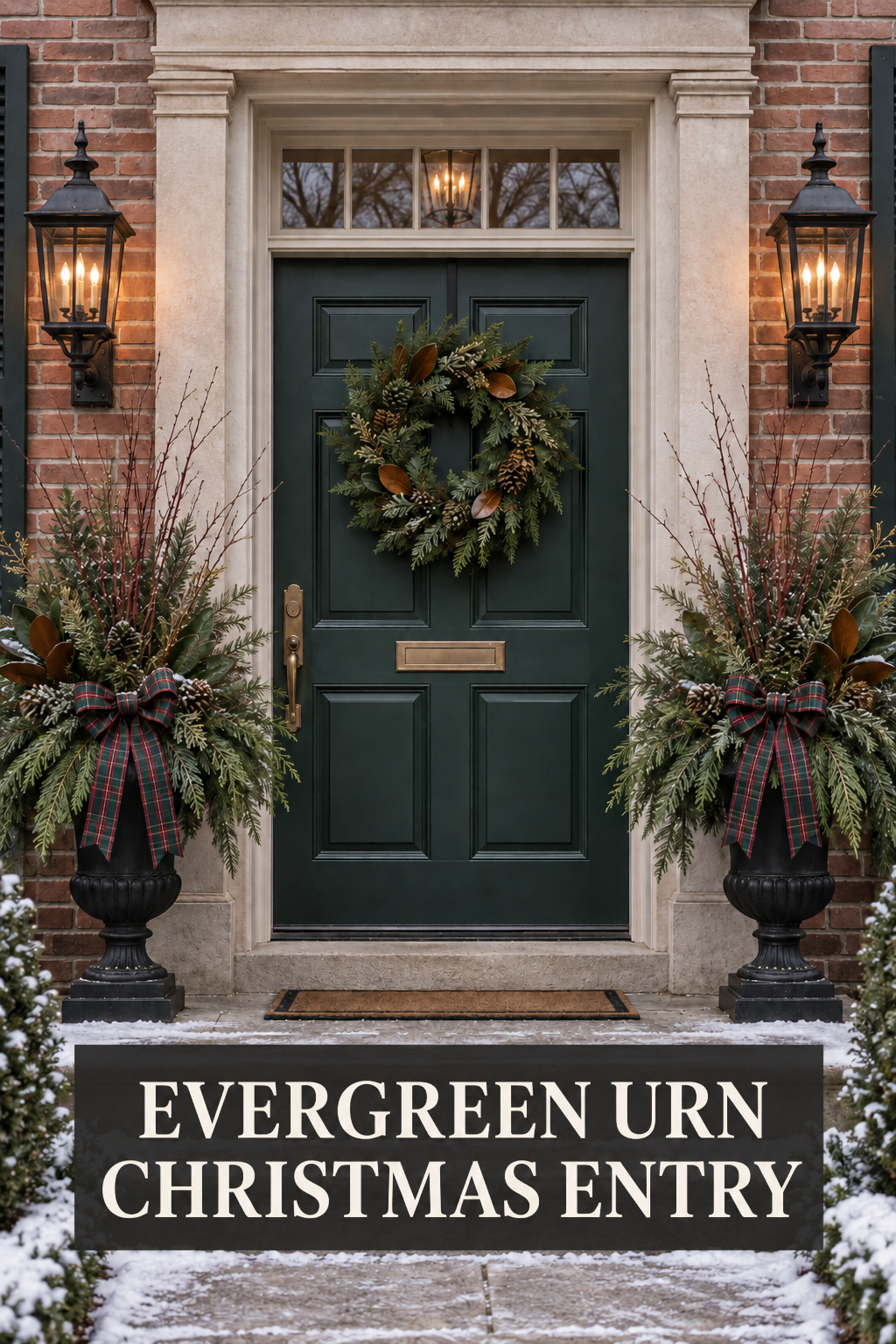
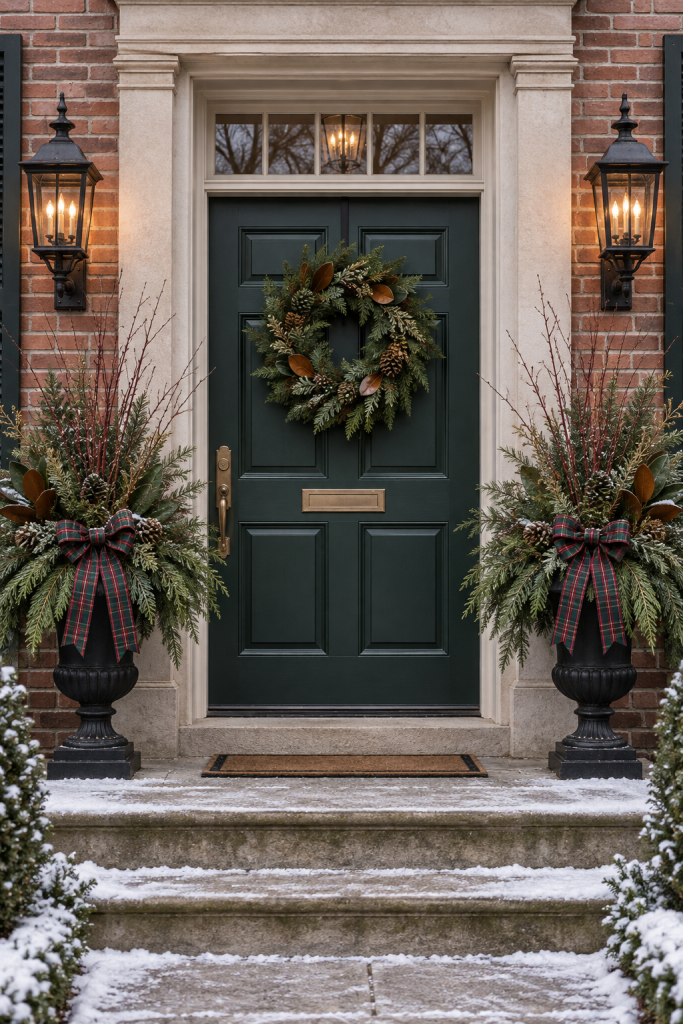
This winter entrance uses symmetry to make a narrow brick stoop feel formal and finished. Matching black urns flank a dark green door, each filled with evergreen branches, magnolia leaves, pinecones, red twig stems, and a large tartan bow. A simple evergreen wreath repeats the same natural materials at eye level.
The display works with the existing architecture rather than covering it. Stone trim remains visible around the doorway, the brass hardware stays unobstructed, and the urns sit beneath the two black wall lanterns. A light dusting of snow emphasizes the winter setting without becoming part of the decoration itself.
How Symmetry Strengthens the Front Door
Architectural Framing and Finish Continuity: The two urns establish the widest points of the composition and direct attention toward the door. Their black finish connects with the lanterns and shutters, while the dark green door allows the wreath to appear tonal rather than sharply contrasted.
Layered Volume and High-Visibility Focal Bows: Inside each urn, tall red twigs create height, evergreen branches fill the middle, and longer cedar tips spill over the rim. Magnolia leaves and pinecones provide larger shapes among the needles. The tartan bows sit just below the center of each arrangement, where they can be seen clearly from the walkway approach.
Restrained Door Wreath Hierarchy: A quieter door wreath is the ideal choice for this entrance. Because the planters already carry the plaid and red accents, the wreath only needs layered greens, pinecones, and a few magnolia leaves to complete the entrance without visual competition.
Subtle Red Tone Bridges to Exterior Brick: The red twigs connect the arrangement to the brick facade without matching it exactly. Against the nearly black green door, their thin lines remain visible but do not compete with the brass mail slot and handle. This restrained use of red allows the tartan bows to stay dark and traditional rather than needing a brighter holiday color.
Key Pieces for the Winter Entry
Matching Black Outdoor Urns
Choose weather-resistant planters with enough weight or ballast to remain stable in wind. A tall pedestal and fluted bowl suit a traditional brick and stone facade.
Mixed Evergreen Branches
Combine upright fir or pine with softer cedar that can drape over the rim. Outdoor-rated artificial stems offer repeat use, while fresh cuttings can be secured in soil or floral foam where climate allows.
Magnolia Leaf Branches
A few broad leaves break up the fine evergreen texture and echo the magnolia in the wreath. Look for green fronts and warm brown backs that remain convincing outdoors.
Red Twig Stems
Tall, slender branches give the urns height without making them solid at the top. Natural red twig dogwood or outdoor artificial stems can provide the restrained red repeat visible here.
Tartan Wired Ribbon
Use outdoor-suitable wired ribbon so the loops and long tails keep their shape. A dark red and green plaid connects the planters to the traditional door and brick.
Evergreen Pinecone Wreath
Select a wreath that fits comfortably within the door panels and leaves the handle and mail slot clear. Mixed greenery and natural-looking pinecones are enough; the urns carry the stronger decoration.
How to Assemble the Entry
1. Anchor the Tallest Branches
- Center-Rear Placement: Place red twigs and upright evergreen stems into the center rear of each urn to establish vertical reach.
- Wind Resistance Check: Secure all stems deeply into the base material and test the heavy planters for wind stability before adding outward-facing layers.
2. Build Matching Outlines, Not Exact Copies
- Consistent Proportions: Repeat the same general height and outer width on both sides of the door.
- Organic Variation: Allow individual boughs to drape and fall naturally, keeping the entry visually balanced without making the flanking planters look mechanically duplicated.
3. Add Broad Leaves and Pinecones
- Mid-Tier Foliage Fill: Tuck broad magnolia leaves through the middle zone to break up fine needle textures.
- Rim Visibility: Place pinecones near the container rim where they remain distinctly visible.
- Approach Sightline Check: Step back to the bottom step to confirm that both planters present the same overall mass and scale, even if individual stem angles vary.
4. Tie and Weather-Check the Bows
- Structural Branch Anchoring: Attach the wired tartan bows firmly to a sturdy inner woody branch rather than a weak, drooping cedar tip.
- Ground Clearances: Trim ribbon tails cleanly above the pavement so they never touch damp masonry.
- Storm Maintenance: Recheck both ribbon ties and urn stability after heavy winter wind, rain, or snow accumulation.
5. Keep the Route to the Door Clear
- Step and Threshold Clearances: Turn trailing cedar branches away from walking steps and verify that long ribbon tails cannot snag on passing shoes or catch in the door threshold.
- Hardware Clearances: Ensure the hung wreath leaves the door handle, knocker, and mail slot completely accessible.
- Preserve Walkway Width: Position the urns outside the primary walking lane, rechecking step clearances whenever heavy snow or wind shifts branch positions.
Shop Similar Pieces
Choosing Black Urn Planters
Compare total height, opening diameter, drainage, and base width. Outdoor stability matters more than finding the exact fluted pattern.
Find Mixed Evergreen Stems for Outdoor Planters
Look for at least two needle shapes and wired tips. Confirm whether the stems are rated for covered or fully exposed outdoor use.
Look for outdoor Tartan Ribbon
Choose wired ribbon with fade- and moisture-resistant material. A darker plaid will hide winter marks better than a cream-dominant pattern.
Shop Similar Evergreen Wreaths
Measure the door panel before selecting a diameter. Favor a restrained pinecone-and-magnolia mix that supports rather than duplicates the urns.
Final Styling Tip
Judge the entrance from the sidewalk or the foot of the steps, not only from beside the planters. Long viewing distance reveals uneven height and any branches that block the door hardware.