
*This post may contain affiliate links for which I earn commissions.*
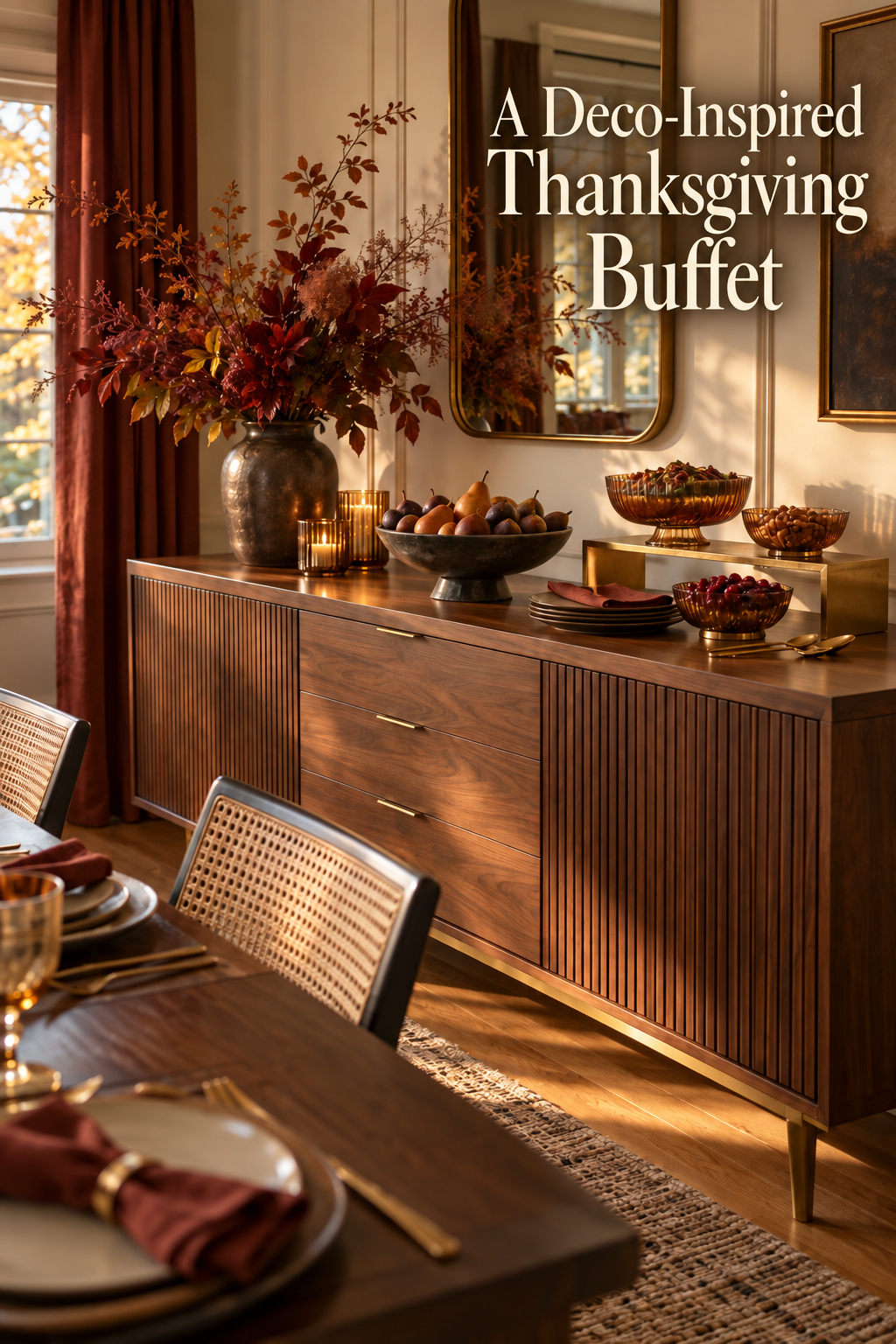
This image was created with AI and is presented as decorating inspiration.
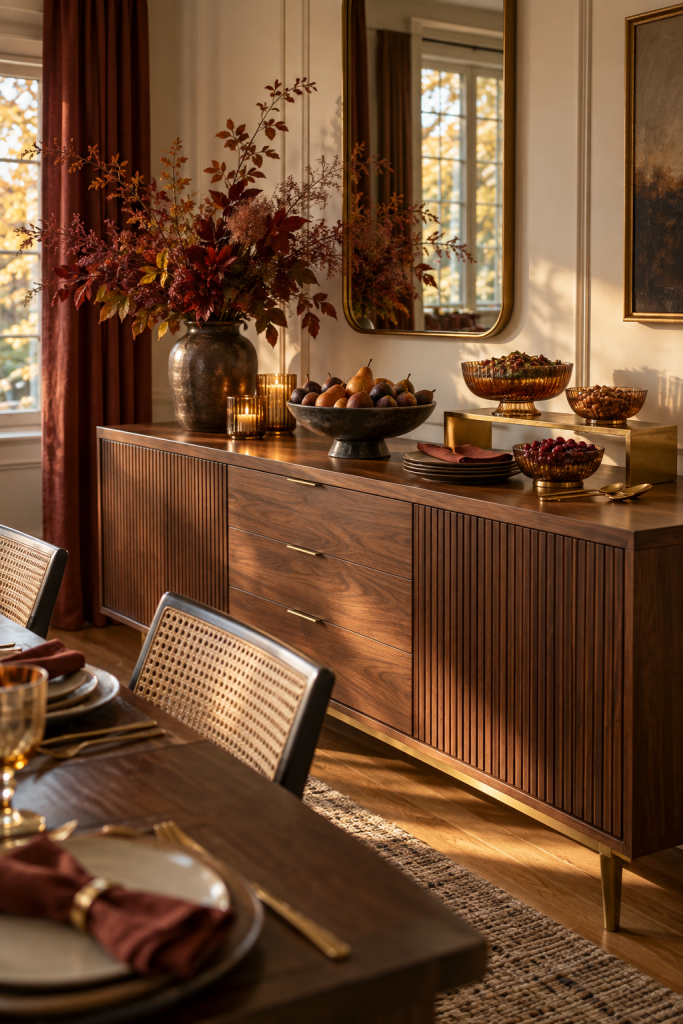
A Thanksgiving sideboard can feel festive without losing its purpose as a place to set down dishes. In this image, a long wood cabinet holds a dramatic arrangement of russet foliage at one end, a dark bowl of pears and figs near the center, and amber-toned glass bowls on a low brass riser at the other. A tall rounded mirror repeats the curves in the vessels, while the straight cabinet and stepped stand give the composition its tailored, Deco-inspired edge.
What Makes This Look Work
One generous botanical gesture
The foliage is large, but it occupies one end of the buffet. That choice leaves the fruit and serving pieces legible, and prevents small stems from being scattered across the entire cabinet. The branching silhouette also reaches above the mirror’s lower edge, giving the arrangement height without requiring a second large object. For a real buffet, choose a vessel with enough weight and a wide enough base to support the stems, then keep projecting branches away from the path where guests will reach for food.
Warm glass against a dark cabinet
The amber bowls catch the afternoon light and separate visually from the darker wood. Their fluted and footed profiles add a polished note without demanding a matching set. A single brass riser introduces the stepped line that makes the styling feel more geometric. It also creates a useful difference in height between the serving bowls, provided the stand is sturdy and intended for the weight it carries.
A restrained harvest palette
Deep red leaves, brown wood, dark fruit, and golden glass create a fall story without relying on a row of pumpkins. The pear shapes are recognizable from across the room, while the smaller fruit fills the bowl without needing a dense centerpiece. Darker colors are concentrated in the foliage and fruit, and the cream wall keeps the whole arrangement from feeling heavy.
Key Pieces to Recreate the Look
A substantial sideboard or buffet
Use the cabinet you already have if its top can hold serving pieces comfortably. The important feature is a continuous surface with enough depth for a large vase and bowls, with clear space to move dishes safely.
A stable vase for fall branches
Choose a broad-based vessel that will not tip when branches extend sideways. A dark ceramic or aged metal finish lets the leaf color lead; start with fewer stems and add only enough to build a loose outline.
Amber-toned serving bowls
Look for bowls with different heights or profiles, rather than several identical pieces. If food will touch them, check that the particular bowls are labeled for food use and wash them according to their care instructions.
A low brass-finish riser
A simple rectangular stand supplies the stepped geometry. Measure the cabinet depth and check load guidance before using it under filled bowls; a decorative display riser is not automatically a serving stand.
A dark fruit bowl
A wide, shallow bowl keeps pears and figs visible instead of piling them high. An everyday stoneware bowl can work as well as a specialized seasonal piece.
Small warm lights
The image includes a few glowing vessels near the foliage. Battery-operated candles can offer a similar warm point of light without putting a flame beside dry leaves or curtains.
How to Style It at Home
Reserve the working surface first
Decide where hot dishes, a drink station, or dessert plates will actually go before placing decor. In a narrow room, leave the easiest-to-reach portion of the buffet free and group the display toward the back edge or one side. Test the arrangement with an empty serving platter to see whether guests can set it down without shifting the decorations.
Build the arrangement from left to right
Place the tallest botanical vessel at one end, the fruit bowl nearer the middle, and the raised bowls at the opposite end. This creates a descending and rising rhythm without lining up every object evenly. Step back to check that the large vase does not hide the mirror or compete with the dining table in front.
Use height sparingly
One riser is enough to introduce the Deco-inspired step. Keep the stand low enough that serving from the rear bowl feels natural. If the cabinet is shallow, skip the riser and use one footed bowl to achieve a small lift.
Finish with practical details
Fold napkins into a compact stack and keep serving utensils beside the bowls they belong to. Leave a hand’s width around vessels that might be lifted. If children or pets use the room, move breakable glass toward the rear and use secure, stable holders for any decorative lighting.
Shop Similar Pieces
Choosing amber glass bowls
Compare usable diameter, depth, and food-contact guidance first, then look for a warm amber tint and a fluted or footed profile close to the image’s visual rhythm.
Find a sturdy brass-tone riser
Seek a low, level platform with a stated load capacity and a footprint that fits your cabinet, rather than choosing it solely for its finish.
Look for a weighted branch vase
A wide base and a narrow enough opening to hold stems in position will make the asymmetrical foliage easier to control.
Shop a dark shallow bowl
Choose a diameter that lets several pieces of fruit sit in one visible layer; the understated finish should contrast with the brighter glass.
Final Styling Tip
Take a quick photograph from the dining table before guests arrive. The view will reveal whether a branch blocks the mirror or whether a serving bowl needs a little more clearance, so you can adjust it in minutes.