*This post may contain affiliate links for which I earn commissions.*
This image was created with AI to offer inspiration for your own decorating.
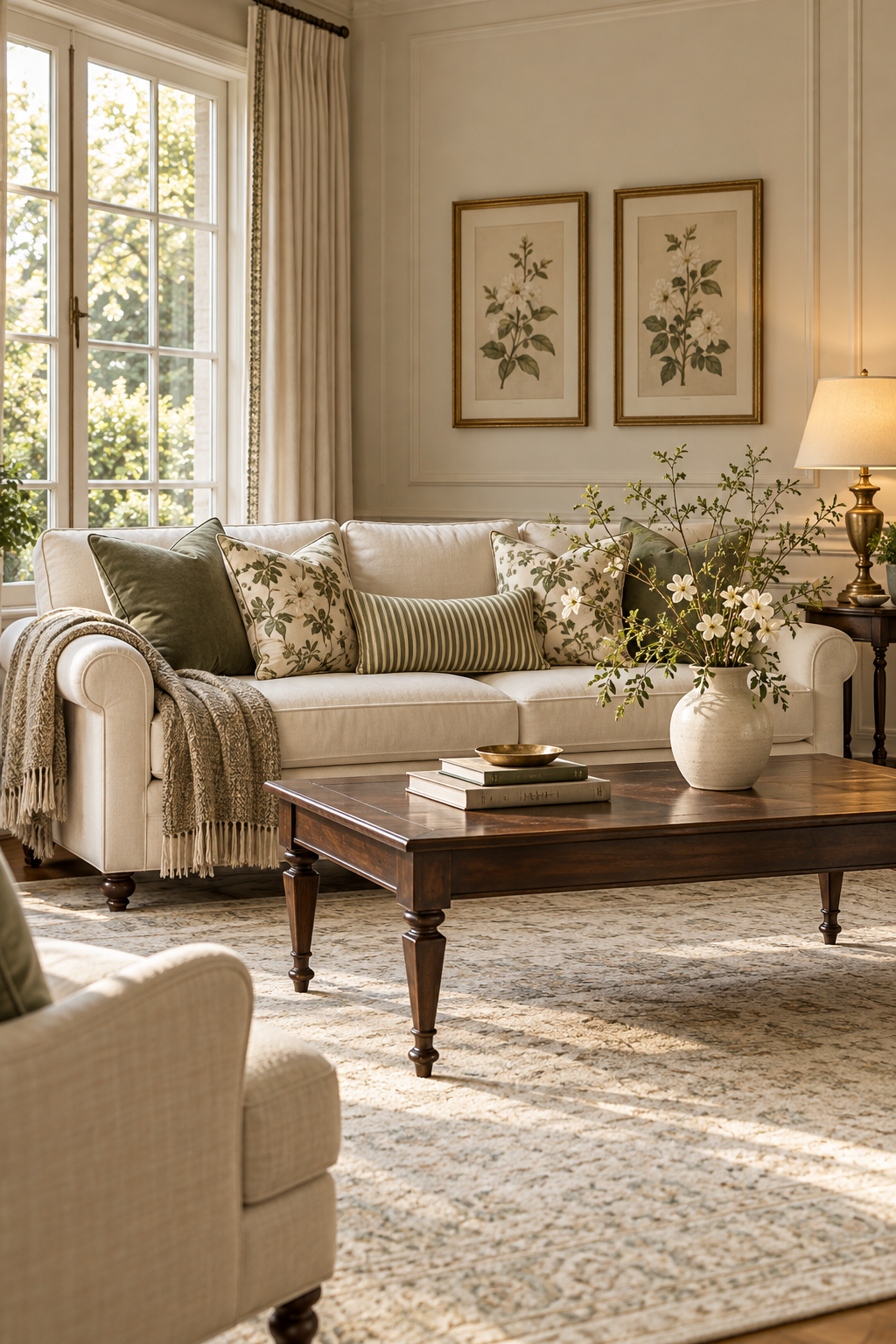
A green living room can feel light without giving up the warmth of traditional furniture. In this scene, an ivory sofa holds sage cushions, leafy prints, and a narrow striped lumbar pillow. A dark coffee table provides contrast, while a cream vase sends delicate branches across the right side of the seating group.
The arrangement has a garden-like ease, but its structure is quite orderly. Framed botanical pictures sit above the sofa, a shaded lamp warms the side table, and a pale rug ties the furniture together. You can borrow the pillow combination and open branch shape without replacing your whole room.
What Makes This Look Work
Green appears at different scales
The solid cushions carry the strongest green. Smaller leaves on the printed cushions soften the transition to the ivory upholstery, and the stripes give the eye a quieter pattern to follow. The colors relate, but the patterns do different jobs. That distinction keeps the sofa from looking like a matching fabric collection.
The green also extends into the pictures and stems. Those smaller repetitions connect the seating to its surroundings without requiring green walls or a large green rug.
The branches have room around them
The vase sits toward one end of the coffee table rather than squarely in front of the striped pillow. Its stems spread loosely, with gaps that allow the sofa to remain visible. Cream flowers brighten the lower part of the arrangement, while slender twigs provide the height.
Some stems cross a cushion in this view, but the center of the sofa stays readable. For a room used for conversation, the useful lesson is to keep the fullest part of an arrangement below the main sightline and let only a few fine stems rise above it.
Dark furniture steadies the pale fabrics
The brown table separates the ivory sofa from the light rug. Its visible legs keep the room from becoming one continuous block of pale upholstery. Warm metal on the lamp and picture frames adds a small amount of shine without competing with the green textiles.
The throw contributes a rougher woven texture. Against the smooth cushions and vase, that texture makes the seating feel comfortable rather than overly formal.
Key Pieces to Recreate the Look
Sage velvet pillow covers
Choose a muted green with a soft surface that catches light gently. A slightly deeper shade than the botanical print helps the solid cushions remain distinct from the smaller leaf shapes.
Cream botanical cushions
A light background is essential to this combination. Look for leafy motifs with visible space between them, and avoid a densely dark print that would make both pillow styles feel equally heavy.
A narrow striped lumbar pillow
Thin green-and-cream stripes provide an orderly counterpoint to the leaves. A rectangular shape also changes the outline of the pillow group without introducing another decorative color.
A rounded cream vase
The pictured vessel has a rounded body and a narrower opening. A similar silhouette can hold a small group of stems together while leaving the branches free to spread above it.
Airy branches and cream flowers
Select fine branching stems rather than a solid mass of foliage. A few open cream blooms can fill the lower area, but the gaps between stems should remain part of the arrangement.
A warm shaded table lamp
A restrained brass-tone base and pale shade suit the traditional furniture. Keep the shade visually quieter than the botanical pictures so the lighting supports the seating instead of becoming another focal point.
How to Style It at Home
Build the sofa combination before adding stems
Lay the covers together in the room where they will be used. Check them in daylight and again with your lamps on. Sage can lean gray, olive, or blue, and two fabrics described with the same color name may look quite different together.
Place the solid pillows near the ends, then bring the botanical pillows slightly forward. Set the lumbar where it can be moved easily when someone sits down. If your sofa is smaller, use one botanical pillow instead of copying the entire arrangement. Preserve a useful stretch of seat rather than fitting every pattern into the room.
Test the vase from both seats
Start with the empty vase toward an end of the table. Sit on the sofa and the opposite chair before adding branches. The opening should be easy to see and reach, and the base should feel secure on the tabletop.
Add the longest stems first, turning them outward rather than creating a dense vertical tower. Fill the lower space with flowers only after the branch shape works. Move any stem that points toward a person’s face or spreads into the route around the table.
Give the wall its own quiet arrangement
The botanical pictures echo the cushions without repeating their exact print. You could use a single landscape instead, especially if you already have a larger piece. Choose art for its overall green and cream balance, then allow clear wall space around it.
Avoid placing a tall plant directly below the busiest part of the art. In a smaller room, fewer wall pieces may make the branching centerpiece easier to appreciate.
Keep a practical landing area
Group books and a small dish away from the vase. Leave a reachable area for drinks, a remote, or whatever your room needs most. If the tabletop is narrow, the books can move to the side table; the branches should not make everyday use awkward.
Pull the front edge of the rug into the seating group so it connects the sofa and chair. Check that the chair can turn or shift without catching the rug edge, and that the route between furniture remains comfortable.
Shop Similar Pieces
Compare sage in customer photographs
Look at the selected color variation, not just the listing’s main image. Check whether covers include inserts, and measure your existing inserts before choosing a cover size.
Choose botanical prints with breathing room
Inspect the full repeat, including the corners. Large leaves cropped at every edge can read more boldly than expected, while a lighter repeat is easier to combine with velvet and stripes.
Check the vase opening and base
Compare the opening width with the stems you plan to use. For fresh flowers, confirm that the vessel holds water or use a suitable liner; a decorative vase is not automatically watertight.
Buy stems for flexibility
For an artificial version, look for bendable stems and photographs showing the branching shape outside a tightly packed bouquet. The aim is a loose outline, so a dense preassembled bunch may be harder to adapt.
Final Styling Tip
Turn the vase slightly when you finish. A small rotation can move a branch out of the striped pillow’s outline without removing stems or rebuilding the arrangement.