
*This post may contain affiliate links for which I earn commissions.*
This inspiration image was created with AI.
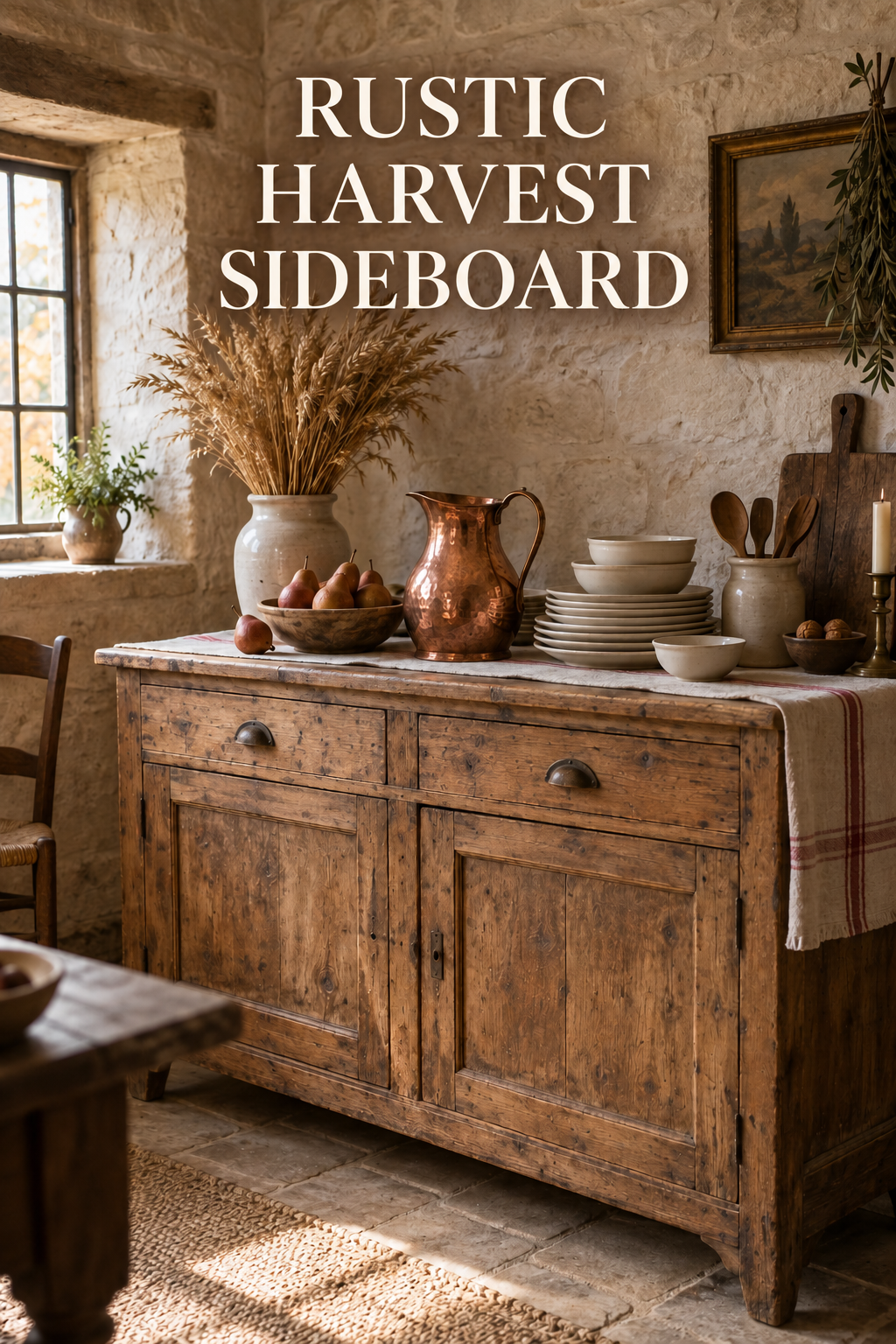
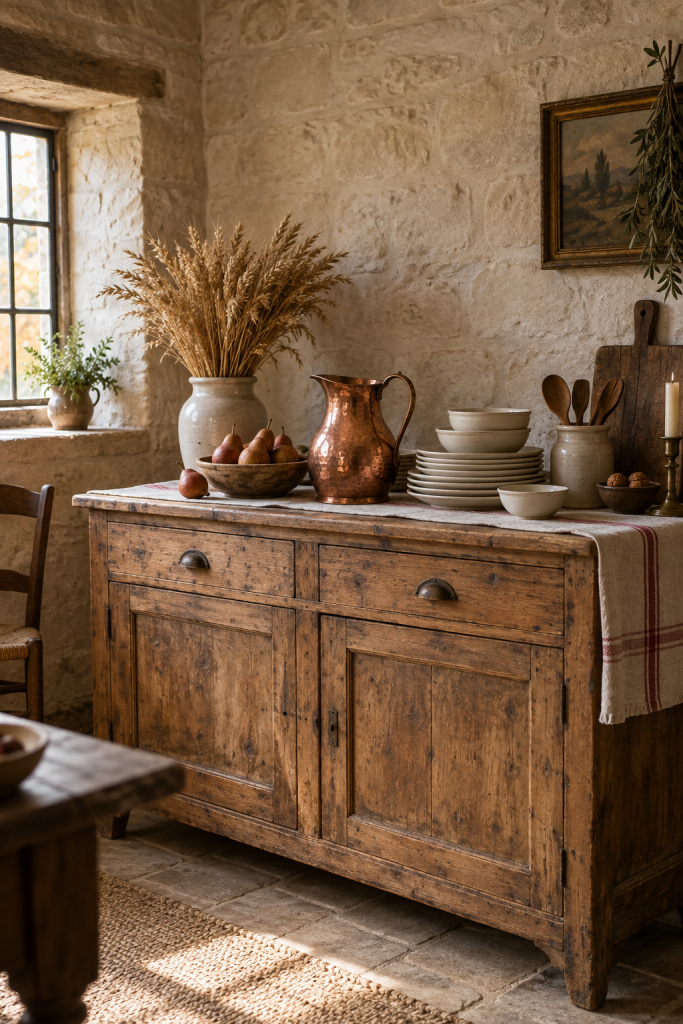
This harvest arrangement feels grounded in the kitchen rather than staged as a formal holiday display. A scarred pine sideboard carries cream dishes, a glowing copper pitcher, pears, wheat and useful wooden utensils against rough pale stone. The limited materials give the scene its rustic heritage character, while the orderly grouping keeps it polished enough for Thanksgiving.
What Makes This Look Work
The sideboard is the strongest element because its worn grain occupies most of the lower frame. Instead of disguising that age, the styling lets scratches and darkened edges become part of the palette.
Cream stoneware creates a quiet repeated line across the top. The plates and bowls are practical shapes, and their pale glaze separates them clearly from the wood without introducing sharp white.
Copper provides one concentrated warm highlight. Its reflective surface catches the window light, while pears and wheat repeat the same russet and straw notes in softer finishes.
Height moves from the wheat at left to the pitcher and stacked dishes, then settles into smaller bowls. That descending rhythm makes a generous collection look intentional rather than crowded.
Key Pieces to Recreate the Look
Weathered wood sideboard
Choose solid-looking wood with visible grain and enough surface depth for serving pieces. A medium warm stain fits this scene better than gray wash.
Hammered copper pitcher
Look for a simple bellied silhouette and a warm, naturally varied finish. One substantial copper piece is more convincing here than several small metallic accents.
Cream stoneware dishes
Mix plates, shallow bowls and a utensil crock within one warm cream family. Slight glaze variation supports the collected character.
Grain-sack style runner
A narrow flax or cotton runner with a restrained red stripe softens the top while leaving plenty of wood exposed.
Dried wheat bundle
Use a full upright bundle to establish height. Natural tawny stems should look loose, not tightly shaped like a formal bouquet.
Wooden fruit bowl and pears
A low wooden bowl brings the produce into the same material story and keeps the fruit contained.
How to Style It at Home
Start with the runner offset to one side rather than centering it like a tablecloth. Place the tallest vessel near the window side, then build a lower working group with the pitcher and dishes.
Keep the copper pitcher slightly forward so it does not disappear between pale ceramics. Leave a few inches of clear surface between major clusters. That gap is what lets the old wood remain visible.
I would limit the produce to one bowl plus a single loose pear. That small spill breaks the rigid line without turning the sideboard into a full harvest market display.
If the room lacks stone walls, repeat the effect with warm off-white paint, an earthenware vessel and a woven rug. The look depends more on texture and restrained color than on historic architecture.
For a working kitchen, keep frequently used dishes on the accessible side and reserve the taller dried arrangement for the back corner. The display can remain useful through the season.
Reserve a clear landing area beside the stacked dishes before deciding where the decorative pieces belong. On a sideboard used for Thanksgiving service, that open patch should be wide enough for a hot pad or serving bowl. Keep the copper pitcher near the center, shift the pear bowl toward the wheat, and place the utensil crock at the far end so guests can reach plates without brushing the tall stems.
Because fruit, metal and old timber react differently to moisture, protect the surface without hiding it. Set fresh pears in a dry wooden bowl, check the fruit every day, and place a discreet cork mat beneath the copper pitcher. I would also turn its handle slightly inward: the curved profile remains visible, but it is less likely to catch a sleeve when the sideboard becomes part of the meal setup.
Treat the sideboard as a transition between everyday kitchen storage and a holiday serving station. Leave the drawers and doors unobstructed, and group the ceramics according to use: dinner plates together, bowls above them, and utensils in a separate crock. The arrangement then looks generous for Thanksgiving while still making sense on an ordinary weekday.
Scale is especially important against the broad stone wall. A tiny vase would feel lost, so the wheat needs a vessel with a stable base and enough shoulder width to balance the copper pitcher. If the sideboard is shorter than the one shown, trim the stems rather than allowing the arrangement to tower over the room.
Carry the palette into the surrounding kitchen sparingly. A brown woven mat or one olive clipping is enough; additional orange leaves, signs and miniature pumpkins would compete with the honest materials already present. The most adaptable version of this idea can remain in place after Thanksgiving simply by removing the pears and wheat.
Shop Similar Pieces
Find a substantial copper vessel
Compare silhouette, scale and a softly varied surface; bright mirror-polished copper will feel newer than the image.
Choosing warm cream stoneware
Look for simple rims and coordinating rather than perfectly identical pieces.
Look for a narrow striped runner
Match the faded red line and natural woven ground, and measure so one end can fall neatly over the side.
Shop a natural wheat bundle
Prioritize stem length and fullness over extra dyed color.
Final Styling Tip
Slip a washable protective pad beneath the runner where metal and ceramics sit; it keeps the display practical without changing the visible texture.