*This post may contain affiliate links for which I earn commissions.*
This image was created with AI to offer inspiration for your own decorating.
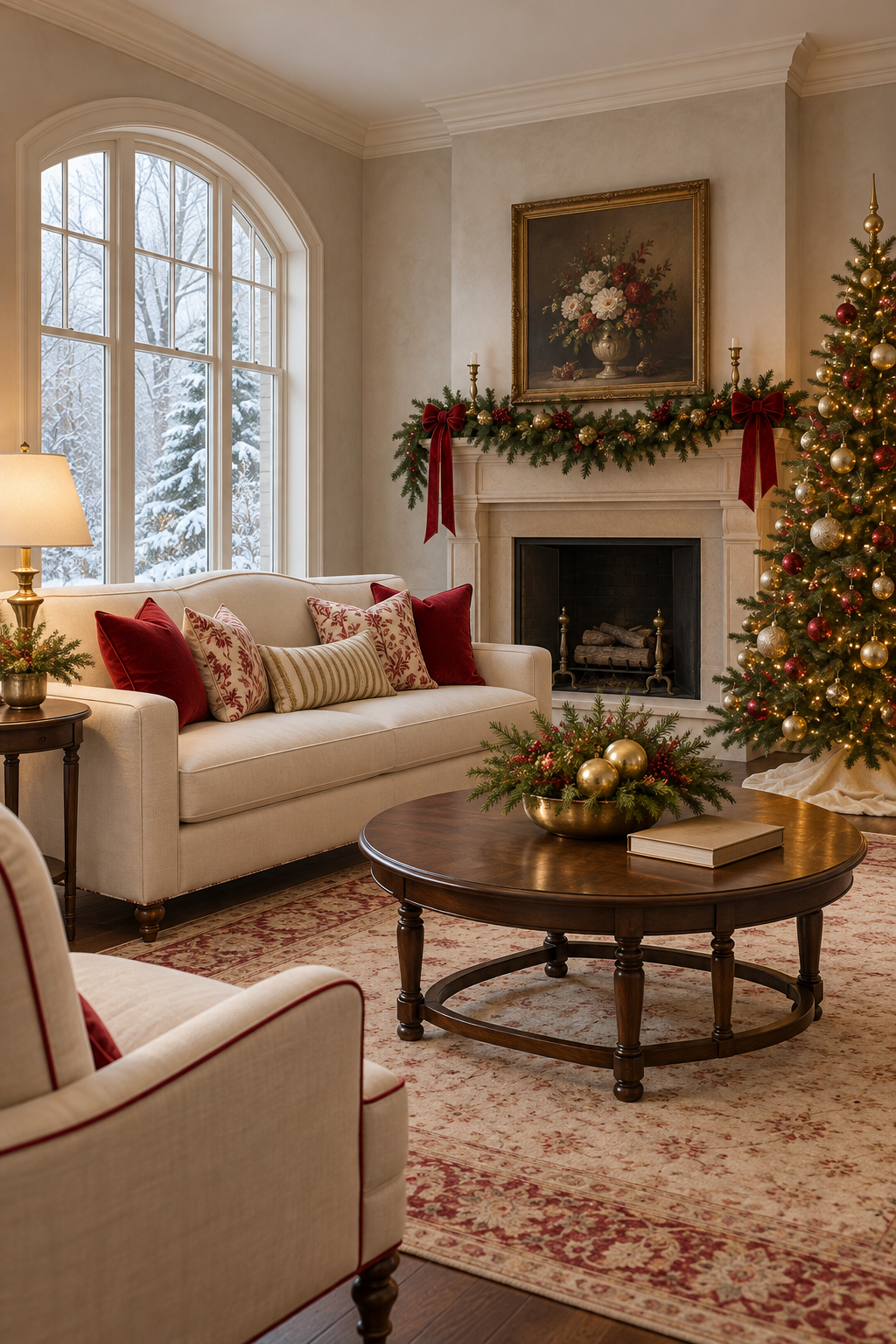
A Christmas tree can share the room with the furniture you use every day. In this red and gold living room, an ivory sofa and round wood coffee table remain clearly visible beside the decorated tree. Velvet pillows, mantel bows, and red ornaments repeat the color, while warm gold appears in the lighting, picture frame, and greenery.
The room suggests a useful approach to seasonal decorating: keep the seating arrangement recognizable, then connect the holiday details around it.
What Makes This Look Work
The sofa carries part of the Christmas color
Red velvet and red-on-cream botanical pillows bring the palette into the seating area. The striped lumbar offers a quieter middle note. Because those fabrics already relate to the tree and bows, the sofa feels included without needing novelty cushions or holiday lettering.
Three shapes organize the greenery
The tree rises beside the fireplace, the garland runs across the mantel, and the table arrangement spreads close to its bowl. Their different outlines give each display a clear role. The eye can move around the room without encountering the same tall arrangement on every surface.
Gold changes with the surface
The ornaments catch pinpoints of tree light, while the frame and lamp offer more settled areas of warm color. The centerpiece bowl brings that metallic note down to the table. Mixing these surfaces gives the gold variation without introducing another strong accent color.
Key Pieces to Recreate the Look
Red velvet pillow covers
The solid pillows connect everyday seating to the seasonal red accents. Choose a deeper red that remains distinct against ivory rather than relying on printed holiday motifs.
Red and cream botanical pillow covers
These bridge the cream upholstery and darker velvet. A modest botanical pattern brings detail to the sofa without competing with individual tree ornaments.
Evergreen mantel garland
The garland outlines the fireplace beneath the framed artwork. Look for a flexible structure with branches that can be shaped, so it can rest naturally along your own mantel.
Red velvet ribbon
The bows make red visible above the sofa’s height. Ribbon with enough body to hold a loop works well, provided its tails still fall naturally rather than sticking straight out.
Gold ornaments with smaller red accents
Gold baubles form the tree’s main decorative layer, with red appearing between them. A mixture of finishes can create variation while keeping the selection focused on these two colors.
A shallow gold centerpiece bowl
The bowl gathers short greenery, red berry accents, and gold ornaments into a separate table display. Its broad shape makes this arrangement different from the vertical tree beside it.
How to Style It at Home
1. Test the tree footprint with the chairs in use
Decide where the tree will stand before unpacking the smaller decorations. Mark its expected branch spread on the floor, then pull the nearby chair into the position people actually use. Check the route past it from the doorway.
If the branches would press into a seat or narrow the route, choose a slimmer tree or another location. Keep the room’s comfortable furniture layout as the starting point. The inspiration shows an unlit fireplace; a working fireplace needs the clearances specified for the appliance and surrounding decorations.
2. Carry one fabric color up to the mantel
Set out the sofa pillows, then compare the ribbon against them. This gives the mantel a connection to the room before you add ornaments. Shape and attach the garland using supports suitable for its weight and the mantel surface, then secure the bows to that supported arrangement.
Let the tails hang where they will remain clear of the fireplace opening and any controls. A bow can be prominent without long tails reaching into an area that needs to stay accessible.
3. Place ornament sizes where the branches can hold them
Start with the larger gold ornaments in stronger, deeper branch positions, leaving them visible between the tips. Add smaller gold and red pieces where there is space around each hanging shape. Step back after each section instead of filling every gap automatically.
Aim for varied spacing, not identical rows. Where two large ornaments touch, move one to a different depth or branch. Fine light strands should follow the branches, with the cord route planned before the area around the tree is finished.
4. Make the tabletop a smaller seasonal gesture
Use short greenery in the shallow bowl, then nestle a few ornaments among it so they cannot roll across the table. The image includes a book beside the arrangement, giving the round surface a second, simpler shape.
You do not need to copy every mantel detail below it. Keeping ribbon on the mantel and clustered baubles in the table bowl lets the two displays share colors while retaining different outlines.
Shop Similar Pieces
Compare the garland’s branch coverage
Check photos of the garland stretched out as well as styled. A listing may show two lengths combined for fullness. Compare the usable length, flexibility, and attachment points with your mantel before ordering.
Choose ribbon by width and handling
Look for close views of the edges and reverse side, which can become visible in a bow. Check whether the ribbon is wired and how much is included; a photographed finished bow does not necessarily represent the quantity in one roll.
Read the ornament assortment
Compare the actual size mix and red-to-gold balance rather than judging only the box photo. Check whether hanging caps and cords are included. Lightweight ornaments offer more placement options on softer branch tips.
Find a bowl that can stand alone
Look for a stable base, a plain rim, and enough depth to contain the ornaments. A highly ornate vessel would repeat the frame’s detail, while a simpler bowl keeps attention on the greenery above it.
Final Styling Tip
When the season ends, label each light strand by its room location before packing it away. A note such as “tree, lower half” makes it easier to repeat a working arrangement without rebuilding the cord plan from scratch.