
*This post may contain affiliate links for which I earn commissions.*
This inspiration image was created with AI.
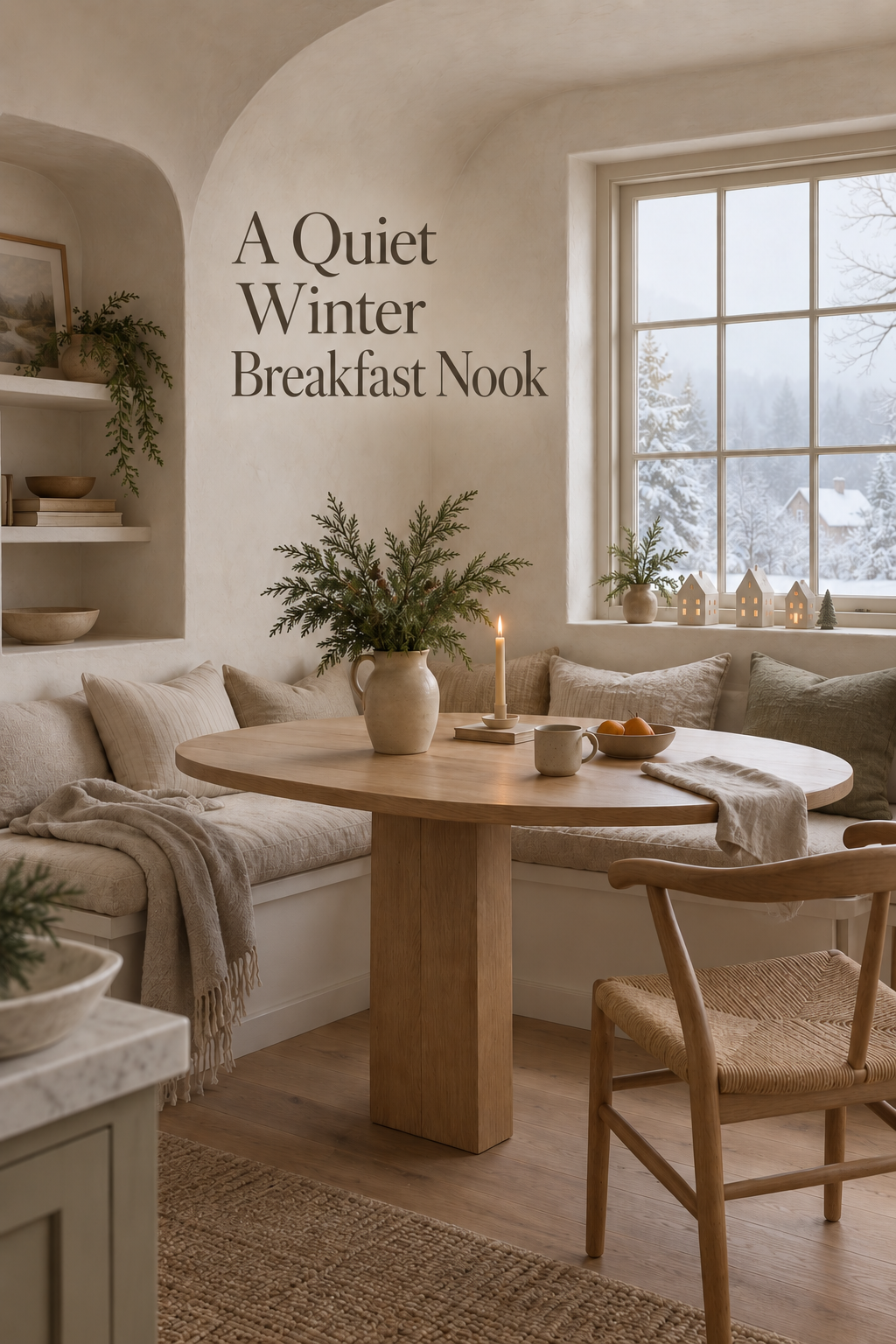
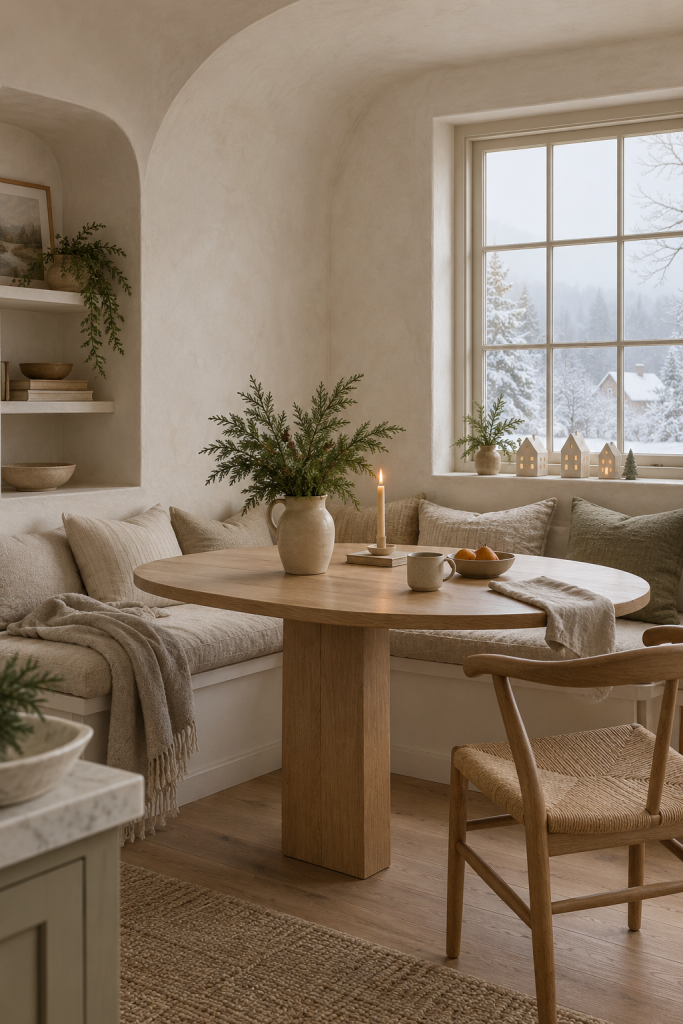
Winter decorating does not need to fill every available surface. In this breakfast nook, the seasonal mood comes from a few carefully chosen details: cedar branches in a cream stoneware jug, softly glowing ceramic houses on the windowsill, and a single warm taper candle. Oatmeal-toned cushions, a loosely draped throw, and pale oak keep the built-in seating comfortable and relaxed. Beyond the divided-light window, snow-covered trees sharpen the sense of winter while the room itself stays warm, light, and uncluttered.
The curved plaster ceiling gives the nook a sheltered quality. Because the architecture already has such a strong presence, the decor can remain restrained. The result feels seasonal without depending on red accents, oversized garlands, or a crowded centerpiece.
What Makes This Look Work
The palette is narrow, but it is not flat. Warm white plaster, cream ceramics, oatmeal linen, pale wood, and muted cedar green sit close together in value. Their differences come mostly from texture. The walls are softly mottled, the cushions have a visible weave, the chair seat is tightly woven, and the oak table shows natural grain. Those subtle changes keep a neutral room from feeling washed out.
The round tabletop also softens the many straight lines in the scene. It sits against the angled built-in bench and the square window grid, creating an easy focal point without adding another decorative object. The cedar arrangement rises from the center of the table, but its loose branches allow light and sightlines to pass through. A low mug, fruit bowl, folded cloth, and candle spread the composition horizontally so the greenery does not feel isolated.
Light is doing two different jobs here. Cool daylight from the snowy window defines the shape of the nook, while the candle and ceramic houses provide small pockets of amber warmth. That contrast makes the scene feel inviting even though most of the colors are pale. If I were adapting this idea for a room with less natural light, I would keep the greenery airy and use two or three low warm light sources rather than one bright overhead fixture.
Key Pieces to Recreate the Look
Oatmeal Linen Cushion Covers
Choose covers in flax, oatmeal, mushroom, or warm stone instead of a stark white. A visible linen-like weave and slightly relaxed finish will suit the plaster and wood better than a smooth, shiny fabric.
A Soft Neutral Throw
The throw adds a looser layer to the structured built-in bench. Look for a lightweight woven texture with simple fringe, then let part of it fall naturally rather than folding it into a precise rectangle.
Cream Stoneware Jug
A rounded jug gives the cedar arrangement enough visual presence to hold the center of the table. An off-white matte or lightly speckled finish will blend with the room while still separating clearly from the oak surface.
Natural-Looking Cedar Stems
Select stems with fine, irregular branch tips and more than one shade of green. A small number of longer pieces will reproduce the open silhouette more convincingly than a dense bundle of identical short sprays.
Simple Ceramic Houses
The houses introduce a recognizable winter detail without turning the nook into a full village display. Small warm-white forms with cutout windows work best, especially when their rooflines and heights vary slightly.
Beeswax-Tone Taper and Low Holder
The honey-colored taper creates a focused point of warmth near the greenery. Pair it with a stable, low-profile holder so the candle feels integrated with the tabletop instead of becoming a tall formal accent.
Pale Wood and Woven Accents
A light oak table and natural woven chair carry the neutral scheme into the furniture. If replacing furniture is unrealistic, a woven seat pad, shallow basket, or natural-fiber rug can introduce the same texture on a smaller scale.
How to Style It at Home
Start by clearing the table and windowsill so you can see the room’s fixed shapes. Place the largest seasonal element first. Here, that is the cedar-filled jug. Set it slightly off the exact center if the table is used every day, leaving a practical area for cups, plates, or a laptop. Trim or bend the lowest branches so they do not brush against place settings.
Next, build comfort along the bench with cushions in closely related neutrals. Mix one or two subtle textures rather than several patterns. The image uses pillows with softly varied weaves and tones, which gives the seat depth without making it busy. I would reserve the palest cushion for the darker corner of the nook and place the deeper mushroom or sage-gray tone nearer the bright window. That small shift helps the seating read evenly across changing daylight.
Keep the windowsill display low. Group three to five ceramic houses toward one side rather than lining them across the entire ledge. Leave gaps between the buildings so their individual rooflines remain visible, and add only one very small tree or vessel if the arrangement needs a transition at the edge. Battery-operated lights are the most practical option for the houses because no loose cord needs to trail through the seating area.
Treat the candle as evening decor rather than a permanent unattended feature. Position it on a stable holder with generous clearance from cedar, linen, books, and the window treatment. When the nook is in active use, an LED taper can provide a similar warm point without an open flame. The fruit bowl and mug already make the table feel inhabited, so extra ornaments are unnecessary.
Finally, view the arrangement from the kitchen or adjoining room. The cedar should be the first seasonal element you notice, followed by the glowing houses and the layered seating. If the windowsill competes with the table, remove the smallest accessory or reduce the brightness inside the houses. Editing from the approach view is more useful than judging each object at close range.
Shop Similar Pieces
Choosing Oatmeal Linen Covers
Prioritize warm undertones, a dry woven surface, and removable covers that can handle breakfast-area use. Avoid bright optical white or heavy decorative trim, which would make the seating feel more formal than the inspiration.
Find a Rounded Stoneware Jug
Compare the width of the body with the opening at the top. A broad base and moderately narrow neck will support loose cedar branches while echoing the soft curves of the ceiling and table.
Look for an Understated Ceramic Village
Search for a compact set in matte warm white with simple window cutouts. Before committing, I would check the listed dimensions against the actual windowsill depth, since oversized houses could block the view or make the ledge feel crowded.
Shop Natural Cedar Stems
Choose flexible stems that can be spread into an asymmetrical shape. Mixed branch lengths and delicate tips matter more than a very full count, and they make it easier to adjust the arrangement around the candle and daily table items.
Final Styling Tip
Place small felt pads beneath stoneware pieces before setting them on painted sills or pale wood. They protect the surface and make it easier to shift the display as daylight, seating needs, or holiday routines change.