
*This post may contain affiliate links for which I earn commissions.*
This visual was generated with AI. The arrangement below is an interpretation for a real sitting room, with product categories and styling choices to adapt rather than exact rendered items to purchase.
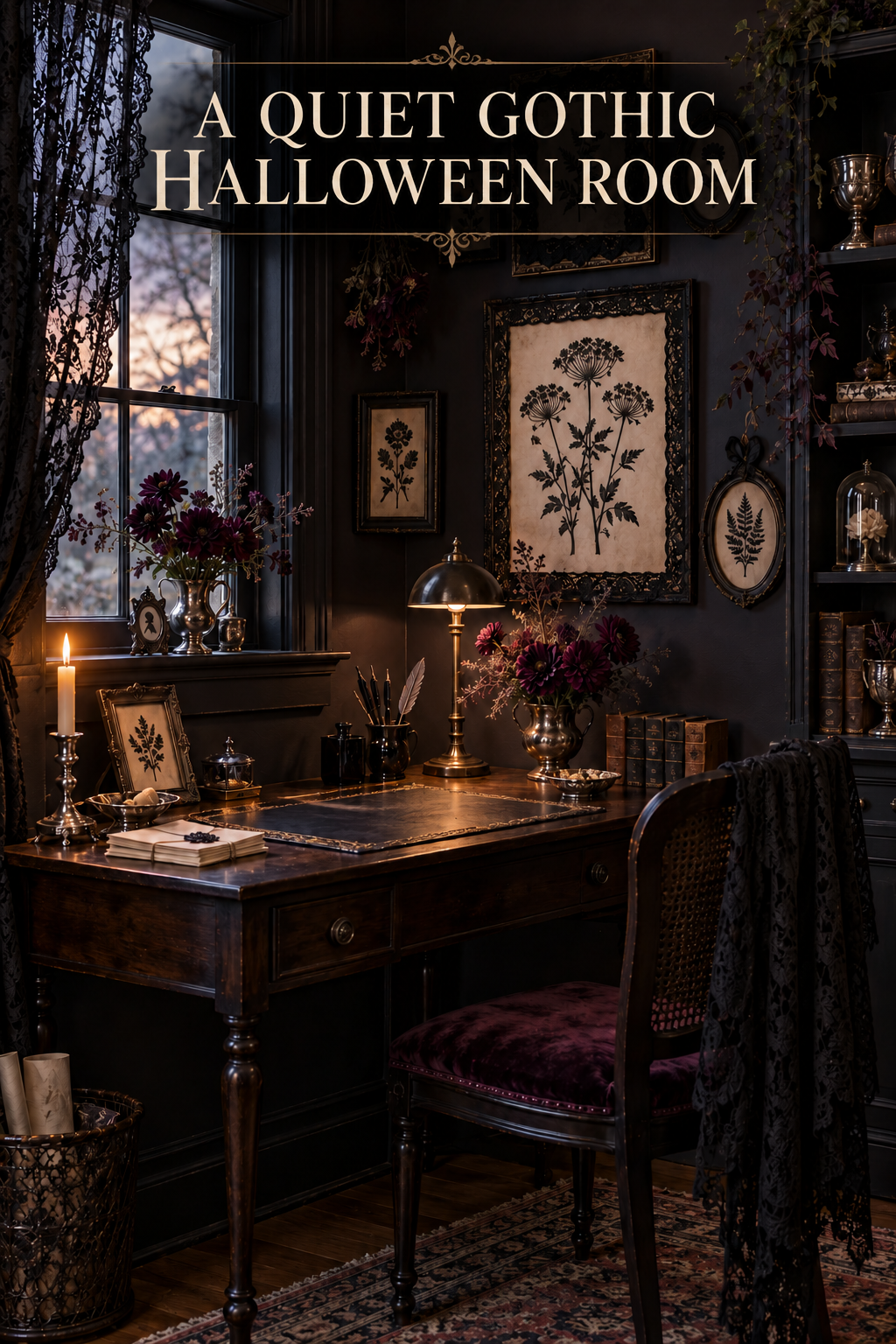
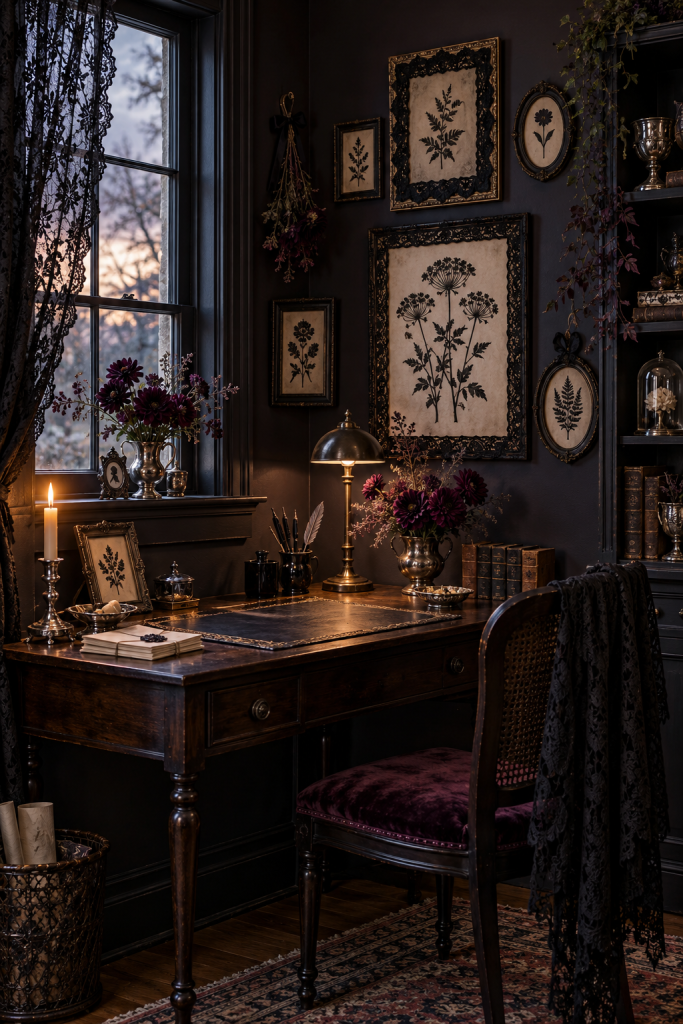
The empty writing desk in this Halloween inspiration image suggests a story without a costume, character, or theatrical prop. Black lace frames botanical prints above the desk and softens the window. Dark flowers, an old-fashioned lamp, and reflective silver-toned accents create a room that feels mysterious but still usable.
What Makes This Look Work
Botanical art tells a restrained story
The wall is the main narrative surface. Pale backgrounds make the plant silhouettes readable against dark paint, while lace edging changes the prints from ordinary gallery art into something more evocative. Different frame sizes keep the group from looking like a matched set. The desk below gives the images a believable context: it reads as a collector’s working corner.
Black lace bridges window and furniture
Lace appears as a curtain and as a textile on the chair. The open pattern allows the cool window light through instead of turning the room into a solid black box. That transparency is useful in a small home: a single panel or narrow length of trim can establish the mood without covering functional light sources or crowding the writing surface.
Plum flowers soften the dark palette
The dark purple blooms near the window and desk supply a gentler shape against the straight edges of frames and books. Small reflective vessels lift them out of the near-black background. This is the point where Halloween color enters, but it stays closer to wine and aubergine than bright novelty orange.
The desk remains a desk
There is a clear writing area beneath the wall art. A lamp supplies focused light, and only a few objects sit near the edges. That empty center is the difference between a themed vignette and a practical room. The photograph’s fictional atmosphere comes from placement and light rather than from filling every surface.
Key Pieces to Recreate the Look
Botanical prints with pale grounds
Choose plant silhouettes that remain legible at a distance. They can be seasonal prints, reproductions, or your own pressed-flower artwork, provided the display avoids text that asks guests to read it.
Mixed dark frames
Use several sizes with a related dark finish. The differing outlines build a collected arrangement while the similar tone prevents the gallery from becoming visually scattered.
Black lace trim or a narrow panel
Trim can edge a mat or sit behind glass; a separate curtain panel filters window light. Select lace with enough open space for the motif to show rather than a heavy, opaque fabric.
Dark plum faux stems
Choose a small number of full, bendable blooms. A compact arrangement preserves the desk’s working area and can be reused after Halloween in another fall setting.
Silver-tone vase
A reflective container separates the flowers from the dark wall. A narrow opening helps a few stems stand naturally without a large filler bundle.
Compact task lamp
The lit shade makes the desk useful at dusk. Check the reach, switch position, and cord route before choosing a decorative silhouette.
Dark textile for the chair
A removable lace or textured throw can extend the mood onto the seat. Keep the sitting surface comfortable and avoid trailing fabric where chair legs may catch it.
How to Style It at Home
Draw the gallery outline on paper
Trace each frame and tape the paper shapes to the wall before making holes. Keep the largest botanical print near the desk center, then balance smaller pieces around it. Allow a clear gap above the lamp so the shade does not visually collide with a frame.
Add lace where it changes the view
Try one curtain panel at the window first. If the room already has a dark wall, a small amount of openwork will be more effective than several dense layers. For lace edging on art, mount fabric securely behind glazing or on a removable mat rather than allowing loose fibers to cover the print.
Reserve a working zone
Place the flower vessel and decorative books at the ends of the desk. Sit down and check whether there is enough room for a notebook and lamp. Remove anything that must be moved every time the desk is used.
Control the evening light
Use the task lamp as the principal warm light source. A battery candle may be added away from curtains and papers, but the image’s mysterious effect does not require an exposed flame. Test the room at the actual hour you plan to use it: dark walls can absorb more light than expected.
Shop Similar Pieces
Frame a cohesive mix
Check mat openings, hanging hardware, and frame depth. Different sizes can share one finish, making inexpensive prints look intentionally grouped.
Assess lace openness
Compare fabric samples against a light background. The pattern should be visible at the chosen distance without obscuring artwork or shutting out the window.
Pick flowers by silhouette
Look for varied bloom sizes and flexible stems rather than the darkest available color alone. A few convincing stems can fill a narrow vessel.
Prioritize the lamp’s function
Check bulb compatibility, switch access, and shade direction. A lamp that illuminates the writing surface keeps the corner usable after the seasonal styling comes down.
Final Styling Tip
Keep a small tray inside a desk drawer for loose seasonal pieces. When the writing surface needs to be cleared, the room can retain its mood through the wall art and lace alone.