
*This post may contain affiliate links for which I earn commissions.*
This inspiration image was created with AI.
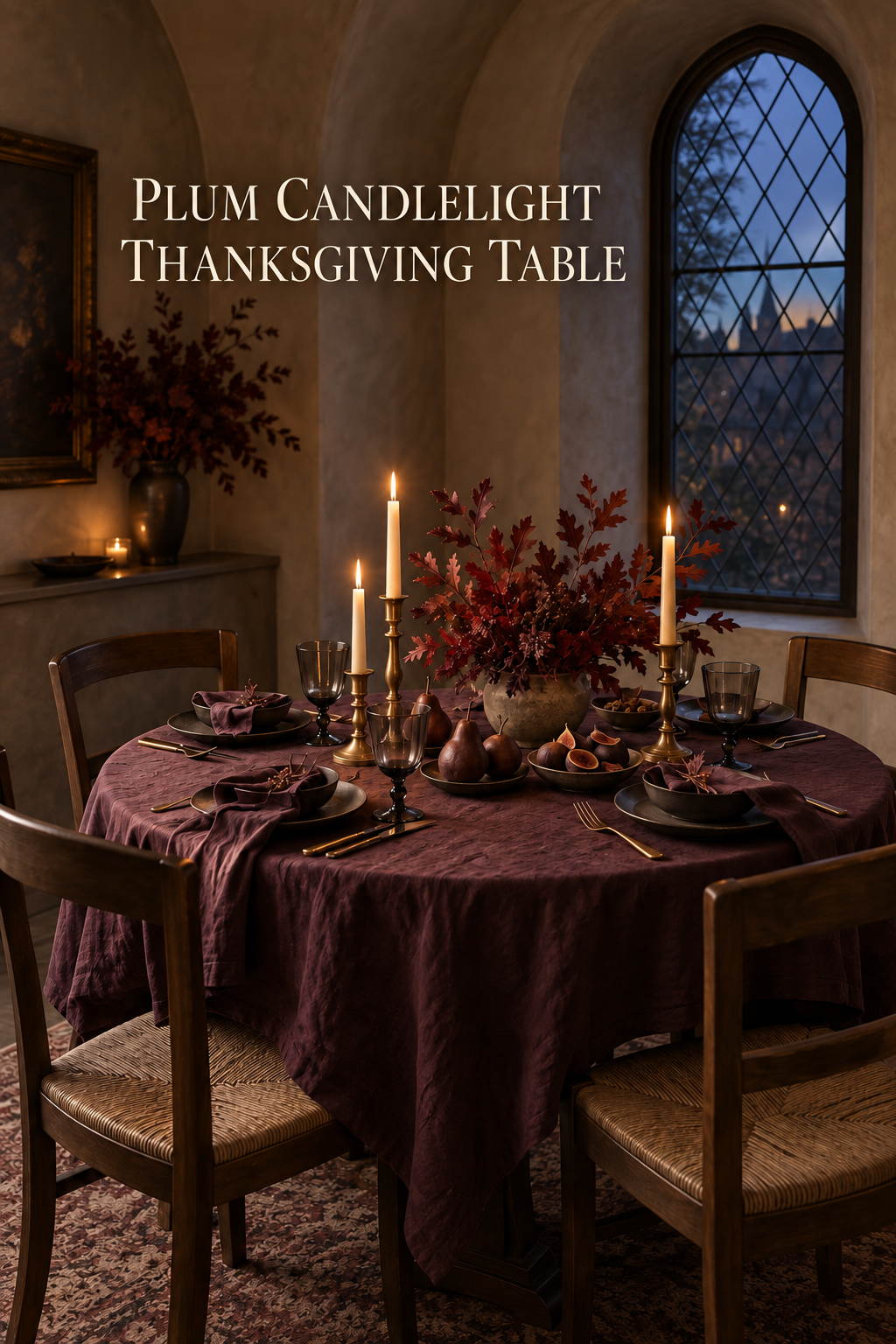
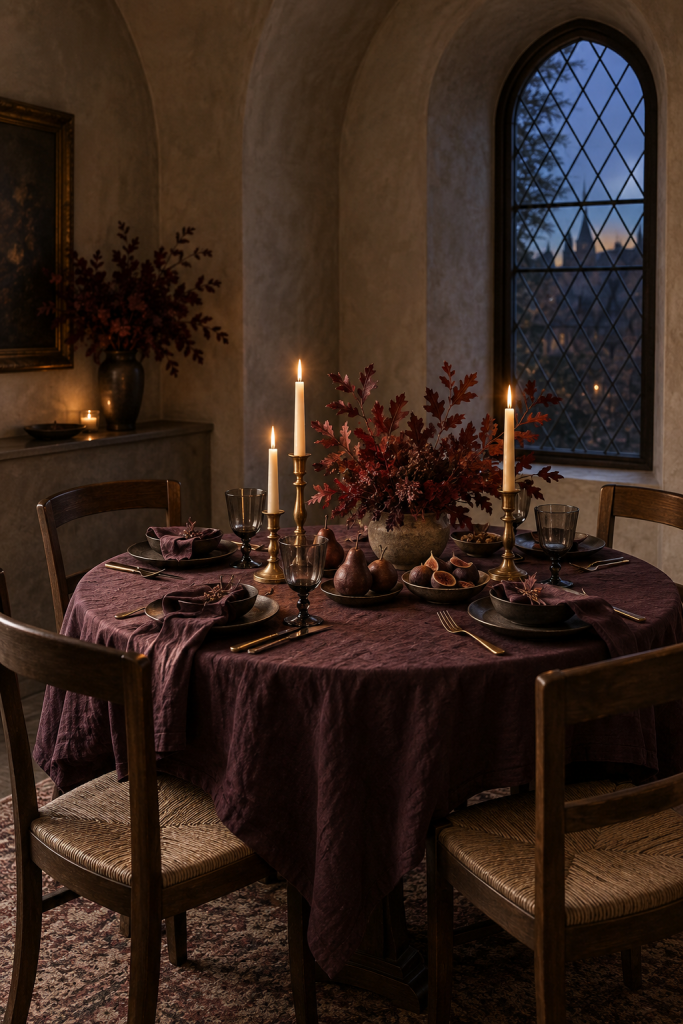
Thanksgiving color does not have to stop at pumpkin orange and wheat gold. This candlelit dining alcove moves the holiday into a deeper register with plum linen, charcoal dishes, smoky goblets, aged brass, burgundy foliage, figs, and dark pears. The round table still feels welcoming and usable, yet the restrained palette gives an ordinary gathering a more intimate evening character.
The useful idea here is contrast. Cool blue light at the arched window keeps the brown plaster and wine-toned textiles from becoming heavy, while candlelight draws attention back to the places where guests will sit. Nothing depends on a rare antique or a complicated centerpiece. Most of the effect comes from color, finish, and thoughtful spacing.
Why the Plum Palette Feels Festive
The tablecloth establishes the mood before any seasonal object appears. Its dusty plum color is rich enough for a holiday but softer than bright purple, and its relaxed texture prevents the setting from looking formal. Charcoal plates and bowls create a dark frame around each napkin, helping the individual settings read clearly against the cloth.
Brass tapers provide the brightest hard surface. Because the holders vary slightly in height, the candlelight forms a loose rhythm instead of a rigid row. Smoky goblets repeat the darker tones without becoming opaque, so they add atmosphere while leaving the tabletop visually open.
The centerpiece works because it is broad rather than towering. A low stone vessel carries burgundy oak leaves across the middle of the table, while bowls of figs and pears sit close to the surface. I would preserve that low profile in a real dining room even if the foliage had to be trimmed more aggressively. Conversation and serving space matter more than matching the image’s fullness exactly.
The arched window also plays a design role. Its blue-hour light introduces a cool note that separates the plum, brown, and brass layers. In a room without a dramatic window, a charcoal wall, dark framed mirror, or cooler nearby lamp could create a similar boundary.
Key Pieces to Recreate the Look
Dusty Plum Table Linen
Choose a washable tablecloth or runner with a muted wine undertone and visible woven texture. A fabric that drapes softly will feel more relaxed than crisp banquet linen.
Matte Charcoal Dinnerware
Low-sheen plates and bowls anchor each place setting. Look for simple shapes so the dark color feels intentional rather than theatrical.
Aged-Brass Taper Holders
A small group in two or three heights brings warmth and vertical movement. Stable bases and cups that fit standard tapers are more important than an antique-looking finish.
Smoky Glass Goblets
Gray or smoke-tinted glass adds depth without blocking the tablecloth beneath it. Keep the silhouettes straightforward so the glasses can work beyond the holiday.
Burgundy Branches
Fresh or convincing faux oak leaves carry the autumn reference. Use one generous branch structure instead of many unrelated stems.
Dark Seasonal Fruit
Figs and pears add organic shapes and a harvest cue. Real fruit can be moved to a serving board later, while faux pieces offer a reusable display option.
Low Stoneware Vessel
A weighty, wide-necked pot supports the branches and keeps the arrangement visually grounded. Choose a neutral gray-brown finish that does not compete with the linen.
How to Style It at Home
Start by fitting the tablecloth to the actual table rather than chasing a floor-length drape. On a round table, an even drop keeps chair movement comfortable. Set the dinnerware next so you can see how much center space remains before adding decorative pieces.
Place the foliage vessel slightly off the geometric center if that opens a clearer route for serving dishes. Arrange the tallest brass holders around it, not directly in front of a guest’s face. Then add one or two shorter holders to bridge the height between the leaves and tabletop. Keep flames well away from foliage and loose textiles, or use convincing flameless tapers when clearances are tight.
Divide fruit among two shallow bowls instead of scattering it across the cloth. This makes the styling easier to lift when dinner arrives and prevents round fruit from rolling toward glassware. I would use the figs as the smaller detail and let two or three pears provide the stronger silhouette.
Fold the napkins loosely inside the bowls or across the plates. A tiny leaf or tied stem is enough decoration; elaborate napkin ornaments would compete with the centerpiece. Finally, turn on the room’s ambient light and dim it before lighting the table. The goal is a soft transition between the table and room, not a bright tabletop floating in darkness.
Shop Similar Pieces
Find a Muted Plum Tablecloth
Compare undertones in daylight and choose plum, mulberry, or muted burgundy rather than vivid violet; a linen blend offers texture with easier care.
Choosing Stable Brass Taper Holders
Look for weighted bases, varied but compatible heights, and a softly aged finish that will not read as mirror-bright gold.
Search for Smoke-Tinted Goblets
Prioritize translucent gray glass, comfortable rims, and a scale that leaves room between each plate and centerpiece.
What to Look for in a Stoneware Crock
A low, wide vessel with a narrow enough opening will support branches without requiring an oversized bouquet.
A Practical Lighting Check
Evaluate the finished table from both a standing and seated position. Candle flames that look well spaced from across the room can align directly with a guest’s view once everyone sits down. Shift the holders a few inches outward or lower one candle if necessary, then check that the cool background light still separates the foliage from the wall. If dinner will continue after the window turns fully dark, one dim shaded lamp elsewhere in the room can prevent the corners from disappearing while preserving the candlelit mood.
Final Styling Tip
Before guests sit down, place an empty tray nearby that can hold the fruit bowls and one pair of candlesticks. Clearing those pieces in a single trip creates serving room without dismantling the entire table.