
*This post may contain affiliate links for which I earn commissions.*
This inspiration image was created with AI.
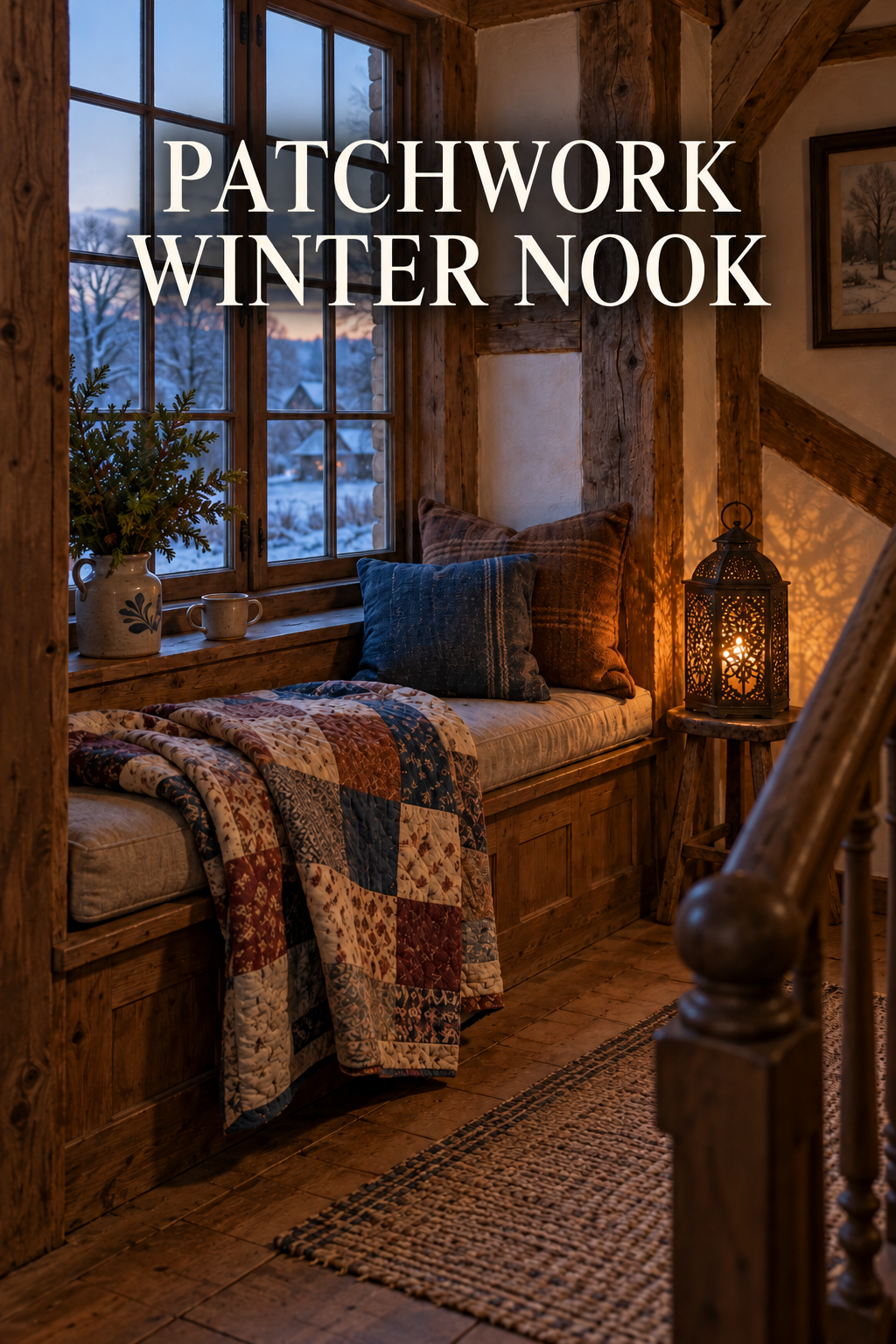
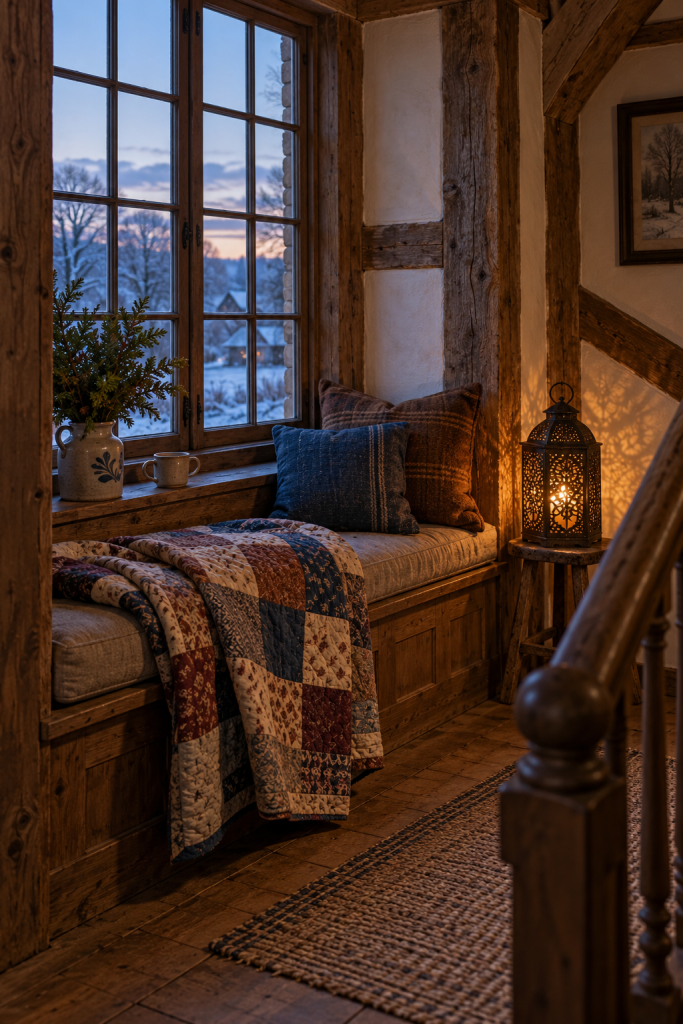
A deep timber window seat becomes a winter retreat through a few highly tactile layers. The muted patchwork quilt carries rust, indigo, brown and cream across the bench, while two wool cushions repeat the darkest shades. Cedar in a salt-glazed jug and a pierced metal lantern add seasonal character without turning the nook into an elaborate Christmas display.
What Makes This Look Work
The window supplies cool blue evening light, while the lantern throws a concentrated amber pattern across the plaster and timber. That warm-cool contrast gives the small corner depth.
Patchwork is the main decorative statement. Its many prints stay calm because the colors are aged and low in contrast rather than bright or sharply graphic.
The cushions are intentionally simpler than the quilt. Solid and lightly striped surfaces give the eye a resting place and support the bench without competing with the patchwork.
Cedar and stoneware connect the soft furnishings to the rural architecture. The arrangement remains believable because the mug is within reach and the lantern sits on a stable stool, not on the upholstered seat.
Key Pieces to Recreate the Look
Muted patchwork quilt
Look for small-scale prints in rust, indigo, tan and cream with a softly washed finish. The quilt should be large enough to fold and still drape over the seat edge.
Wool-look cushions
Choose two cushions with different but compatible weaves. Tobacco brown and faded navy anchor the patterned quilt.
Pierced metal lantern
A dark metal lantern with open perforation creates the patterned glow that distinguishes this nook. Use it with a flameless candle indoors.
Salt-glazed stoneware jug
Select a sturdy cream or gray jug with a simple painted motif and a mouth wide enough for a loose cedar clipping.
Natural cedar stems
A compact asymmetrical bunch is sufficient. Realistic branching matters more than adding berries or ornaments.
Neutral bench cushion
Use a durable flax-toned cover that allows the quilt colors to remain the focal point.
How to Style It at Home
Begin styling by planning from the sitting position outward, prioritizing everyday comfort and safety before finalizing decorative accents.
1. Layer the Textiles for Depth and Comfort
- The Foundation: Begin with a fitted neutral seat cushion in a durable flax tone that keeps the focus on the patchwork.
- The Quilt: Fold the quilt lengthwise so both its patchwork face and bound edge remain visible, allowing one end to drape naturally over the bench rather than covering the whole surface. If your existing quilt features brighter patterns, fold it so a quieter, low-contrast section faces outward instead of buying a replacement.
- Cushion Placement: Set the two cushions upright in the deep corner and overlap them slightly. Keep the indigo cushion forward because it bridges the snowy blue exterior view and the warmer interior wood.
- Sitting Comfort: Arrange the rear cushion so it directly supports your shoulder blades, and make sure the folded quilt is effortless to pull across your lap.
- Color Restraint: Repeat one blue in the forward cushion and one brown in the timber, and then stop. Keeping neighboring surfaces restrained allows the patchwork to introduce varied colors without looking busy.
- For Shallower Benches: Reduce the arrangement to a single lumbar cushion and a narrower quilt fold. Everyday comfort and a clear sitting area matter far more than copying every single layer.
2. Position the Lantern for Atmosphere and Safety
- Wall-Grazed Shadows: Set the pierced metal lantern on a rigid stool or floor-level stand reasonably close to a plain wall. Test it at dusk and rotate the lantern until the perforated shadow casts beside the seat rather than shining directly across a reader’s face.
- Dedicated Operating Zone: Place the stool beyond the quilt’s overhang. Maintain enough clearance to lift the lantern and reach its switch easily without having to lean across the upholstered seat.
- Lighting Choices: Use an LED candle equipped with an automatic timer set to turn on near dusk, or choose a dimmable warm bulb. This ensures the patterned amber glow appears exactly when it matters, provides easy light control, and avoids the fire hazard of an open flame near loose blankets.
3. Design for Real-World Functionality and Moisture Care
- Sill Protection: Tuck a slim, washable sill mat behind the cushions. It stays completely out of sight while catching occasional drips, protecting both the vintage woodwork and the patchwork quilt.
- Sill Clearance and Mug Space: Place the stoneware jug with cedar on the sill only if the window can still open safely; otherwise, move it to a nearby ledge while preserving the same height relationship. Always leave a stable landing spot for a warm mug well clear of the textiles.
- Morning Condensation Checks: Check the cold glass and window sill on winter mornings before leaving textiles in place. If condensation forms, pull the quilt several inches away from the glass, shift the stoneware jug toward the room side of the seat, and let the timber dry completely.
Shop Similar Pieces
Find a washed patchwork quilt
Compare palette, print scale and binding; avoid high-contrast novelty fabrics for this quiet look.
Choosing textured winter cushions
Look for removable covers in wool, tweed or substantial woven blends, using one dark blue and one warm brown.
Shop a pierced metal lantern
Match the tall dark silhouette and check that it accepts a flameless candle.
Look for a rustic stoneware jug
Prioritize stable proportions, a warm neutral glaze and a simple folk motif.
Final Styling Tip
Rotate the quilt fold every few days if the nook receives direct sun; this helps prevent one exposed section from fading faster than the rest.