*This post may contain affiliate links for which I earn commissions.*
This image was created with AI and is presented as decorating inspiration.
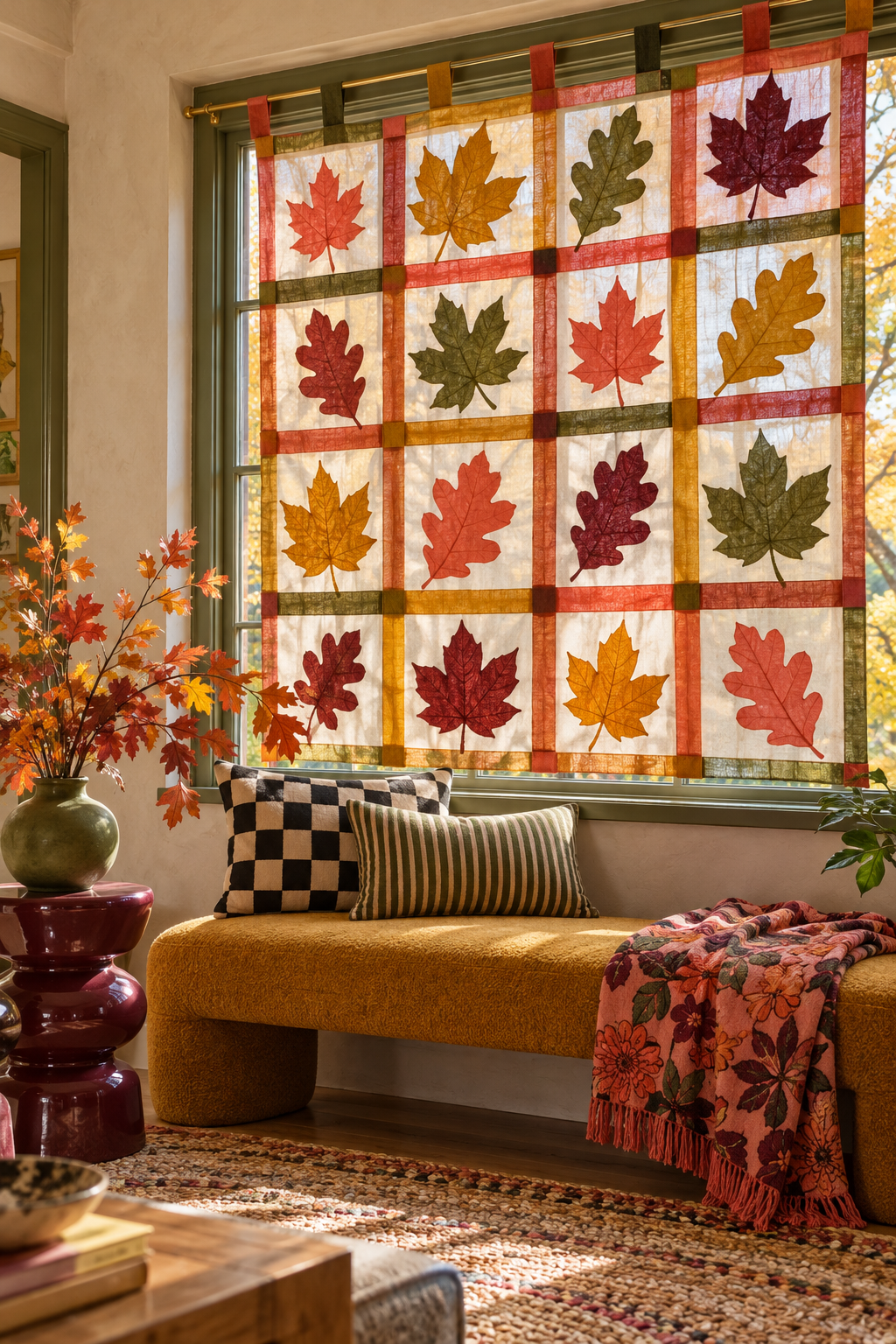
The window is the main decoration in this autumn sitting corner. A translucent curtain carries a grid of coral, mustard and olive bands, with large leaf shapes filling the pale squares. Below it, an ochre bench holds a checked cushion, a striped cushion and a floral throw. The patterns differ in scale, but they share enough color to feel connected.
A sculptural berry-colored side table and a green vase extend the palette beyond the curtain. The result is a playful fall space where the strongest idea occupies the window itself. You can adapt the arrangement with a decorative textile panel and pieces already in your room, without reproducing every leaf or furnishing.
What Makes This Look Work
Daylight becomes part of the pattern
Light passing through the pale curtain squares separates the leaves from the colored grid. The window still reads as a window, with the textile adding a seasonal layer in front of it. This is why a translucent panel suits the idea better than a heavy opaque hanging that removes the daylight entirely.
The grid gives the leaf shapes a clear order
Maple-like and rounded leaves alternate across the curtain, with their silhouettes standing out inside separate cells. The bands contain the repeated shapes and keep the pattern legible. Even with many leaves, the eye can recognize the larger patchwork structure before noticing individual details.
Large checks and narrow stripes change the scale
The black-and-cream cushion creates a strong graphic contrast beneath the leaves. A narrower striped cushion is quieter, while the floral throw supplies a softer, more irregular pattern. The plain bench upholstery gives all three textiles a place to rest without adding another competing repeat.
Key Pieces to Recreate the Look
A translucent decorative curtain panel
Choose a panel that lets useful daylight through and can be moved aside. A leaf-patterned textile can suggest the image’s main idea without needing an exact patchwork match.
A curtain rod and compatible hanging method
The visible rod and loops make the textile part of a believable window treatment. Select hardware appropriate to the wall, panel and intended use, rather than treating the decorative cloth as a self-supporting installation.
A low upholstered bench
A simple bench creates a broad block of color beneath the window. Check that its position leaves access to window controls and enough room to sit comfortably.
A large checked cushion
The bold check links to the curtain’s grid while remaining a different pattern. A cover with clear light-and-dark contrast will usually read more strongly than a tiny check.
A narrower striped cushion
Fine stripes provide a change in rhythm beside the larger squares. Pull one stripe color from the curtain or bench so the mix feels deliberate.
A floral throw
A loose botanical pattern introduces curved shapes beneath the regular grid. Choose a throw that repeats some autumn colors without matching every shade in the window panel.
A rounded side table and simple vase
The berry table in the image adds a curving silhouette, with a green vase holding branches above it. A stable existing table can serve the same role even if its shape or finish differs.
How to Style It at Home
Test the panel against your actual daylight
Hold a sample or the proposed panel in front of the window before committing to the treatment. View it from inside during the hours when you use the room. A cloth that looks pale on a table may appear much darker when several layers overlap across the glass.
Consider privacy as a separate requirement. A decorative sheer may not provide the coverage your room needs, particularly after dark. Keep an existing blind or other appropriate privacy treatment if necessary, and check that the added panel does not interfere with it.
Give the curtain room to move
Plan a position where the panel can slide aside without catching on the bench, vase or window handle. If you use fabric loops, test how freely they slide along your rod before arranging the furniture below it.
For a handmade textile, choose a hanging method suited to its weight and construction. If you do not plan to sew a patchwork panel, a finished leaf-print curtain can bring the same large leaf motif to the window.
Build the bench mix from different pattern sizes
Start with a plain bench surface. Add the large check first, then place the narrower stripe slightly in front so both remain visible. Drape the floral throw at one end, keeping the middle seat available. This gives each pattern a distinct area instead of piling all of them together.
Avoid choosing cushions solely because every color matches. Their pattern sizes and proportions matter just as much. If the curtain already contains a dense small print, a large simple cushion pattern offers a clearer change than another busy textile of the same scale.
Use the side table to balance the window
Set the vase where branches will not brush the curtain or block its movement. Keep the base fully supported on the tabletop, with the branch arrangement proportionate to the vessel. An arrangement of fewer stems can preserve the airy outline seen beside the bench.
Bring the side-table color into one small area of the textiles if it otherwise feels disconnected. Then stop and assess the corner from farther away. The window should remain the first thing you notice, with the bench and table supporting its leaf-quilt idea.
Shop Similar Pieces
Check the panel’s hanging style
Compare the curtain’s actual width, heading type and care instructions with your rod. A decorative panel may need more stacking space than expected when moved aside. Check how its pattern is positioned within the stated dimensions.
Measure usable bench depth
Look at the seat depth as well as the overall furniture measurements. Thick cushions can leave little room to sit on a shallow bench. Also confirm that the bench will fit below the window without obstructing nearby doors or controls.
Compare prints at their real scale
A close-up product photograph can make narrow stripes or small checks look bold. Seek an image showing the whole cushion cover, or check any stated pattern dimensions. Choose the contrast based on how it will appear across the room.
Consider the vase opening and base
For a spreading branch arrangement, assess the vessel’s base stability and opening shape. A narrow, tall vase may require a different arrangement from the low rounded one shown. The right vessel is the one that supports your stems reliably.
Final Styling Tip
When you open the window or move the curtain, check where the throw fringe falls. Tucking loose fringe back onto the bench keeps it from dragging along the floor as the corner is used.