
*This post may contain affiliate links for which I earn commissions.*
This inspiration image was created with AI.
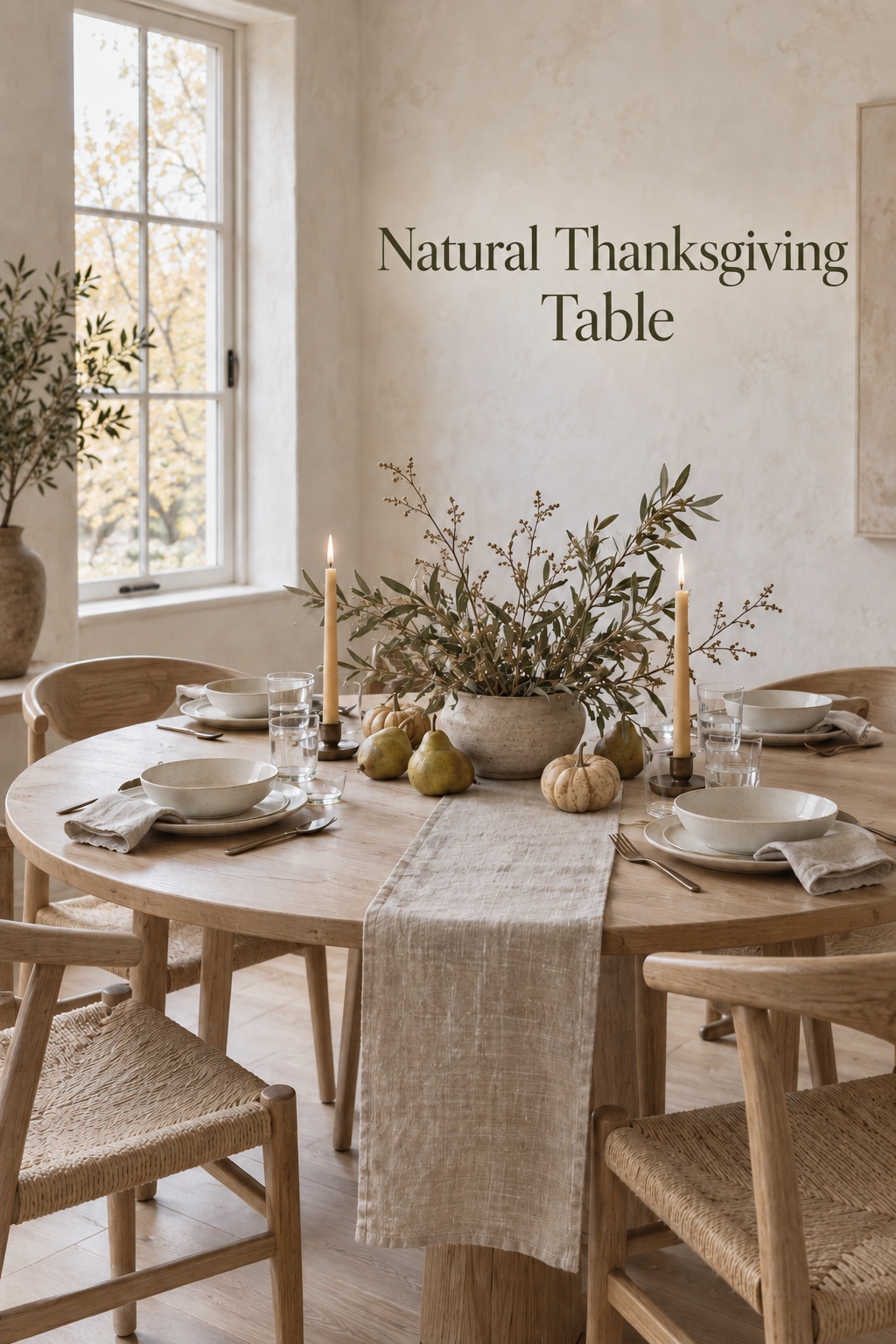
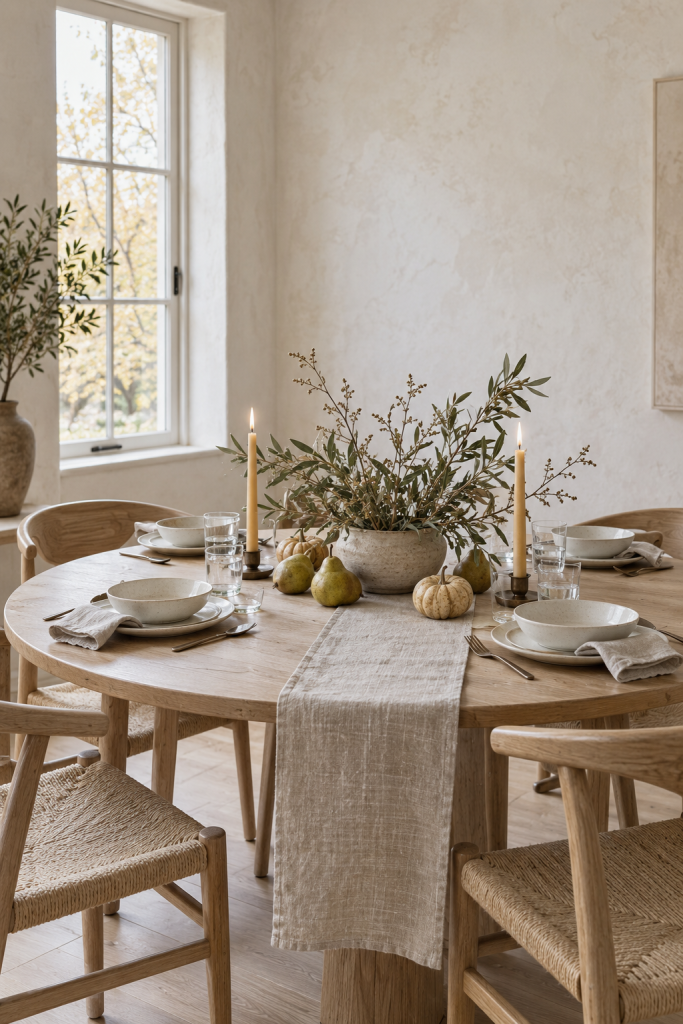
This natural Thanksgiving table trades the usual saturated orange palette for flax linen, pale oak, soft cream stoneware, and fresh-looking olive branches. The result feels seasonal without becoming theme-heavy. Pears and two small pale gourds provide a harvest reference, while the round table and open arrangement keep the setting relaxed enough for an everyday dining room.
What Makes This Look Work
The room begins with a quiet architectural envelope: warm limewashed walls, a simple divided-light window, and pale wood. Those surfaces allow subtle differences in texture to register. The table runner is rumpled rather than pressed flat, the stoneware has a softly speckled finish, and the woven chair seats add another natural fiber without introducing a competing pattern.
The centerpiece works because it is broad but not visually solid. Fine twig stems and olive leaves spread outward, so the arrangement feels generous while light still passes through it. Its stoneware vessel sits low enough that the tallest movement comes from branches rather than a bulky container. Pears repeat the muted green of the foliage at table level, and the pale gourds add just enough Thanksgiving context.
Two slim beeswax tapers create vertical punctuation on either side of the branches. Their warm color connects to the autumn foliage outside the window, but the rest of the palette stays cool and restrained. I would preserve that limited color range when adapting the look, because introducing several rusty or orange accents would quickly change its calm character.
Key Pieces to Recreate the Look
Washed Linen Table Runner
Choose a runner with visible flax texture and a soft drape. A natural oatmeal or undyed tone will stand apart from pale wood without creating a hard stripe down the table.
Matte Cream Stoneware
Simple plates and shallow bowls make the setting feel substantial without looking formal. Look for a warm cream glaze, gently irregular edges, and little or no painted decoration.
Low Stoneware Centerpiece Vessel
A wide, low bowl or crock gives branches a stable base while keeping the arrangement conversational. A mottled off-white finish will echo the dinnerware without matching it exactly.
Olive and Fine Twig Stems
Mix leafy stems with a few finer seeded or twig-like branches. The contrast creates an airy outline and avoids the dense mound associated with a conventional floral centerpiece.
Pears and Pale Gourds
A small group of green-brown pears and two neutral gourds supplies the harvest cue. Keep the fruit near the vessel and vary the spacing rather than forming a perfect ring.
Beeswax Tapers and Dark Holders
Slim honey-colored tapers warm the neutral scheme. Low bronze or dark metal holders provide enough contrast to define the candles against the pale table.
Plain Flax Napkins
Soft napkins placed loosely beside the bowls continue the runner texture. Select a similar neutral with a slightly different weave so the layers do not look like a matched set.
How to Style It at Home
Begin with the runner and four place settings, then position the vessel slightly off the exact center of the round table. Add branches gradually, turning the vessel as you work so the silhouette reads well from every seat. Keep the widest stems above eye level and leave open pockets through the arrangement.
Place the pears in two uneven groups and tuck the gourds closer to the vessel. This makes the produce feel casually gathered rather than lined up as decoration. Set the tapers on opposite sides, but avoid rigid symmetry by moving one slightly forward.
Before guests arrive, sit in each chair and check the sightline. If branches block a face across the table, I would remove one stem instead of trimming the whole arrangement. The negative space is part of the design.
Adjusting Scale, Light, and Serving Space
Scale keeps this neutral scheme from feeling empty. The runner is wide enough to register, the bowls have generous rounded shapes, and the branches reach into the open wall area. None relies on a strong pattern. Instead, the eye moves between large simple forms, fine leaves, and small fruit clusters.
Use the table shape as a spacing guide. On a round table, keep each plate the same distance from the edge and reserve a clear serving zone between the centerpiece and bowls. On a rectangular table, stretch the fruit into a slightly longer line rather than enlarging the vessel. Battery tapers are a practical alternative when sleeves, children, or passing platters make open flame unsuitable.
Turn off cool overhead light and use indirect window light plus one warm lamp elsewhere in the room. The aim is an even, low-contrast glow that lets washed linen and matte glaze show their texture.
Shop Similar Pieces
Find a Soft Flax Runner
Match the visible loose weave and oatmeal tone first. The runner should be long enough to drape over both ends without pooling on the floor.
Choosing Warm Cream Dinnerware
Look for service for four with broad, simple rims and a matte or low-sheen surface. Avoid cool blue-white sets, which may feel stark beside beeswax and pale oak.
Look for Natural-Looking Olive Stems
Prioritize branch length, bendable stems, muted leaf color, and an irregular outline. Several smaller stems are easier to shape than one dense premade bouquet.
Shop Slim Beeswax Tapers
Select a diameter that fits the holders securely and a warm honey color that adds contrast without becoming bright yellow.
Final Styling Tip
Keep a small tray nearby for temporarily removing the pears and low branches when serving large platters; the table can regain its full arrangement after the meal.