
*This post may contain affiliate links for which I earn commissions.*
This image was created with AI. Use it as decorating inspiration, not proof of particular products, materials, or a real installed room. You can borrow its low centerpiece and tactile place settings without recreating the surrounding architecture.
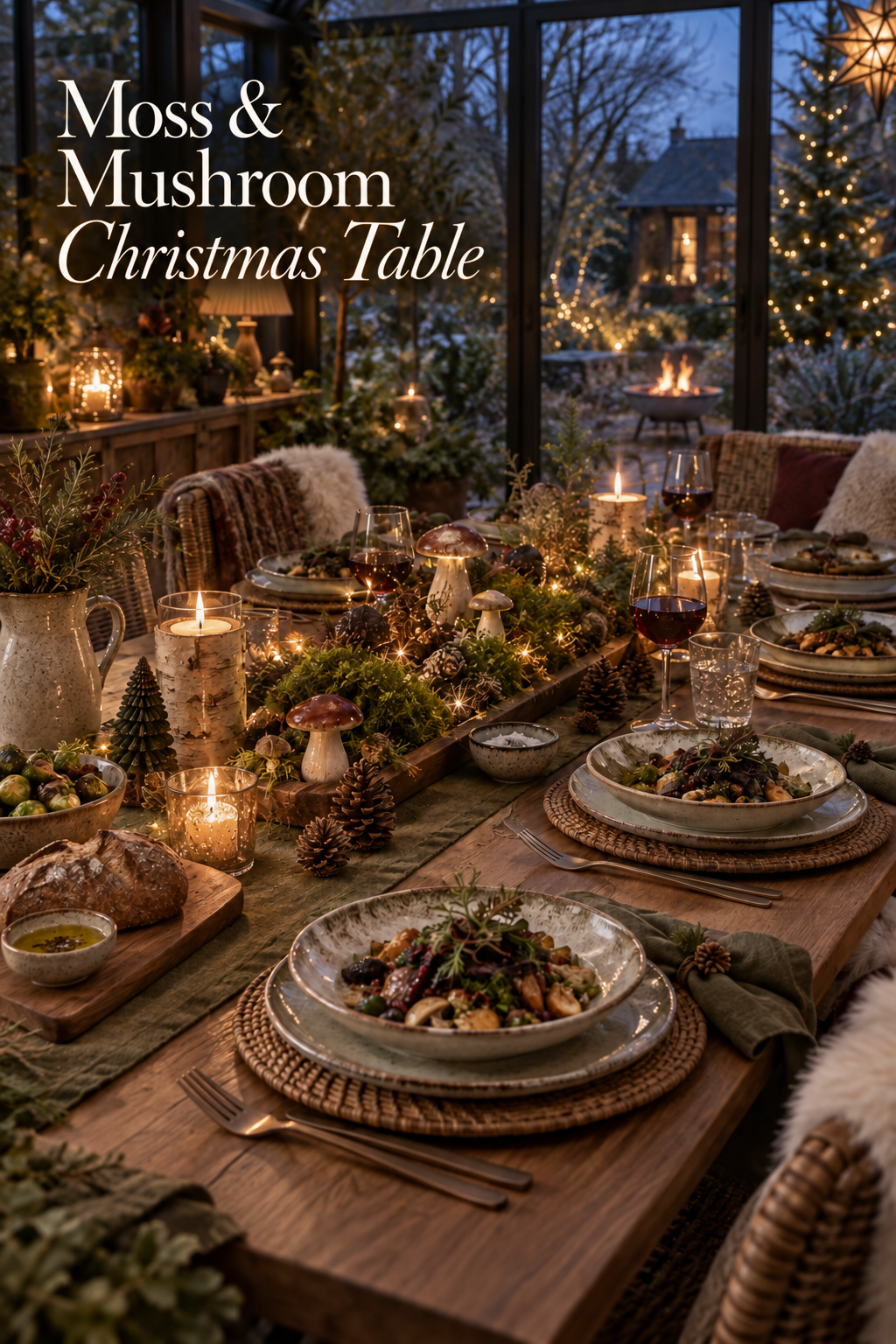
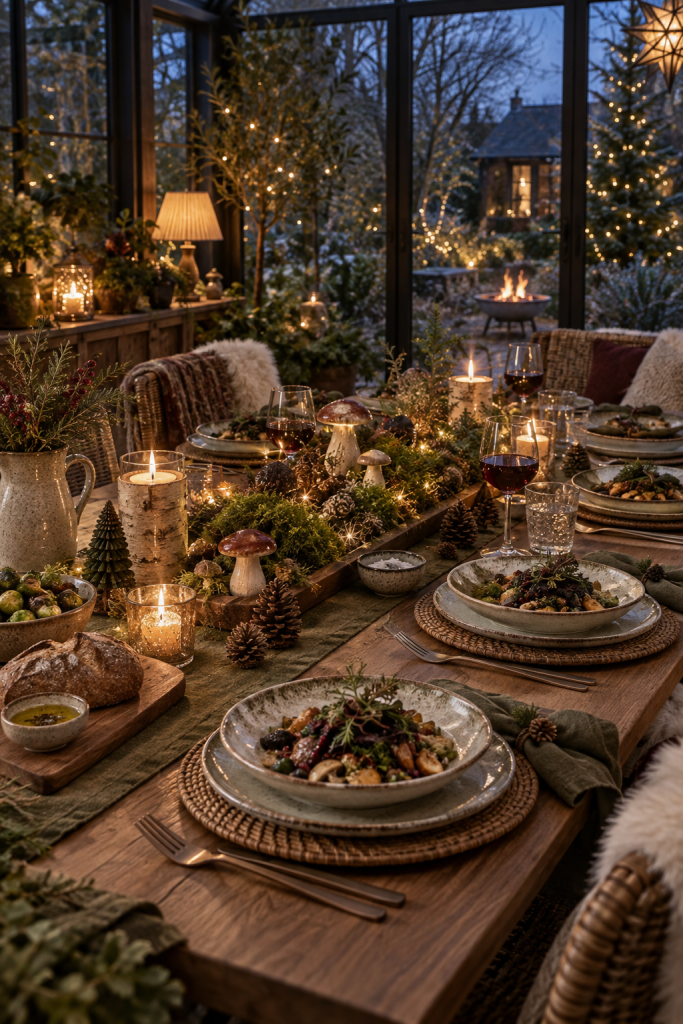
A wooden tray crowded with moss and brown-capped mushrooms gives this Christmas table its woodland character. Around it, woven chargers, pale speckled bowls, and olive napkins look ready for supper rather than a display-only arrangement. The garden-room windows deepen the effect: dark glazing frames the table while small lights trace the greenery beyond it.
Why the Centerpiece and Place Settings Belong Together
The table has two different scales of texture. Moss, pinecones, and mushroom caps form a close, irregular landscape inside the rectangular tray. The repeated circles of the chargers and bowls give each diner a clear place within that busier scene. Neither part needs to compete for the same job.
Brown mushroom caps pick up the tabletop’s warmth; their pale stems connect to the dishes. Olive fabric carries the moss color outward in a softer form. This repetition explains why the centerpiece looks integrated instead of like a separate seasonal object placed among unrelated plates.
I would keep the woodland accents inside one liftable tray. That decision matters more than filling every gap: it lets the display leave the table intact when a shared serving dish needs its space.
Key Pieces for This Woodland Supper Table
A Shallow Rectangular Wooden Tray
The visible tray provides a definite boundary for the forest-floor details. Choose a low rim that does not conceal the smaller mushrooms, and check its outside width against the usable space between opposite place settings. A decorative tray need not be suitable for direct food contact.
Brown and Cream Mushroom Ornaments
Several cap sizes make the grouping read as mushrooms rather than repeated identical figurines. Glossy brown tops contrast with the moss, while cream stems prevent the center from becoming uniformly dark. Broad, stable bases are more useful here than precarious tall stems.
Contained Moss and Pinecones
The green layer covers the tray floor; cones interrupt it with small brown shapes. For a recreation, use decorative moss over a removable protective liner. Keep dyed or shedding material inside the tray, away from food and the rims of glasses.
Pale Speckled Plates and Bowls
The pale dishes stand out against wood and woven fibers without looking stark white. Shallow bowls suit the supper mood in the image. Before buying a matching set, consider the food you serve and whether its bowl size leaves room for cutlery and a glass.
Round Woven Chargers or Placemats
These repeat around the table as a visual rhythm. Their larger circles give the dishes a defined base. A mat should lie flat beneath the plate, with a weave that does not snag the napkin or collect difficult-to-remove crumbs.
Olive Napkins and a Narrow Runner
Olive cloth connects the place settings to the moss without adding another holiday motif. Loose folds make the textile feel relaxed. Choose napkins that can be laundered after dinner; keep the runner narrow enough to show wood on both sides.
Small Warm Lights and Candlelike Accents
The scene combines fine light points with larger candle glows. Battery micro lights and flameless votives can recreate that hierarchy without flames beside dry decorative material. Hide the power pack where it stays accessible, rather than burying it under the moss.
How to Arrange It for an Actual Meal
Start with one complete place setting on each side of the bare table. Include the widest dish, cutlery, and both drinking vessels you expect to use. Only then measure the central strip. This order prevents a beautiful centerpiece from forcing diners’ glasses toward the edge.
Set the runner and empty tray into that strip. Place the largest mushroom off the tray’s midpoint, then balance it with two smaller caps farther along its length. Their heights should remain low enough for seated guests to see one another. Check from a chair, not only while standing above the table.
Add the protective liner and moss around the ornament bases, leaving the rim visible. Tuck a few cones into separate gaps rather than lining them up. Thread small lights along the tray’s interior perimeter so their wiring can leave at one discreet end. Follow the light set’s instructions, and never put real flames among moss, cones, or textiles.
Build out the place settings with the pale dishes and olive cloth. I would leave the napkins unadorned here: a second mushroom at every plate would dilute the center’s importance and add obstacles beside the food. A loose cone-shaped napkin fold already echoes the upright stems without another ornament.
Finally, plan where serving bowls will land. A nearby sideboard can hold extras, as the background furniture suggests, but the table itself still needs a practical route for passing bread or water. If space is tight, shorten the tray arrangement rather than squeezing the settings closer together.
Shop the Pieces That Establish the Look
A Tray with a Finished Underside
Check bottom construction and overall dimensions, not just the interior photo. Felt pads or a smooth underside protect a finished tabletop. Handles are helpful only if they do not project into the diners’ space.
Mushroom Figurines with Varied Heights
Read the individual measurements in a set. A group of nearly equal tiny ornaments will not reproduce the cap hierarchy here. Inspect base width and finish; avoid pieces designed only to hang from a tree.
Battery Lighting with Reachable Controls
A fine warm-white wire suits the low tray. Choose a battery pack or switch that can sit outside the decorative fill, and verify the manufacturer’s indoor-use instructions. A timer is useful for hosting preparation, but does not replace safe placement.
Everyday Bowls with Seasonal Flexibility
Look for food-safe, usable dinnerware rather than decorative bowls. Dishwasher suitability, rim shape, and stackability matter after the holiday. I would spend on dishes I would serve from in January, then let the removable moss arrangement provide the Christmas identity.
Final Styling Tip
Place a small washable coaster under the concealed light-control pack at the tray’s exit point. It gives the pack a predictable resting spot when you lift the centerpiece and stops a loose wire from dragging through a guest’s place setting.