
*This post may contain affiliate links for which I earn commissions.*
Image created with AI. The pictured setting is inspiration, not a verified installation or a specification for outdoor materials.
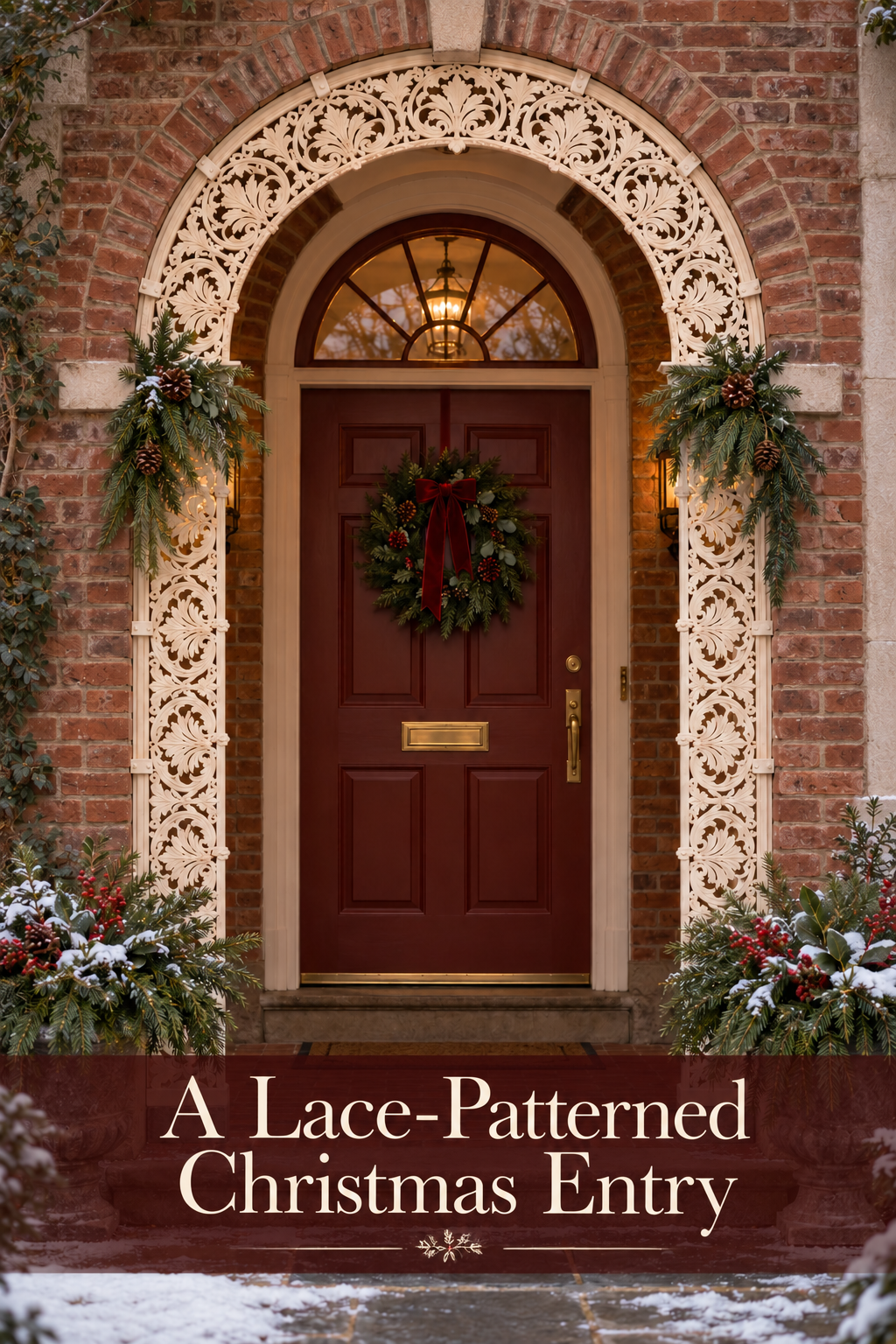
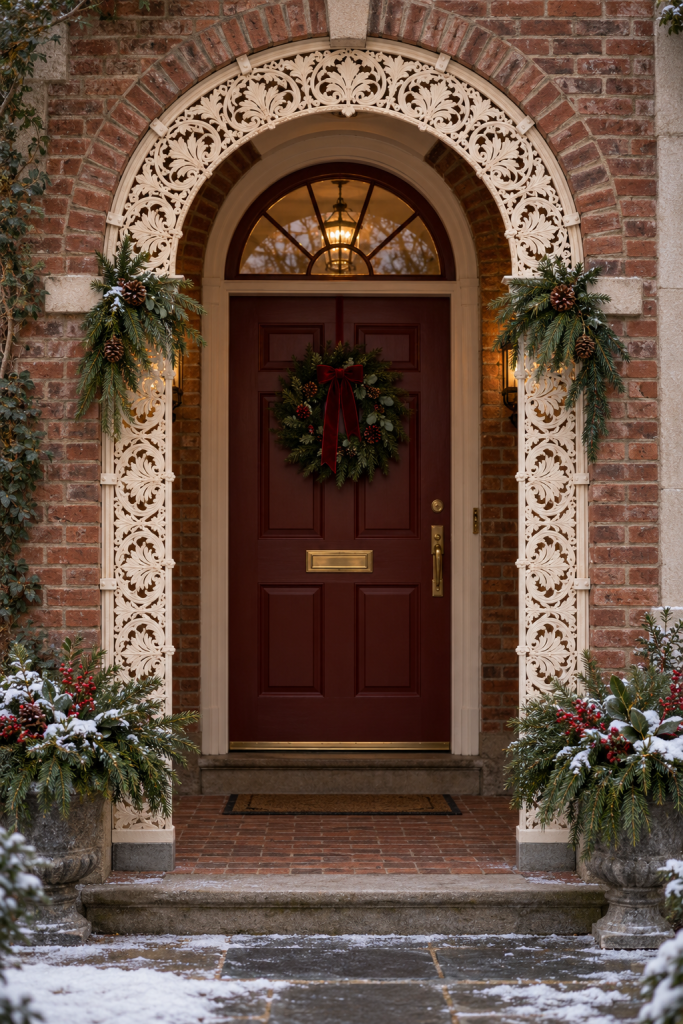
An existing brick arch becomes the focus of this Christmas entry when cream cutwork follows its curve and continues down both sides. The image pairs that open pattern with a dark red door, evergreen accents and substantial planters. The doorway remains the route into the home, so an adaptation should begin with the actual architecture and preserve the full door swing and walking path.
What Makes This Look Work
The pattern follows real architecture
The decorative panels sit within an existing masonry opening. Their repeating cutwork makes the arch read like a piece of lace, but the visible brick still defines its shape. The result is more distinctive than hanging fabric across the door because the pattern changes how the entry frame looks while keeping the threshold open.
Cream separates brick from the door
The pale openwork creates a clear edge against the red brick and dark door. The lace motif remains legible even in subdued light. Because the wall, door and pattern supply most of the color, the greenery can stay compact instead of covering the arch with a large garland.
Greenery marks the sides, not the route
Evergreen clusters at the spring points and low arrangements in planters echo each other across the doorway. A wreath supplies a familiar Christmas center on the door. The plants soften the rigid cutwork, while the central passage and step remain visibly usable.
Key Pieces to Recreate the Look
Outdoor-suitable openwork panels
Choose decorative cutwork that can follow your entry’s existing shape without creating a new structural arch. Separate narrow sections are often easier to size around a real opening than one rigid piece. Verify the material’s outdoor suitability and the maker’s mounting guidance for the exposure at your doorway.
Appropriate mounting hardware
The image shows discreet attachment points along the frame. Any real installation needs fasteners compatible with the panel, the actual substrate and local conditions. Do not assume adhesive or a decorative clip alone will hold a panel outside; use an appropriate mounting plan for the specific site.
Evergreen side accents
Small clusters can occupy existing attachment points near the arch without hiding the cutwork. Choose fresh or faux stems suited to the exposure and secure them independently of a delicate panel unless its manufacturer permits a load. Keep the ends tidy and clear of hinges and handles.
Stable planters
Two low containers ground the vertical frame. They do not need to match exactly, but comparable scale keeps one side from feeling unfinished. Select bases and contents that remain stable on the available surface and stay outside the walking zone.
A restrained door wreath
The pictured wreath has deep greenery and a dark ribbon, which gives the door a seasonal focal point without competing with the cream frame. Choose a diameter suited to the door panels and hardware. The hanger should suit the door and not interfere with closing or locking.
Subtle seasonal accents
Pinecones, berry-colored stems or a few small winter branches can link the planters to the wreath. Use them sparingly so the cutwork remains the defining feature. Artificial accents should be selected for the actual weather exposure rather than assumed to be durable because they look realistic.
How to Style It at Home
Measure the existing opening first
Sketch the arch, side returns, door swing and any light fixtures before selecting decoration. Note where there is a suitable mounting surface and where stone or brick should remain untouched. The shape should be adapted to the house, not forced into a standardized arch kit that projects into the entry.
Keep the cutwork in one visual plane
Dry-position sections so their repeating motif follows the curve, then check the side lengths from across the approach. A modest gap between sections can be less noticeable than a panel bent beyond its intended use. Confirm that no edges protrude into the path or catch the opening door. Follow the panel and hardware makers’ instructions for installation; a professional installer may be appropriate where attachment to masonry or exposure is uncertain.
Treat evergreen as punctuation
Add compact bundles at two points where the curved top meets the sides, or use only one if the architecture is asymmetric. Secure branches to appropriate supports rather than hanging their weight from a decorative cutout. Step back after the first bundle; if it hides the pattern, shorten it before adding more material.
Balance the ground level
Place planters outside the door swing, with a clear route from the approach to the threshold. Vary the branch profile slightly so the display looks natural. A wreath can complete the upper-to-lower connection, but it should remain separate from the frame and easy to remove for normal door use.
Inspect after the first weather change
Outdoor installations need attention once the wind or rain tests them. Check fasteners, panel edges and planter stability according to the products used. If an exposed position makes the delicate treatment impractical, scale it back to a genuinely sheltered portion of the entry rather than extending it across an unsafe span.
Shop Similar Pieces
Look for a cutwork scale that reads from outside
Tiny lace perforations can disappear against brick at a distance. Compare sample photos and panel dimensions with the width of your actual frame, then confirm whether sections can be trimmed or joined according to the maker’s directions. Material and mounting suitability matter more than a perfect copy of the pictured motif.
Match fasteners to the substrate
For a masonry, wood or other entrance, compare the manufacturer’s approved attachment methods. The panel weight, exposure and surface all affect the choice. Buy only after identifying the exact site and any restrictions on drilling or exterior alterations.
Choose planters for the landing
Measure the usable landing area after allowing for movement and door clearance. Favor a stable footprint and weather-suitable construction over a taller ornamental vessel that narrows the approach. Check drainage or liner needs for your chosen greenery.
Find a wreath with a quiet silhouette
Look for deep green foliage, modest fullness and a ribbon that relates to the door color. Compare its depth as well as its diameter, especially if a storm door or recessed frame limits clearance.
Final Styling Tip
Photograph the undecorated doorway straight on before ordering panels. Marking the intended boundaries on that photo can reveal conflicts with a light fixture, mailbox or door swing that a simple width measurement misses.