
*This post may contain affiliate links for which I earn commissions.*
This image was created with AI and is presented as decorating inspiration.
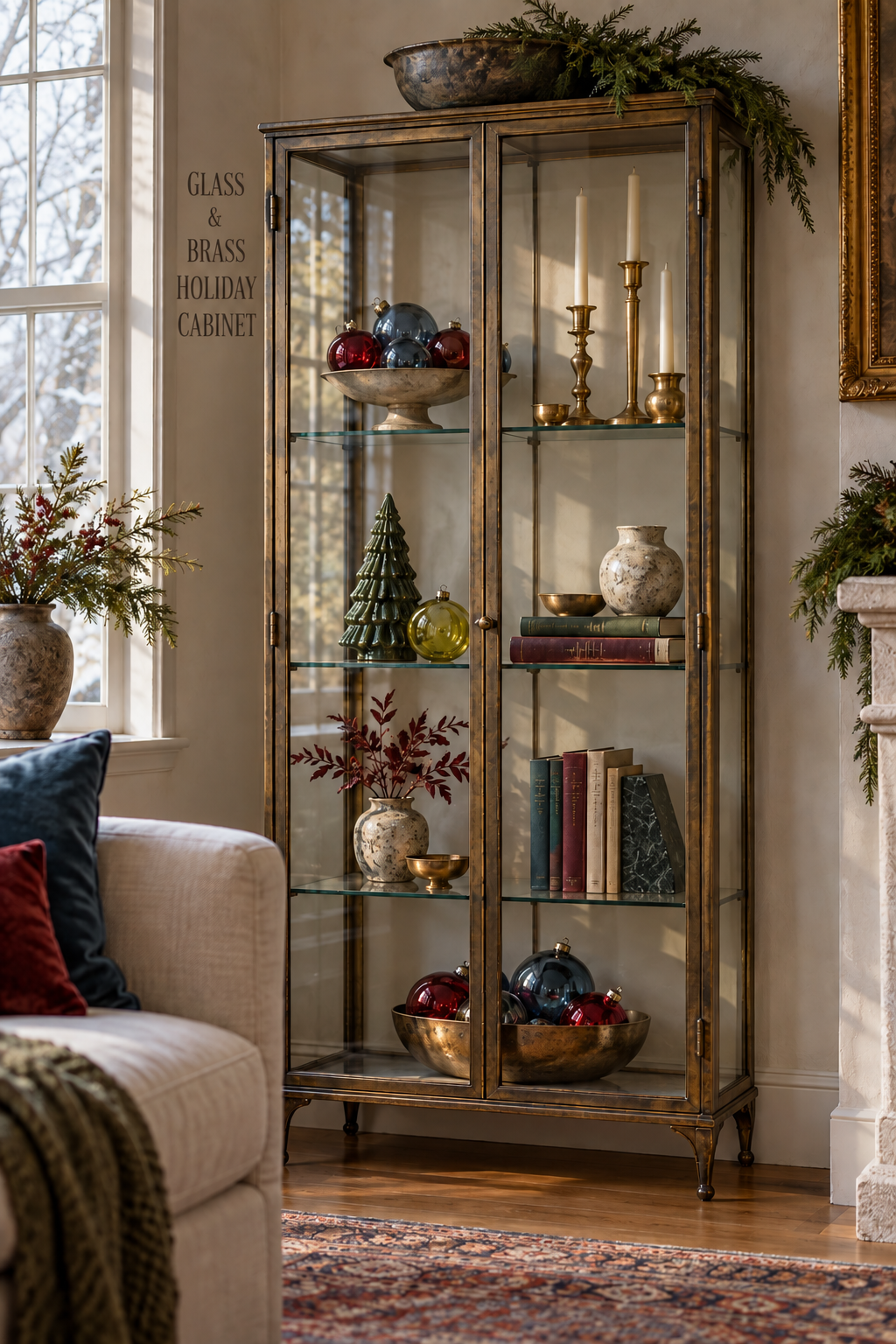
A glass-front cabinet can carry a holiday display without turning a living room into a seasonal showroom. In this inspiration image, dark red and smoky blue ornaments sit in shallow metallic bowls, unlit candles rise on aged-looking holders, and a small green tree interrupts the row of rounded objects. Books and pale vessels make the cabinet feel like part of an everyday room. The asymmetry matters: each shelf has a different job, while the cabinet doors contain the whole composition.
What Makes This Look Work
Reflective color appears in separate pockets
The ornaments are not spread evenly across every shelf. A raised bowl near the top gathers dark glass, another cluster sits at the bottom, and a single bright green piece sits beside the small tree. Those breaks let the saturated colors register against the neutral cabinet interior. For a similar look, choose two leading glass colors and let a third hue appear once or twice. Too many equally bright objects would compete with the narrow furniture frame.
Brass creates a vertical counterpoint
Tall candleholders occupy one upper compartment, with smaller warm-metal bowls elsewhere. The varied heights keep a cabinet full of compact objects from reading as one line of baubles. The candles in the picture are unlit, a sensible visual choice in an enclosed display. In a real cabinet, treat tapers as decorative when the doors are closed and follow the candle and furniture makers’ guidance if using them elsewhere.
Ordinary room pieces keep the holiday layer believable
The sofa edge, books, mottled vases, window and greenery make the display feel residential. Those details also suggest a useful editing rule: keep a few familiar pieces on the shelves when decorating for Christmas. You can move some books, but clearing everything to install a perfect ornament grid would lose the collected quality of the scene.
Key Pieces to Recreate the Look
A glass-front display cabinet
The cabinet provides the architectural outline and keeps small objects visually grouped. Look for shelves with enough depth for stable bowls and useful spacing for taller candleholders; the pictured metal-framed cabinet is one possible interpretation, not a required purchase.
Dark glass ornaments
Ruby and smoky blue round ornaments carry the concentrated holiday color. A mix of opaque and reflective finishes can prevent the groups from looking like identical sets, but keep their scale appropriate to the bowls rather than filling the shelves edge to edge.
Shallow decorative bowls
The raised upper bowl and lower wide bowl collect loose ornaments into two distinct shapes. Choose stable bases and rims that keep the objects contained. A metal-looking finish can connect them to the candleholders without matching perfectly.
Tall candleholders with unlit tapers
Several slender forms establish height on the upper right. Select holders that stand securely on the actual shelf and allow room above the tapers; leave candles unlit inside a closed cabinet.
One compact evergreen figure
A dark green sculptural tree appears on a middle shelf. Its angular silhouette separates the rounded glass nearby. A ceramic, wood or other sturdy decorative tree with a stable base could serve the same compositional role.
Books and pale ceramic vessels
Small groups of books and light-toned vases bridge the seasonal accents to the rest of the living room. Use pieces already owned where possible. Check that books stand without pressing into the cabinet door, and keep any foliage clear of the closing path.
How to Style It at Home
Assign a purpose to each shelf before filling it
Empty the cabinet only as far as needed, then decide which levels will hold ornament groups, which will provide vertical height, and which should remain mostly everyday storage. Place the tallest holders first to check door clearance. Put the largest ornament bowl on a lower level where its width has room to breathe. This sequence prevents a final attempt to squeeze a focal piece into the only gap left.
Build small groups instead of a repeated pattern
Gather a few ornaments in a bowl and let one contrasting piece stand near the tree. On a different level, show books and a vessel rather than another identical ornament collection. You need not mirror the left and right cabinet compartments. Compare the silhouette with both doors closed; glass reflections can make a grouping appear denser than it did while styling through an open door.
Edit for reflections and daylight
The side window gives the glass and metal glints, but it also throws bright shapes across the cabinet doors. View the display in the daylight you normally have. If reflections obscure the small objects, shift a bowl backward or remove one shiny piece. Avoid relying on added lighting that would require wiring inside furniture; a well-placed cabinet near existing light can carry this look.
Keep the door and shelves functional
Test each door after arranging. No branch should catch on a hinge, and no loose ornament should roll toward the front edge when the door moves. Consider a soft, shallow liner under hard pieces if the shelf material and cabinet care instructions allow it. The display should be easy to access, dust and return to ordinary use after the holiday season.
Shop Similar Pieces
Compare cabinet proportions first
Before considering the finish, measure the space for the open doors and compare interior shelf heights with the bowls and tall accents you plan to display. A compact cabinet that actually fits the room is more useful than a dramatic piece that blocks circulation.
Choose ornament sets by tone and finish
Look for deep red and blue glass-like ornaments with enough variation to form two distinct groups. Check actual dimensions and packaging counts against your existing bowls; oversized ornaments can make a shallow arrangement unstable.
Look for bowls with a dependable base
A low, broad dish with a visible rim is more practical for loose ornaments than a nearly flat tray. Compare weight, stability and the intended shelf surface, especially if the cabinet has glass shelves.
Select candleholders for shelf clearance
Compare the combined height of holder and unlit taper with the real interior opening. A restrained mix of heights creates the pictured stepped outline without pressing candle tips against the shelf above.
Find a small tree with a clear silhouette
The tree should remain recognizable beside rounded ornaments, so compare its profile and base width as well as its color. An oversized figure would erase the useful negative space around it.
Final Styling Tip
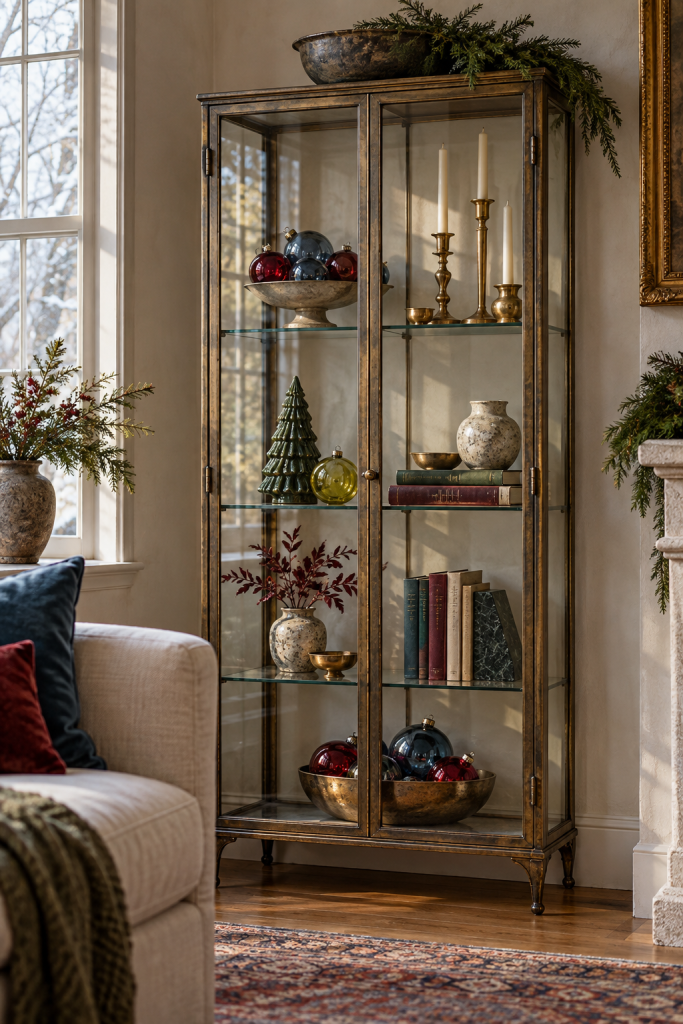
Photograph the cabinet with the doors closed before you finish. Reflections reveal whether a bright ornament disappears behind a door seam, letting you move just that piece instead of restyling the entire shelf.