
*This post may contain affiliate links for which I earn commissions.*
This inspiration image was created with AI.
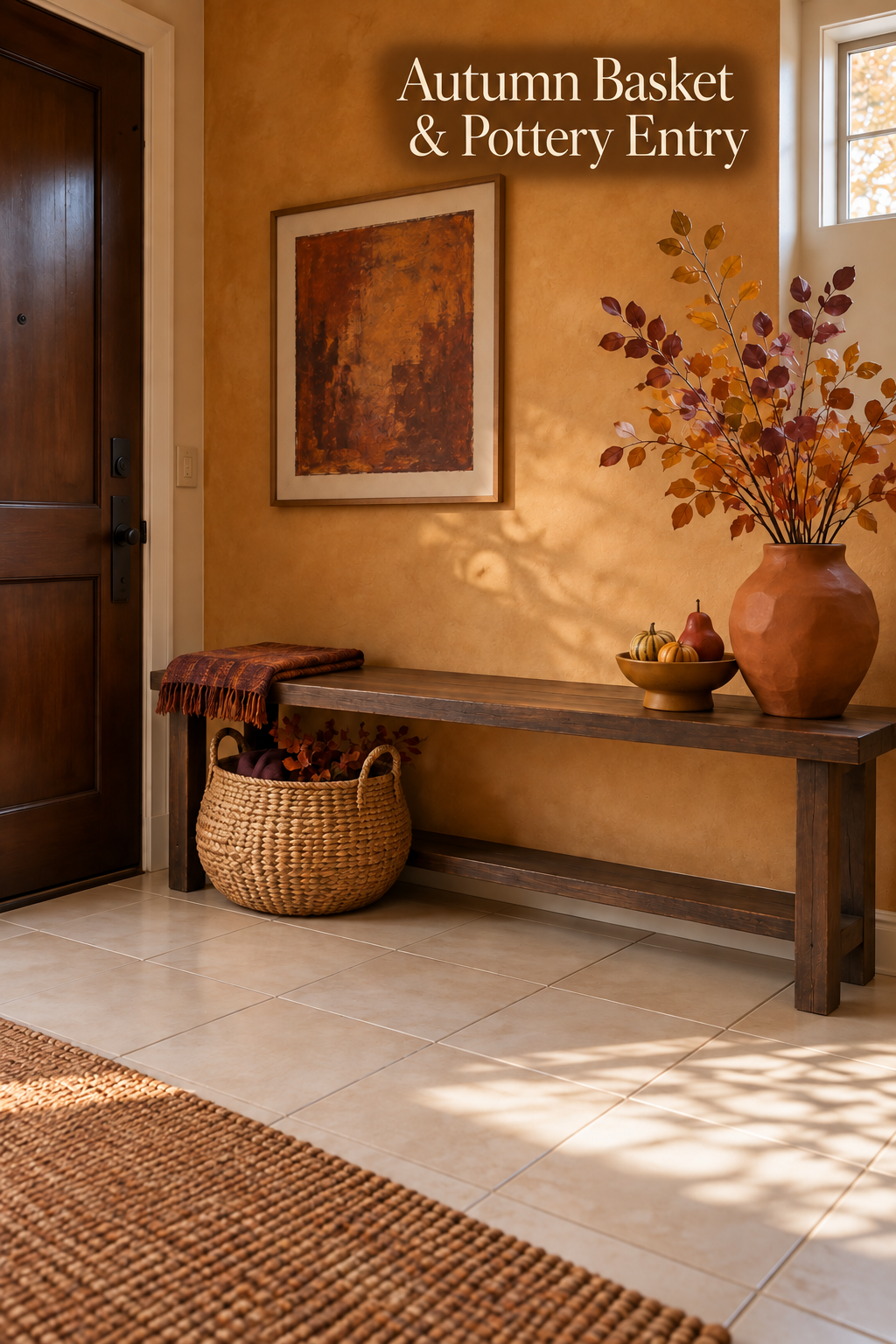
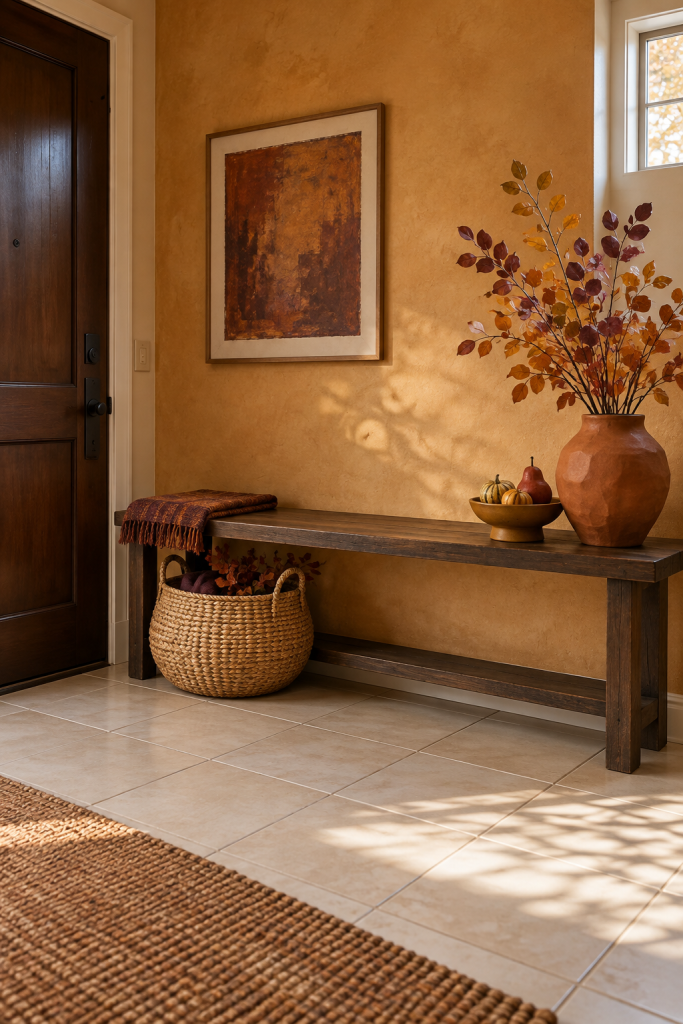
A useful entry bench can also hold a small autumn display when the decoration stays at its edges. Here, a broad woven basket sits beneath one end, while a warm orange vessel and low harvest bowl occupy the other. Ochre and plum-colored leaves rise beside the window, leaving a long stretch of dark bench visible.
The basket and pottery share generous curved shapes, but their surfaces are different enough to make the arrangement distinctive. Woven fiber, matte-looking pottery and a small folded textile give the entrance texture without filling its tiled floor. The idea adapts well to a modest hallway where storage and seasonal decoration need to coexist.
The Shape Relationships Behind This Entry
A rounded basket answers the broad vase
The basket’s bulging body sits low on the left; the vessel’s rounded form sits higher on the right. Their related outlines connect the two ends of the bench without requiring identical objects. This is more useful than matching every accessory, because the basket can remain storage while the vase carries the seasonal branches.
The open seat separates the display zones
Most of the bench surface is bare between the folded cloth and the pottery. That gap lets the dark horizontal line remain readable against the warm wall. It also establishes a practical sitting area. Filling the center with more gourds would weaken both the arrangement’s shape and the bench’s everyday purpose.
Leaf shadows extend the branches without more objects
Morning light produces soft botanical shadows across the ochre wall. The actual foliage is concentrated at the right, but its shadow reaches into the quieter central area. This makes the wall feel connected to the seasonal display while the floor and seat stay comparatively clear.
Choose a Few Pieces with Different Jobs
A broad handled market basket
A rounded basket with visible weave provides the main low shape and useful storage. Handles help it read as a movable everyday object rather than a decorative container that must stay untouched.
A warm sculptural branch vase
Look for a generously rounded vessel with a matte or softly irregular surface. Its opening should suit the stems you intend to display, and its base should sit securely on the bench.
Ochre and plum leaf branches
Mix warm yellow-brown leaves with a smaller amount of deep reddish purple. The branching outline should remain visible between leaf clusters rather than becoming a dense artificial bouquet.
A low ochre harvest bowl
A small bowl contains the lower seasonal accents beside the vase. Its softer yellow tone separates it from the orange vessel while keeping the two pieces related.
Small gourds and a pear-shaped accent
Rounded harvest forms bring the seasonal reference down to bench height. Choose a small assortment that fits within the bowl instead of scattering individual pieces across the seat.
A folded rust or plum textile
A short woven cloth can soften one end of the bench, and a plum fabric inside the basket repeats the darker foliage. Use something easy to remove rather than treating the whole seat as a permanent textile display.
Keep the Welcome Area Working
Reserve the place where someone sits
Test the bench in ordinary use before choosing the decorative footprint. Sit down, bend to handle shoes and stand up again. The vase should remain outside that movement, particularly if the bench is narrow or the entrance is used by several people.
If the available seat is too short, move the pottery to a nearby surface and keep the basket below. The relationship between rounded forms can survive a small separation; preserving a usable entrance matters more than copying the image’s exact distances.
Make the basket easy to pull forward
Place storage near an end where its handles remain reachable. Check that pulling it out does not strike the door or scrape the bench leg. A basket that fits only when empty may not work once a throw or seasonal supplies are inside.
Keep any decorative stems contained below the seat edge. The image includes foliage in the basket, but everyday storage can use cloth alone if leaves would catch on sleeves or make retrieving contents awkward.
Build the tall arrangement from the vase upward
Position the empty vessel securely, then add lightweight stems in small groups. Turn the branches toward the wall or window rather than the passage. Check that leaf tips do not interfere with a lock, handle, curtain or opening window.
For fresh branches, use a watertight liner if the vase is not rated to hold water. For artificial stems, compare their weight with the vessel’s stability. The warm clay-like appearance in the image does not prove the vessel’s material, weight or water resistance.
Put the harvest details inside their own boundary
Use the small bowl to contain the gourds and pear-shaped form. Leave its rim visible and avoid a pile that rolls when the bench is bumped. Real produce belongs in an easy-to-clean bowl and should be checked regularly; decorative pieces can work where maintenance would be inconvenient.
View the finished entrance from the open door and from the adjoining room. Remove any item that appears to spill into the floor route. The wall art can remain an existing everyday piece rather than becoming another seasonal purchase.
Focused Shopping for the Entry Display
Compare the basket at its widest point
Listed dimensions may describe the rim or base, while the bulging sides need more space. Check overall width including handles and the height under your bench. A lined interior is helpful for delicate fabric, but it should not prevent access or hide the exterior weave.
Find a vessel with a dependable footprint
Inspect base photographs, weight and opening size alongside the decorative finish. A narrow-bottom vase may look elegant but be unsuitable for branches beside a working seat. Confirm water-use guidance rather than assuming every ceramic-looking vessel is watertight.
Select foliage by stem structure
Look for individually adjustable branches with spaces between leaves. Close photos can reveal shiny plastic surfaces or repetitive leaf placement that room images conceal. Choose stem lengths you can shorten or bend for the actual doorway clearance.
Check the bowl’s cleaning requirements
A decorative bowl can hold artificial gourds without being food safe. If you plan to use real fruit, verify food-contact suitability and choose an interior that can be cleaned easily. Keep the bowl low enough that its contents remain visible from the entrance.
Final Styling Tip
Put a small removable felt pad under each pottery base before styling. It protects the bench when the display is shifted for cleaning and helps prevent a gritty decorative underside from leaving marks on a frequently used surface.