
*This post may contain affiliate links for which I earn commissions.*
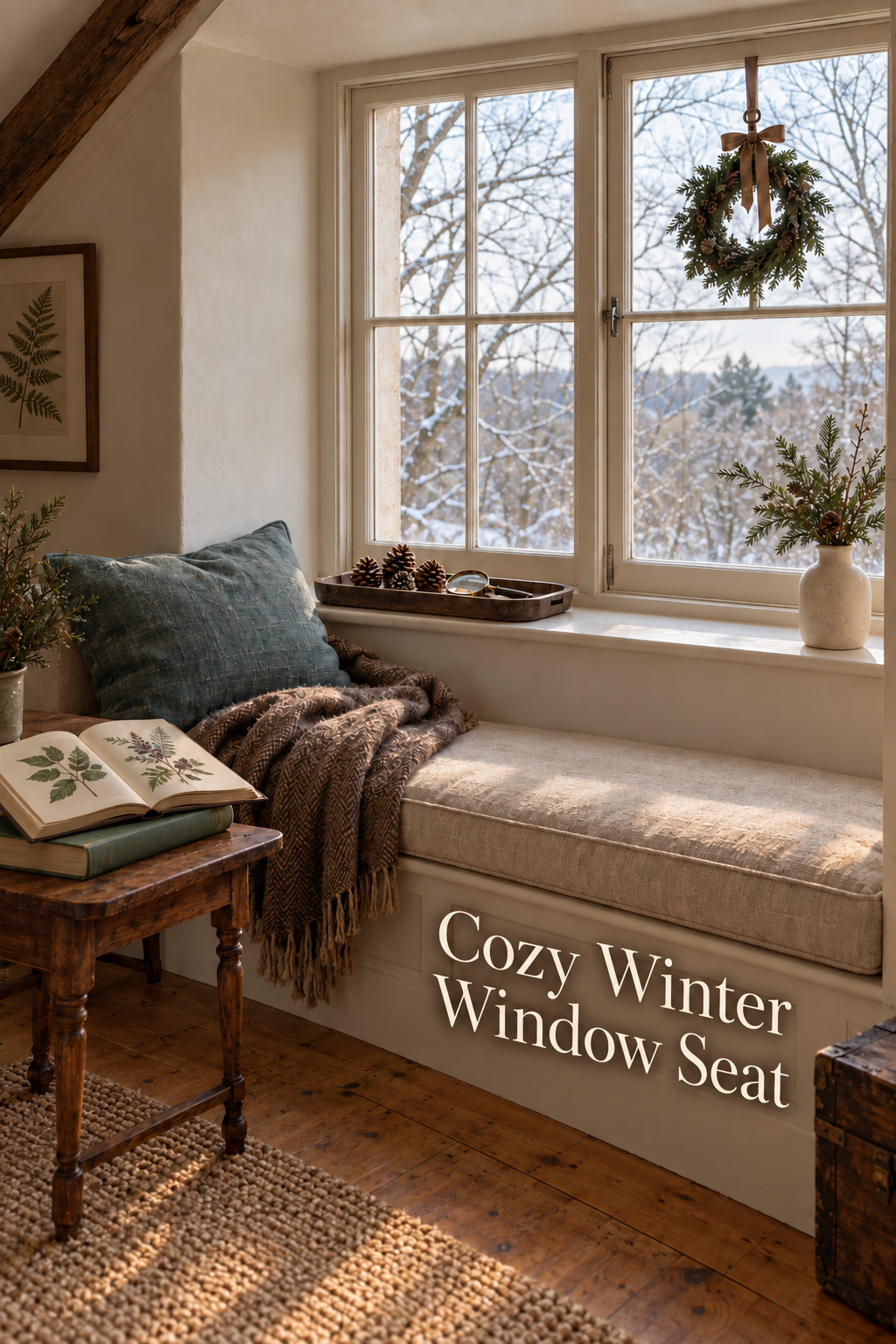
Image created with AI. This image serves as visual inspiration for the decorating ideas below.
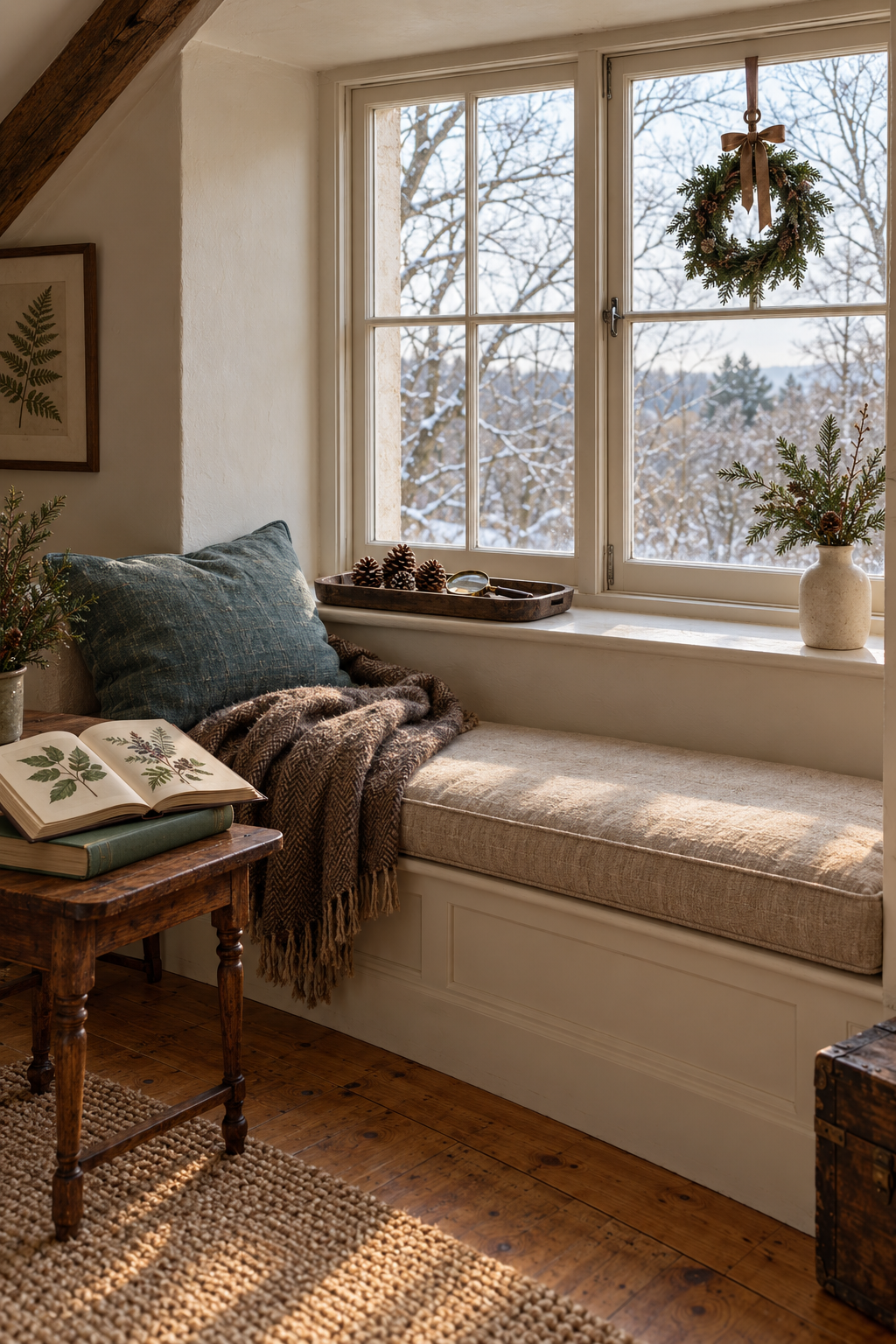
A window seat becomes more inviting when its details suggest something to do there. This winter inspiration pairs an open botanical book with a cone tray and magnifying glass. A blue-green pillow and brown fringed throw make the pale bench feel ready for reading, while a small evergreen wreath connects the nook to Christmas.
The scene has a collected naturalist character rather than a busy craft-room feel. There is room to sit, a place to put down a book and enough daylight to examine the small woodland finds.
What Makes This Look Work
The objects suggest a quiet afternoon
The illustrated book and magnifying glass give the nook a believable purpose. They suggest looking closely at leaves and cones rather than simply displaying unrelated accessories. A few objects can tell that story clearly, which leaves the seating area restful.
The cushion colors answer the winter view
The blue-green pillow sits against cream upholstery, with the brown throw draped nearby. Outside, bare branches create a finer pattern against pale winter light. Indoors, the fabric textures make that cool view feel comfortable without requiring bright holiday colors.
Evergreen appears above the usable surfaces
The wreath places the strongest seasonal detail on the window instead of taking up the bench. Small sprigs in pale vessels repeat its shape more quietly below. This arrangement leaves the seat free while keeping the Christmas connection visible from within the room.
Key Pieces to Recreate the Look
A comfortable bench cushion
The long neutral cushion establishes a simple seating surface. Choose one that fits your own bench closely enough to stay supported at the edges; a pale textured cover can soften the built-in cabinetry without a busy print.
A muted blue-green pillow
A single substantial pillow provides back support and the scene’s main color accent. A woven or softly mottled surface suits the worn wood and botanical theme better than a very glossy fabric.
A brown fringed throw
The throw adds a darker patch beside the cushion and brings a loose texture into the otherwise orderly recess. Choose a blanket you would actually use, since its practical role helps keep the nook from becoming a display-only seat.
An illustrated botanical book
A book with readable plant illustrations is the story’s central accessory. Use a volume that interests you, then place it on a supporting table instead of balancing it on a small vase or a sloping cushion.
A shallow tray with woodland finds
The tray contains the cones and magnifying glass together on the ledge. Its low sides keep the small objects visible while stopping them from spreading across the whole window area.
A modest evergreen wreath
A small wreath preserves the view around it and leaves the window proportions readable. Brown ribbon relates to the throw, although a simple neutral hanging loop would provide a quieter variation.
A pale vessel for sprigs
A compact vase lets a few evergreen stems stand apart from the wreath. Its lighter surface also prevents the window ledge from becoming a continuous strip of dark wood and dark foliage.
How to Style It at Home
Make the bench comfortable before adding a story
Sit on the bench in the position you normally use to read. Check whether the cushion slides, whether your back needs support and where your feet naturally land. Those answers should determine the pillow and table positions.
If the built-in seat is shallow, choose less bulky textiles. A larger pillow that pushes you onto the edge defeats the point of a reading nook, even if it resembles the inspiration.
Give the book a reachable landing place
Set a small table beside the seat where you can put down a book without leaning over the cone display. A table with a lower shelf can hold another volume while leaving the top less crowded.
The book does not need to stay permanently open. Open it while using the nook and close it afterwards if prolonged light falls directly on its pages. The botanical theme still works with the cover visible and a small collection nearby.
Confine the specimens to one ledge area
Use a tray that fits wholly on the sill, with no projecting corners. Place a few dry, clean cones inside and give the magnifying glass a flat resting spot. Leaving room between the objects makes the little collection easy to examine.
For a narrow sill, move the tray to another stable surface and keep only the vase by the window. The arrangement should adapt to the recess you have, rather than forcing every accessory into the same location.
Test the wreath with the window operating normally
Choose a hanging method compatible with your frame and the wreath’s weight. Check that locks, handles and the moving sash remain accessible, and follow any restrictions supplied with the mounting product.
Open and close the window carefully after positioning the wreath. If the ribbon catches or the wreath knocks the glass, use a different permitted position. A neighboring wall can carry the same seasonal accent when the window offers no suitable mounting point.
Arrange the textiles for everyday use
Let the throw rest at the end of the bench, where it can be pulled across your lap without shifting the tray. Keep the pillow against the side of the recess if that gives better support.
Stand up and sit down a few times before considering the nook finished. Move the table outward if its corner meets your knee, and remove any extra accessory that interferes with reaching the seat.
Shop Similar Pieces
Match the cushion to the actual bench
Measure the supported seating area and compare the cushion’s finished dimensions, thickness and fastening options. A removable washable cover is useful in a frequently used window seat. Check the fill and care details instead of judging comfort from the photograph alone.
Consider the throw against bare skin
Brown is only one part of the selection. Look at the fiber content and care instructions, and consider whether you prefer a smoother blanket or a more textured weave. A decorative throw that feels unpleasant will rarely serve the reading nook.
Choose a tray that protects the ledge
Compare base size, edge height and underside finish. Add suitable furniture-safe protection if the tray could mark painted wood. A low-profile form is especially helpful beneath a window, where tall sides can hide the small specimens.
Keep the wreath scaled to one pane
Before purchasing, tape a paper circle of the proposed diameter in the intended position. This gives a more useful size check than a product photograph. Confirm indoor suitability and included hanging hardware, then select the attachment separately if necessary.
Final Styling Tip
Keep a small soft brush with your cleaning supplies for the cone tray. Lifting the tray out and brushing between the cone scales is easier than dusting each piece beside the window, where loose debris can fall into the sash tracks.