
*This post may contain affiliate links for which I earn commissions.*
This inspiration image was created with AI.
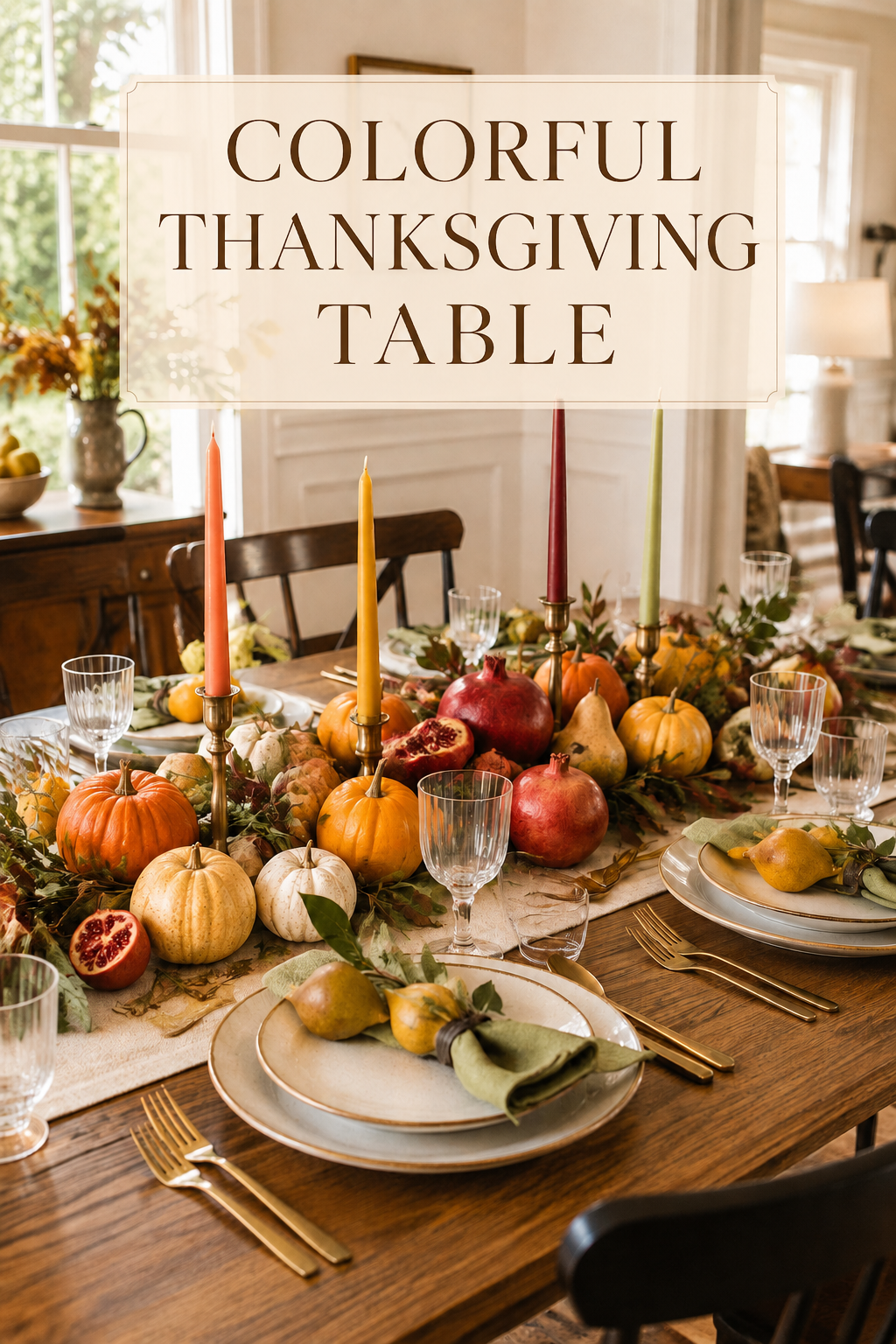
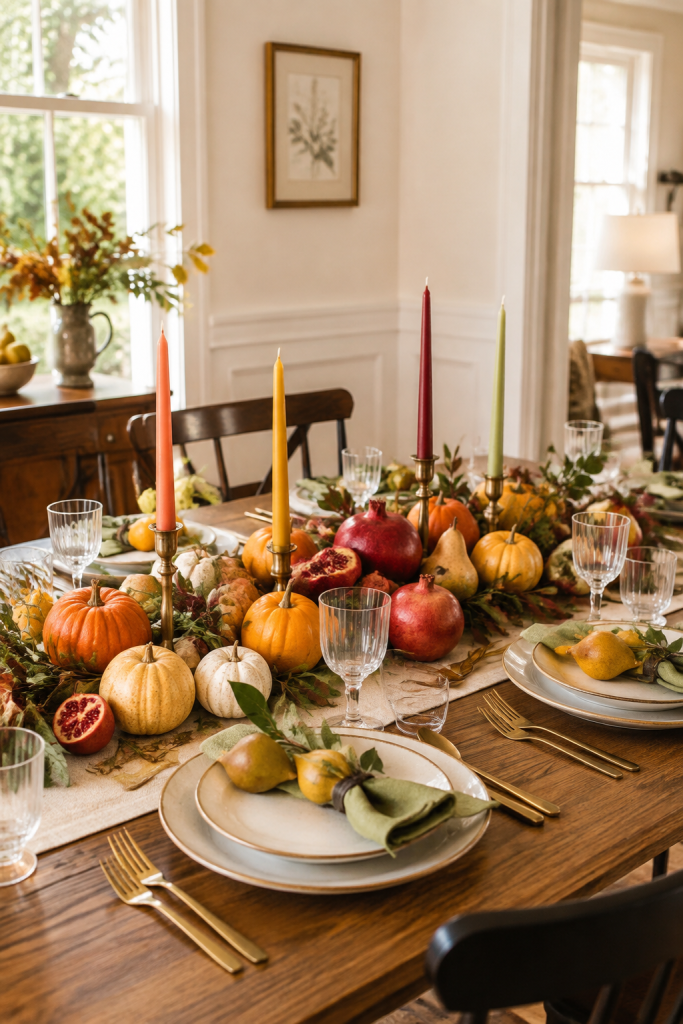
Pumpkins may set the harvest theme, but the fresh-looking pears, split pomegranates, and slender candles are what give this Thanksgiving table its lively character. The centerpiece stretches down the wooden dining table in a low, generous line, surrounded by cream plates, sage napkins, clear goblets, and warm brass-toned flatware. It feels abundant enough for a celebration while still looking connected to an everyday dining room.
What Makes This Look Work
Low-Profile Scale: The centerpiece is broad rather than bulky. Small orange and pale pumpkins form its base, then pears, whole and halved pomegranates, nuts, and leafy branches fill the spaces between them. Because most of that material stays below eye level, the coral, mustard, burgundy, and green tapers can rise above it without creating a wall between guests.
Produce-Derived Palette: Those candle colors are deliberately drawn from the produce. Burgundy relates to the pomegranate skins, mustard picks up the golden pears, coral intensifies the pumpkin tones, and green connects with the foliage and napkins. None of the shades has to match exactly. Their shared warmth is enough to make the mixed palette feel coherent.
Quiet Place Settings: The place settings provide essential quiet around all that color. Wide cream plates have soft brown rims, the clear stemware disappears into the background, and the sage napkins are folded simply rather than shaped into formal displays. I would protect that contrast when adapting the idea: if the centerpiece is this plentiful, restrained dinnerware lets every guest’s place remain easy to read.
Organic Variation: Natural variation also keeps the table from becoming too polished. Pears lean at different angles, pumpkin sizes shift along the runner, and leafy stems break the straight edge of the table. Brass candleholders and flatware add a more refined finish, but the warm afternoon light prevents the metal from feeling formal or cold.
Key Pieces to Recreate the Look
Small Pumpkins in Mixed Tones
Choose squat pumpkins and gourds that can sit securely among the place settings. A mix of orange, golden yellow, cream, and softly speckled skins will create more depth than a row of identical mini pumpkins.
Pears and Pomegranates
Use firm fresh fruit for a short-lived display, or realistic faux fruit if the table will stay decorated for several days. Include a few larger pomegranates to anchor the center and smaller pears to bridge the gaps.
Slender Colored Taper Candles
Look for unscented tapers in four related harvest colors rather than a perfectly matched set. Similar diameter and clean, straight sides will keep the assortment orderly even when the hues vary.
Low Brass-Toned Candleholders
Simple holders with modest bases are easier to fit between produce than wide decorative styles. Confirm that each socket grips its candle firmly, especially on a table where serving dishes and hands will be moving nearby.
Cream Dinnerware and Clear Goblets
Soft ivory plates with a narrow warm rim echo the neutral runner without competing with the centerpiece. Clear vertically ribbed goblets add a subtle texture while keeping sightlines open.
Sage Napkins and a Neutral Runner
Muted green cloth napkins repeat the foliage at each place. Under the arrangement, a washable oatmeal or flax-toned runner protects the table and gives loose nuts, leaves, and produce a defined landing area.
How to Style It at Home
1. Set the Foundation and Reserve Dining Space
- The Base Layer: Lay the runner first, set every plate and glass, and only then measure the space available for decor. This reverses the common temptation to build an oversized centerpiece and squeeze the meal around it.
- Serving Clearance: Leave a practical strip in front of each setting and reserve at least one open area for a serving bowl or bread basket.
2. Build the Produce Base from Large to Small
- Anchor Fruits: Place the largest pomegranates and pumpkins in an uneven sequence down the center of the runner.
- Secondary Layering: Add smaller pumpkins and pears beside them, turning stems and fruit at different angles so the line does not look rigid.
- Tucking Greenery: Tuck leafy branches underneath instead of piling greenery on top. The leaves should connect the produce while allowing sections of the runner to remain visible.
3. Stagger the Taper Candles Safely
- Staggered Placement: Add candleholders only after the low layer is established. Stagger them rather than spacing them like fence posts.
- Fire Safety: Keep active flames well away from leaves, napkins, and diners’ hair.
- For Narrow Tables: Use fewer holders and preserve the color story by choosing three different tapers instead of trying to fit all four shades.
4. Finish the Place Settings
- Napkin and Fruit Accents: Finish each place with a loosely folded sage napkin and one small pear laid across it or beside the plate. The fruit works as a simple seasonal marker, but it should not crowd the eating surface.
- Practical Adjustments: If guests will need the top plate immediately, move the pear above the forks or use a small place card tied to its stem.
5. Perform the Seated Sightline Test
- Perspective Priority: This practical seated test matters far more than how the centerpiece looks from directly overhead.
- Face-to-Face Check: Before lighting the candles, sit in two or three chairs and look across the table. Lower or remove anything that blocks faces.
- Reaching Clearance: Check whether guests can reach their glasses without brushing against a leafy branch.
Shop Similar Pieces
Choosing Mixed Mini Pumpkins
Seek a range of roughly palm-sized forms with matte, believable finishes. Avoid sets in which every stem, color, and shape repeats, since variation is central to this table.
Look for Unscented Harvest Tapers
Match the image with coral, ochre, wine, and moss shades in one consistent diameter. Dripless or slow-burning options are useful for a long meal, but safe clearance is still essential.
Find Simple Antique-Brass Holders
Prioritize stable weighted bases and a height that keeps the lowest flame above nearby produce. A lightly aged finish fits the warm wood better than highly polished yellow metal.
What to Look for in Sage Linen Napkins
Choose washable napkins with a relaxed weave and enough body to hold a loose fold. A subdued olive-sage will connect to the leaves without turning the place settings into another bright focal point.
Final Styling Tip
Keep a small tray nearby for the pears and loose decorative pieces. You can clear a serving zone in seconds when food arrives, then return the accents after the meal if you want the table to remain decorated.