
*This post may contain affiliate links for which I earn commissions.*
This image was created with AI and is presented as decorating inspiration. Use the proportions and color relationships as a guide, then adapt the arrangement to the size and practical needs of your own table.
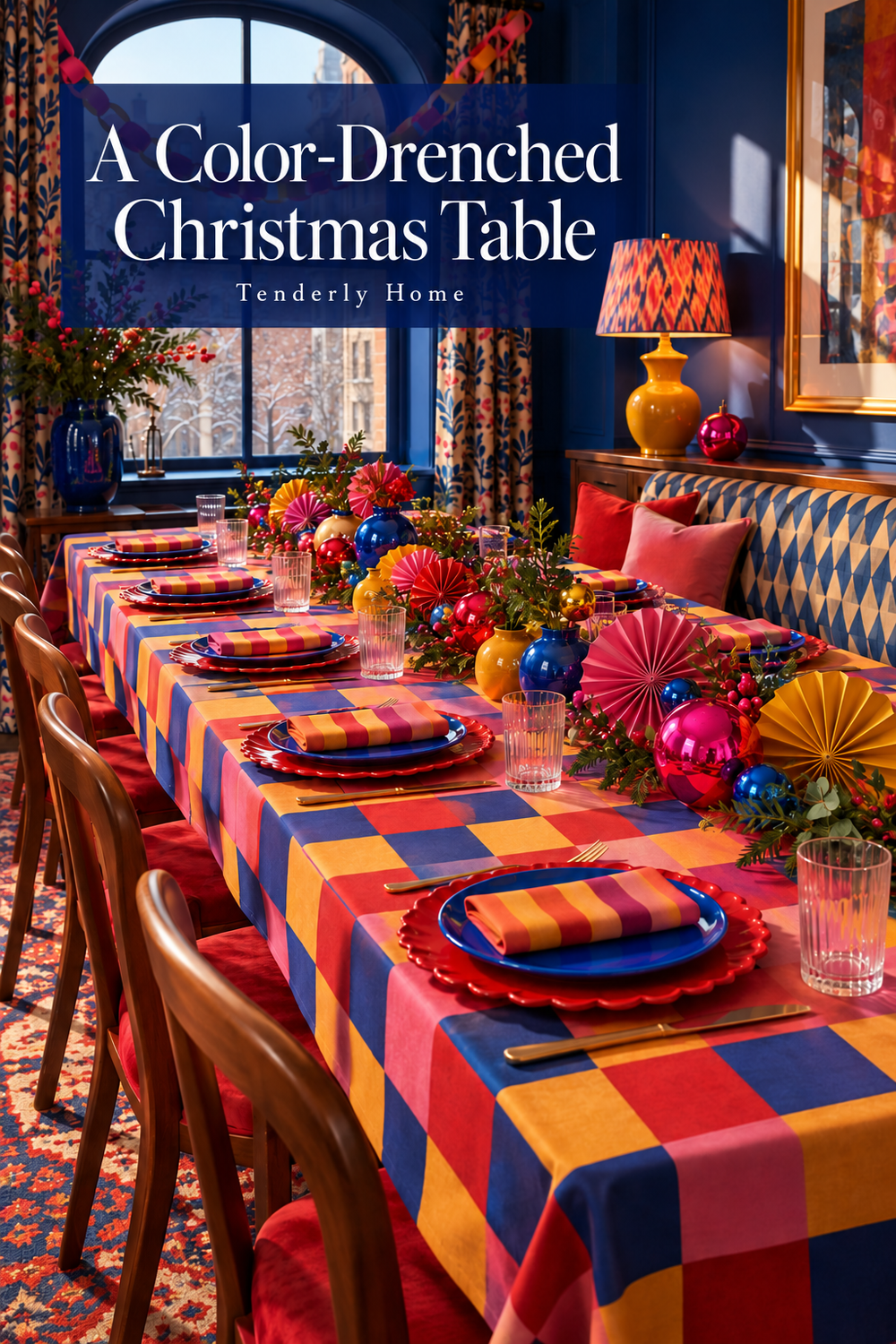
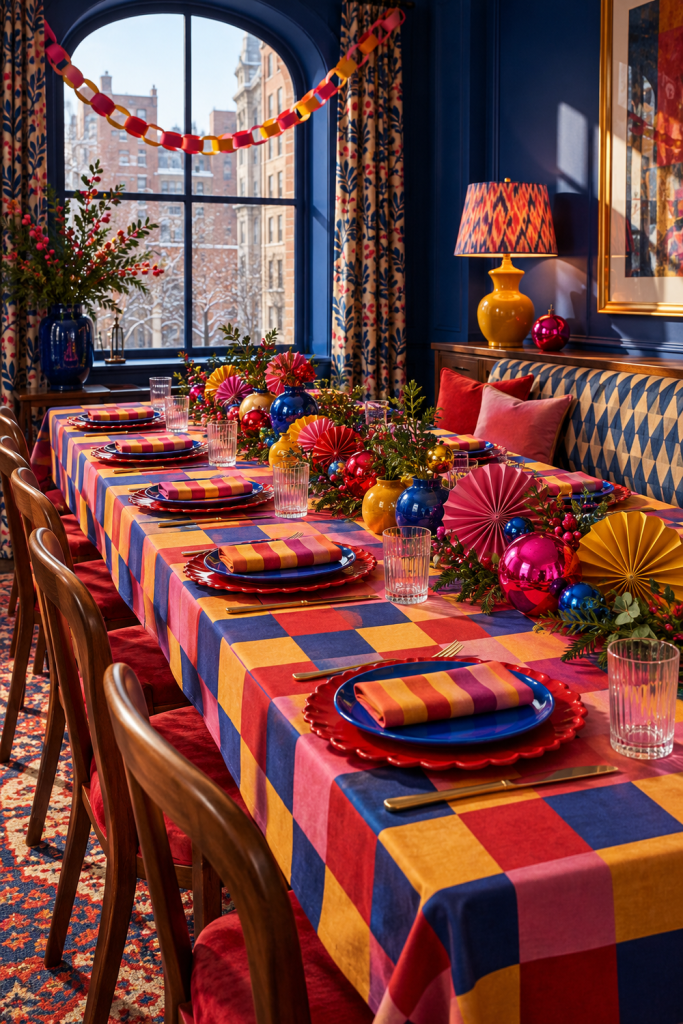
A Christmas table can feel festive without leaning on a familiar red-and-green formula. In this image, large blocks of cobalt, red, pink, and golden yellow run across the tablecloth, while smaller stripes and glossy decorations build a lively second layer. The long table remains recognizable as a place to gather, even though its palette is unusually bold.
What Makes This Look Work
The tablecloth establishes the scale of color
The oversized check is the first thing the eye reads. Its broad blocks prevent the intense palette from dissolving into tiny competing details. The cloth continues over the table edge, which lets the pattern connect the tabletop to the rest of the room. A similar effect could come from a bold checked textile even when the exact colors differ. If the pattern is smaller, keep the plates plainer so the table does not become visually restless.
Stripes add a second rhythm
The napkins cross the solid blue plates in wide warm-colored bands. Their stripe direction and smaller scale differ from the checks beneath them, so the two patterns remain legible. The patterned curtains and banquette sit farther back in the scene, adding depth without taking over the foreground. For a real room, one strong cloth and one smaller-scale napkin pattern may be enough. Existing curtains or upholstery can contribute a third layer if their colors connect to the table.
Low clusters give the eye a path
The centerpiece follows the length of the table. Bright spherical ornaments, pleated fans, greenery, and small colorful vessels repeat in loose groups. The decorations sit below the guests’ sightline in the image, while their shiny and folded surfaces break up the flat geometry of the cloth. A loose sequence of clusters feels fuller than a single small centerpiece but leaves the plate zones distinguishable.
Key Pieces to Recreate the Look
A generously sized checked tablecloth
Choose a cloth with blocks large enough to remain visible around the plates. Check the table dimensions and the desired drop on every side before choosing a size; a narrow cloth may make the pattern disappear under the settings.
Contrasting dinnerware layers
The image pairs scalloped red base plates with smoother solid blue plates. A strong silhouette difference helps distinguish the layers even when both colors are saturated. Use your own dinner plates over colorful chargers if they sit securely and leave space for the glass and utensils.
Striped cloth napkins
The warm stripes bridge the yellow and pink areas of the cloth. Look for a stripe width that reads clearly when folded, and test one napkin on a plate before committing to a full table.
Clear drinking glasses
Simple clear tumblers interrupt the dense palette without adding another color or motif. Their understated shape lets the textiles and centerpiece stay in charge. Confirm that each glass has a comfortable spot above and to the right of the guest’s plate.
Colorful ornaments and small vessels
Glossy round ornaments create concentrated points of reflection. Group them in shallow dishes or among contained greenery rather than leaving fragile pieces loose where a guest might move a plate. The colored vessels can hold small stems and anchor each cluster.
Pleated paper decorations
Folded paper fans contribute a radiating shape that differs from the checks, stripes, and round ornaments. Use stable small versions in the centerline, or secure larger ones away from food and glasses. The paper should not lean into a candle flame or a serving area.
How to Style It at Home
Set the guest zones first
Place the plates, glasses, and only the utensils needed for the meal before adding decoration. Give each diner room to pull out a chair and use the setting. In the image, the visual rhythm is more reliable than every individual utensil position, so use a real place-setting check rather than copying the photo literally.
Limit the palette before adding motifs
Pick three or four vivid colors that you can repeat across the cloth, napkins, and small accents. A deep wall or a neutral room can both work; the table needs its own coherent palette. If the cloth already contains several colors, borrow those rather than introducing a disconnected fifth accent.
Build the center in short sections
Lay out the centerpiece in small groups between opposing place settings. Start with greenery or small vessels, then add the glossy ornaments and a limited number of fans. Sit down at several seats to check the view across the table. Move any tall or wide element that blocks conversation, elbows, or serving access.
Let the room support the table
The paper chain at the window and the room’s patterned textiles carry the celebration upward. A securely attached garland at a window or wall can echo the table without suspending anything over dining surfaces. If the room already has strong upholstery or curtains, repeat one shared color instead of adding more patterns to every surface.
Shop Similar Pieces
Compare tablecloth proportions
Check the actual tabletop length and width, the manufacturer’s dimensions, care instructions, and the pattern scale shown in room photographs. A cloth that fits well will do more for this look than a closer color match that barely covers the table.
Choose usable plate layers
Confirm that a charger is larger than the dinner plate and has a stable, flat resting surface. Compare the red edge profile and blue finish under ordinary room light; color photos can make both appear brighter than they are.
Check napkin fabric and stripe scale
A washable fabric that folds without excessive bulk is useful for a working dinner table. Look at photos of the napkin folded, since the displayed portion may show only one or two color bands.
Select contained centerpiece accents
Compare ornament size, finish, and durability along with the size of a shallow bowl or tray that keeps them in place. Reserve fragile or sharp pieces for positions that guests will not need to clear during the meal.
Final Styling Tip
Photograph or view the table from one seated position before guests arrive. The lower angle reveals whether a fan or ornament cluster that looks balanced from above actually blocks the person across the table.