
*This post may contain affiliate links for which I earn commissions.*
This image was created with AI and is presented as decorating inspiration.
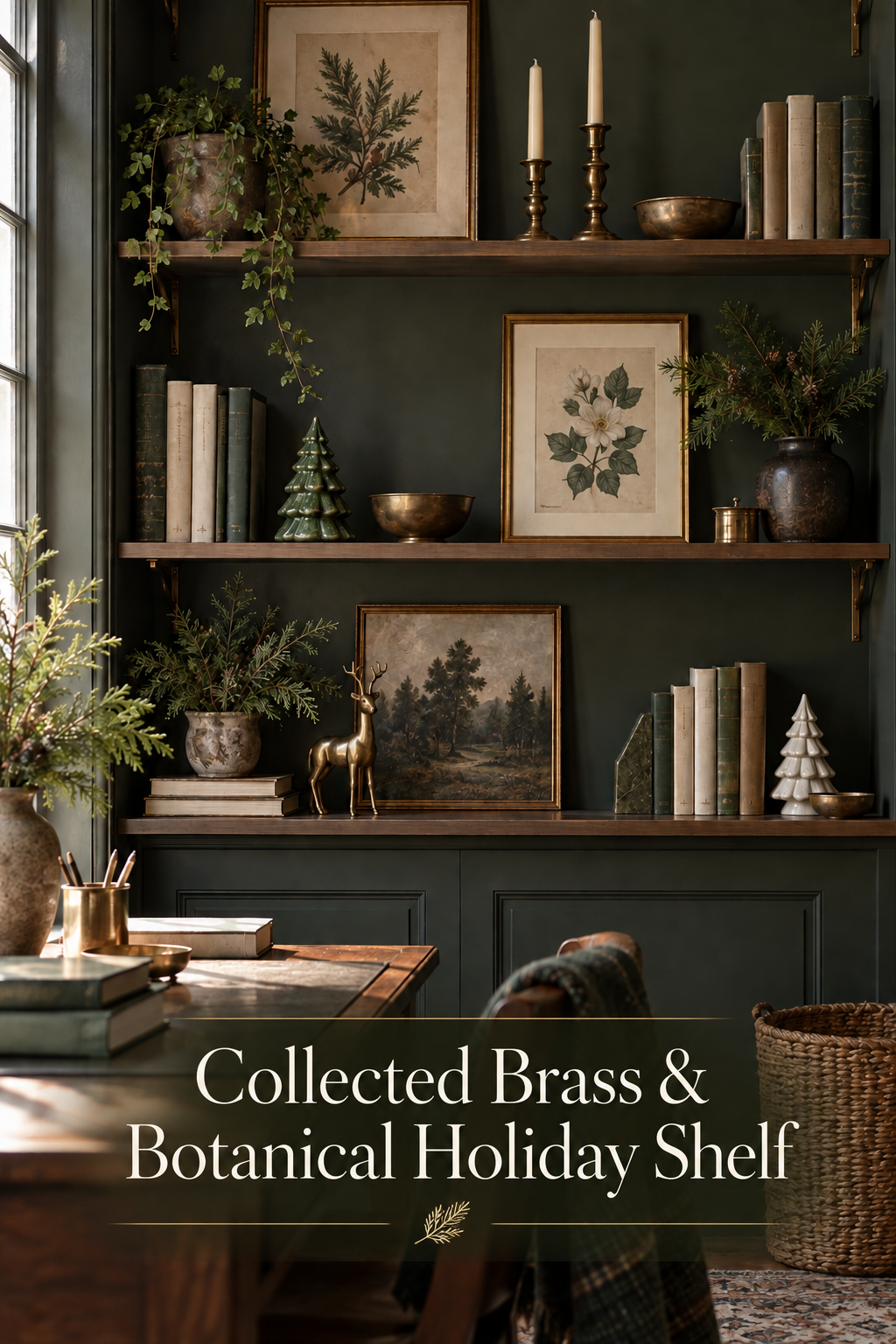
These study shelves dress for Christmas without hiding the room’s everyday purpose. Botanical pictures lean beside books, warm metal candleholders rise above smaller objects, and two ceramic trees make the season legible. Dark walls and wood shelves hold the arrangement together; window light supplies the contrast. You can borrow the spacing and mix of forms even if your own shelves are much smaller.
What Makes This Shelf Work
Botanical pictures give the display a quiet theme
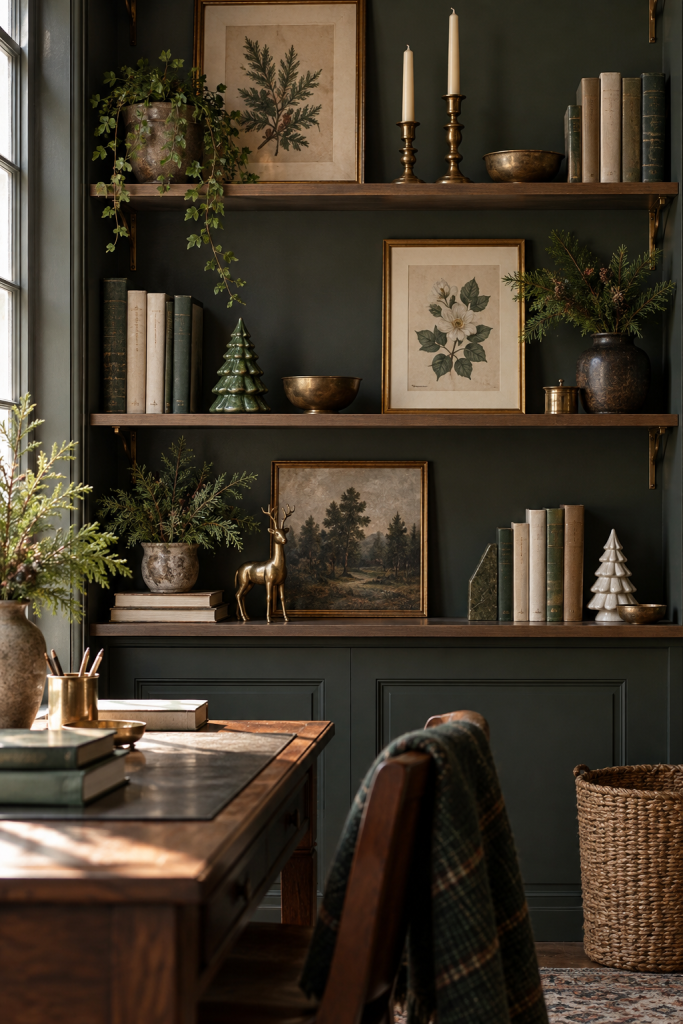
The image shows framed plant studies on the upper shelves and another darker landscape below. They do not match exactly, yet their muted imagery connects the greenery with the books. The top frame is taller than most of its neighbors, so it establishes a visual anchor without requiring a symmetrical stack on the opposite side.
For a real shelf, use art that can lean securely against the wall, with its bottom edge fully supported. Choose one larger print first. Let a second, smaller frame add a different shape rather than repeating the same dimensions on every level.
Metal highlights punctuate the dark background
Two tall candleholders on the upper shelf, a shallow bowl and smaller warm metal pieces create points of reflection. The sheen matters because the ink-dark wall and deep wood absorb light. The display does not need a continuous row of brass. A few separated highlights let the eye travel between shelves.
The pictured candles appear unlit. Keep real flames off crowded bookshelves and beneath upper shelves; battery tapers can offer a candle shape if you want illumination in a real arrangement. Follow the lighting product’s instructions and keep electrical components accessible.
Small trees supply a clear seasonal signal
A dark green tree on the middle shelf and a pale tree below provide different heights and finishes. Their familiar silhouettes say Christmas while the books and botanical prints remain useful throughout the year. The tree figures are separated rather than collected in a single cluster, which keeps the holiday cue moving through the composition.
Greenery softens the straight shelf lines
Vessels of foliage introduce uneven outlines against the horizontal wood. The picture suggests a short evergreen arrangement at the right and another lower down; an upper trailing plant is part of the broader study setting. In a real home, protect shelves from damp stems with a watertight insert and avoid letting plant material press against artwork.
Key Pieces to Recreate the Look
Framed botanical art
Choose muted prints with generous borders and frames that can sit securely on your shelf depth. Mix one substantial image with a smaller companion instead of buying a uniform set.
Brass-tone candleholders
A pair with related finishes but slightly different heights adds the vertical accent. Select a stable base that fits fully on the shelf, and plan for flameless candles in a tight display.
Ceramic Christmas trees
One darker and one lighter tree can link separate levels while avoiding a matching-display feel. Compare the tree’s height with the book spines and frames so it remains visible.
Books with quiet spines
Existing books are perfectly useful. Group a few upright and stack others beneath a small object, keeping the stack low enough that it does not look precarious.
Small metal bowls or lidded vessels
A shallow rounded shape breaks up the books and rectangular frames. Look for a modest diameter that leaves a little wood visible on both sides.
Vases for greenery
One dark, simple vessel supports a loose branch arrangement without competing with the artwork. Consider the weight and shelf depth as well as the finish.
How to Style It at Home
Clear a portion of each shelf first
Remove enough items to see the back wall and some exposed shelf surface. A shelf packed edge to edge loses the pauses that make this picture readable. Keep the books you actually use within reach rather than treating every level as a fixed display.
Place the largest frame and books
Anchor an upper level with the larger picture. Put a lower frame on a different shelf and offset its position so the two do not form a rigid vertical column. Stand books nearby to provide visual weight where there is no frame; check that leaning pieces cannot slip when you remove a book.
Distribute height and reflection
Set the tallest candleholders away from the top of a crowded shelf, then repeat the warm metallic finish with a much lower bowl elsewhere. The gap between tall and low forms is more useful than adding another tall object. Leave room above every piece and use flameless light where appropriate.
Add the holiday details last
Put the two tree figures on different levels. Add cut greenery sparingly, with stems contained and paper goods protected from moisture. Step back from across the room; if a branch hides a frame or a tree disappears beside tall books, move only that piece before adding more.
Shop Similar Pieces
Botanical print frames with secure support
Match the subdued artwork and frame proportions, then check that the frame fits the available shelf depth and has a stable easel or safe leaning position.
Candleholders for flameless tapers
Prioritize stable bases and taper openings compatible with your chosen battery candles; a worn brass finish is closer to the pictured warmth than mirror-bright gold.
Two contrasting ceramic tree forms
Choose related but nonidentical heights and green or cream finishes. A pair of identical trees on one level would change the collected rhythm.
A compact foliage vessel
A sturdy dark vase with a suitable insert is easier to place near books than an open, wide water bowl. Size it to the shelf’s remaining usable depth.
Final Tip
Photograph the shelves before seasonal styling, so you can return frequently used books and objects to practical spots after Christmas.