*This post may contain affiliate links for which I earn commissions.*
Image created with AI.
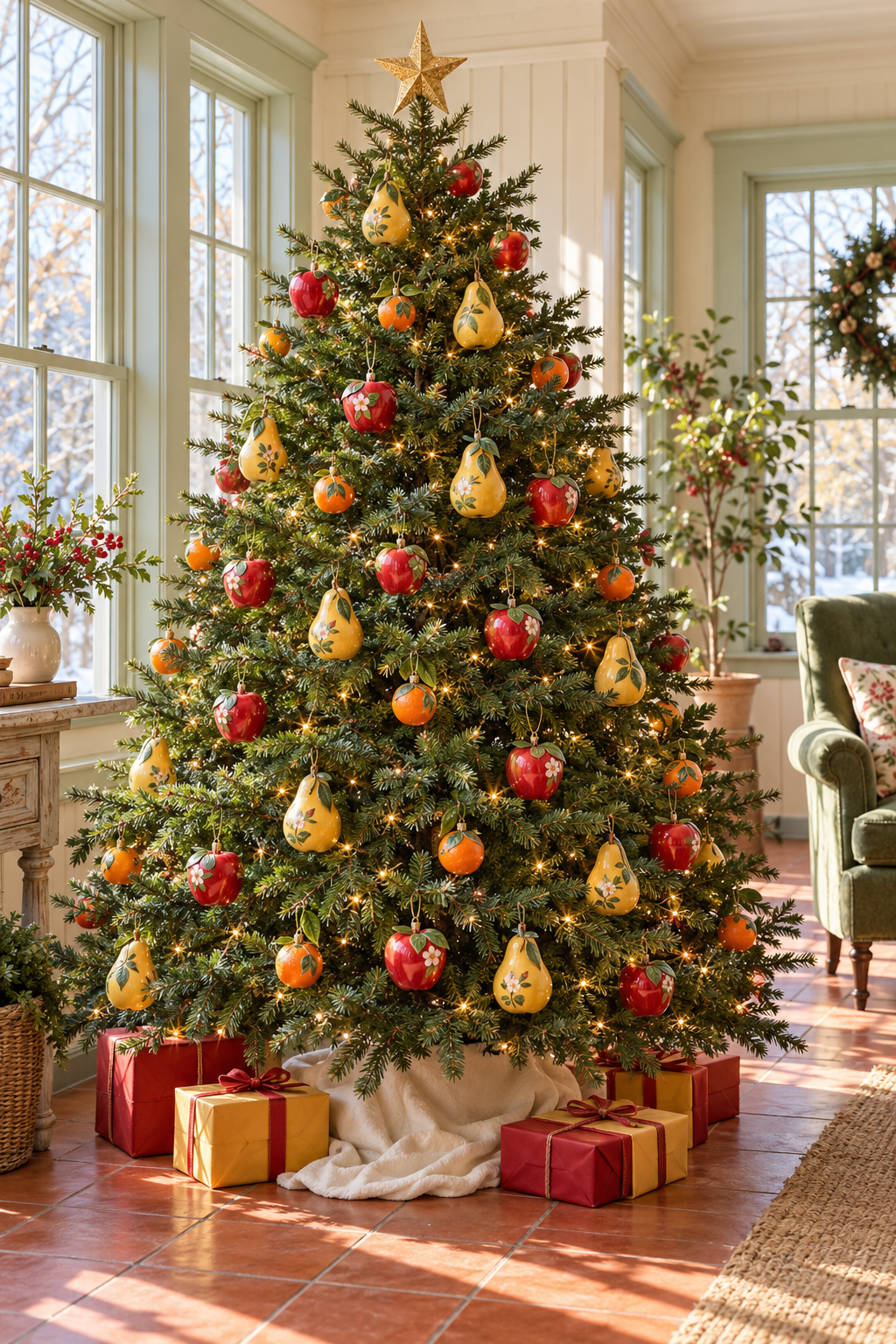
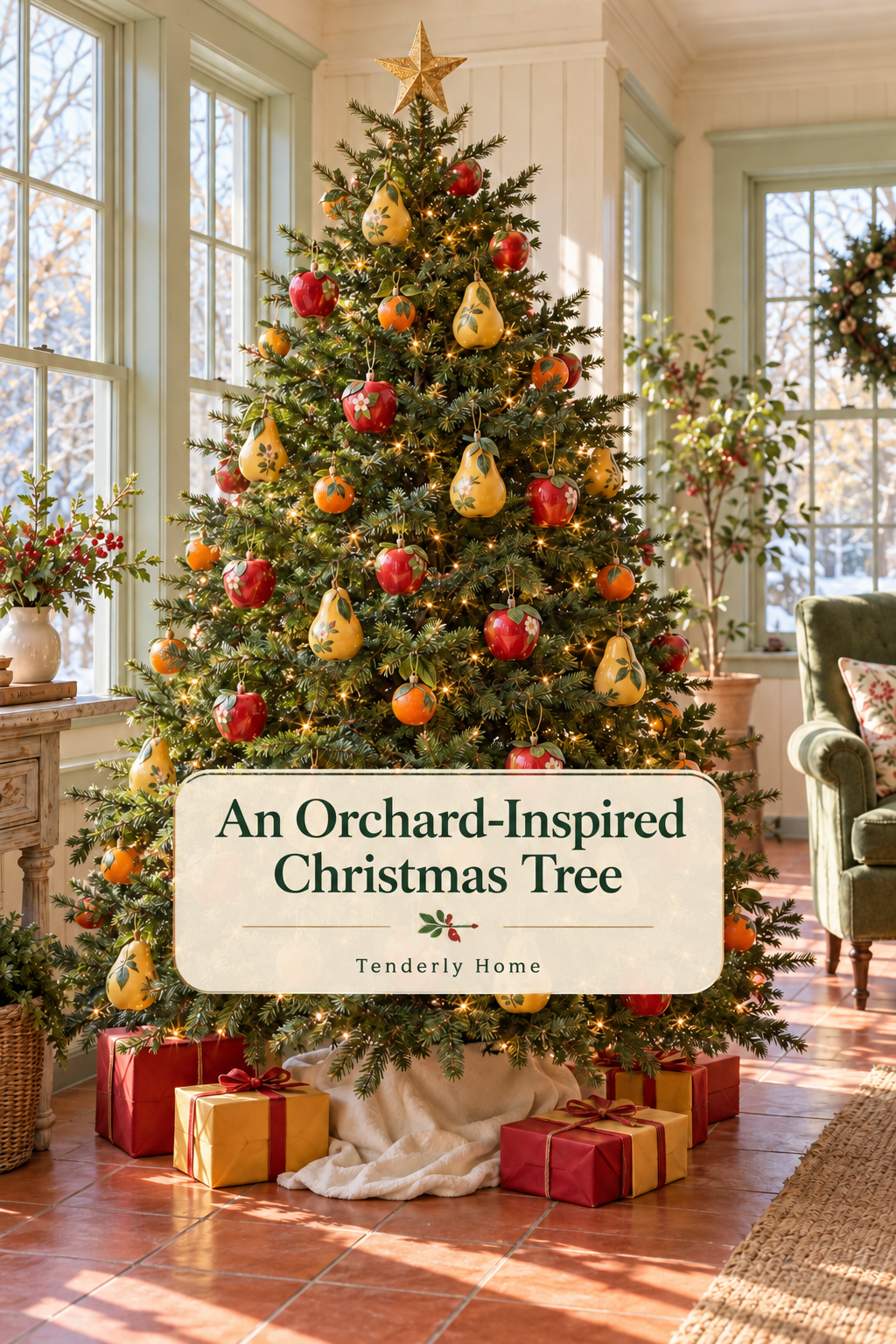
Pear and apple ornaments give this Christmas tree a cheerful orchard theme. Yellow, red and orange shapes sit among the evergreen branches, with small painted leaves and flowers making the fruit feel decorative rather than literal. Warm lights connect the ornaments, and a gold star finishes the top.
The sunroom setting makes the colors especially clear, but the idea does not depend on having windows on every side. A tree near one good source of daylight can carry the same fruit-inspired ornament collection in an ordinary living room.
What Makes This Look Work
Fruit shapes replace the usual bauble mix
The tree has a recognizable ornament language: long pears, round apples and smaller orange forms. Their differences are easy to understand at a glance. Instead of adding every familiar Christmas motif, the arrangement lets these related shapes do most of the decorative work.
That gives the tree a distinct identity without needing a complicated palette. The red ornaments read clearly against green needles, while yellow pears catch the daylight. Smaller orange shapes bridge the two stronger colors.
Painted details keep the orchard theme festive
Leaf and flower marks appear on the fruit ornaments. Those decorative surfaces separate the scene from a tree hung with plain artificial produce. The ornaments look like a coordinated collection even though their outlines vary.
You can use this principle when combining pieces bought separately. Look for a shared painted character or similar surface sheen, rather than insisting that every ornament come from one set. A consistent finish helps different fruit forms belong together.
Green branches remain part of the picture
The ornament coverage is generous, but greenery remains visible around individual pieces. Warm lights appear through the branches rather than only around the outer edge. That depth keeps the tree from looking like a flat panel of colorful shapes.
The light-colored base covering also gives the lowest branches a soft finish. Red and yellow packages repeat the ornament colors below, connecting the tree to the floor without introducing a separate wrapping-paper theme.
Key Pieces to Recreate the Look
A tree with usable branch depth
Choose a tree whose branches can support ornaments at several depths. A reasonably open silhouette makes it easier to show the pear shapes without pressing them against dense tips.
Yellow pear ornaments
The longer yellow forms are the easiest feature to recognize. Use their shape as the main reference point when choosing your collection, especially if you need to simplify the overall ornament count.
Red apple ornaments
Red apples supply the strongest contrast with the evergreen. A glossy or softly reflective finish helps them remain visible in a window-lit room, but their apparent weight should suit the branches carrying them.
Smaller orange fruit accents
Smaller warm-orange pieces give the collection a third scale. They are useful between the larger ornaments, where another pear or apple could make the branches look overloaded.
Warm tree lights
Fine warm lights add depth between the fruit forms. Choose lights appropriate for your actual tree and location, then follow their instructions for installation and use.
A plain star topper
A simple star keeps the top clearly Christmas-themed. Its comparatively quiet shape lets the fruit ornaments remain the main idea rather than competing with a large themed crown.
A light base covering
An ivory skirt or other suitable light-colored base treatment gives the yellow and red packages a clear background. Avoid an unrelated large print that would pull attention away from the branches.
How to Style It at Home
Plan the tree around the room first
Check the tree’s full branch spread, not only the diameter of its stand. Leave room for curtains, furniture and the normal route through the space. A narrow room may call for a slimmer tree with fewer larger ornaments.
Place the tree before decorating and view it from your usual sitting position. If one side faces a wall, prioritize the visible front and sides instead of using the same ornament density everywhere. You do not need to recreate a sunroom view that exposes nearly the entire tree.
Use pears to set the ornament rhythm
Hang a few pear ornaments across different heights first. Their long silhouette makes them useful visual markers as you develop the rest of the tree. Let each hang freely below a branch rather than leaning it into the needles.
Add apples between those markers, then use the smaller orange ornaments in the remaining gaps. Avoid putting every yellow ornament on the outer tips. A few positioned slightly deeper will keep the color visible from more than one angle.
Turn the painted faces toward useful views
Some ornaments may have their decorative marks on only one side. Rotate them toward the doorway or seating area where the tree is most often seen. Check that their hanging loops stay secure after you turn them.
If the collection feels busy, remove an ornament from a crowded branch before adding another category. Keeping one fruit form recognizable is more useful than filling a small gap with a contrasting motif that changes the tree’s theme.
Let the base support daily use
Keep packages outside the stand access area and any watering point on a real tree. Arrange them low enough that they do not hide the lowest fruit ornaments. A soft covering should sit clear of anything that its manufacturer requires to remain exposed.
For a room used every day, leave the most accessible side of the tree open. The finished display should still let you check the stand, reach the light controls and clean around the base without moving the whole arrangement.
Shop Similar Pieces
Compare ornament weight before committing to a set
Look for stated weights or clear information about hollow versus solid construction. Fruit shapes can look alike in product photographs while putting very different demands on a branch. Lightweight alternatives may be a better fit for a small tree.
Check the fruit collection in ordinary photographs
Review customer images when available to judge whether painted details remain clear at a realistic distance. Highly magnified listing shots can make small leaf marks seem much more prominent than they will look across a room.
Choose lights with a workable control location
Compare lead length and the position of the controller or plug. A suitable light color is only part of the decision; the connection needs to reach your actual outlet without pulling the strand tight through the branches.
Look at the topper attachment
Check how the star fits onto the tree tip and whether that method suits your tree. A topper that stays upright on a substantial branch may tilt on a softer or narrower top, even if its overall size looks appropriate.
Final Styling Tip
Keep a small box specifically for the fruit ornaments and separate long pear shapes from round apples during storage. Dividing the collection by shape makes it easier to spot missing loops or chipped surfaces before next year’s decorating begins.