
*This post may contain affiliate links for which I earn commissions.*
This inspiration image was created with AI.
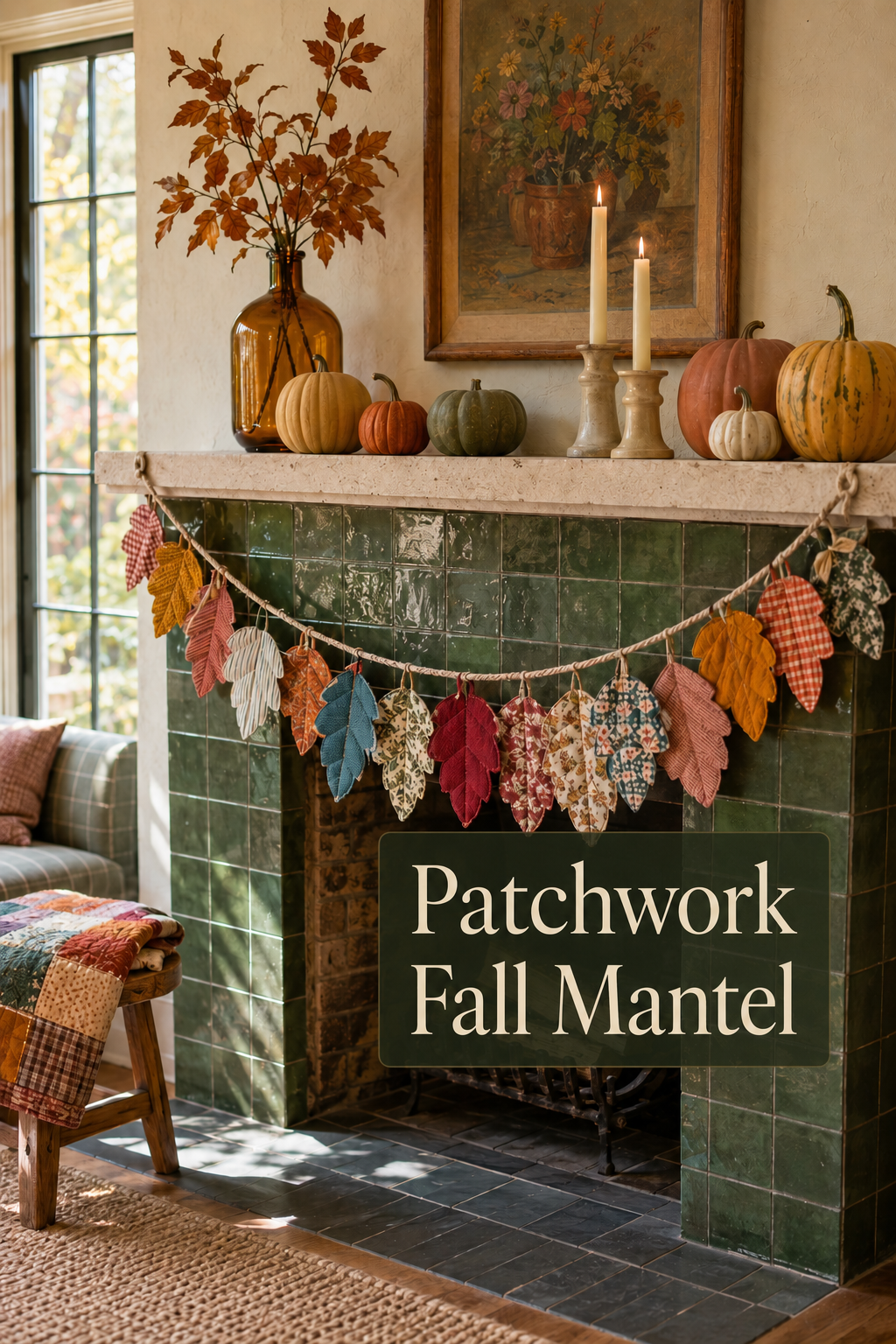
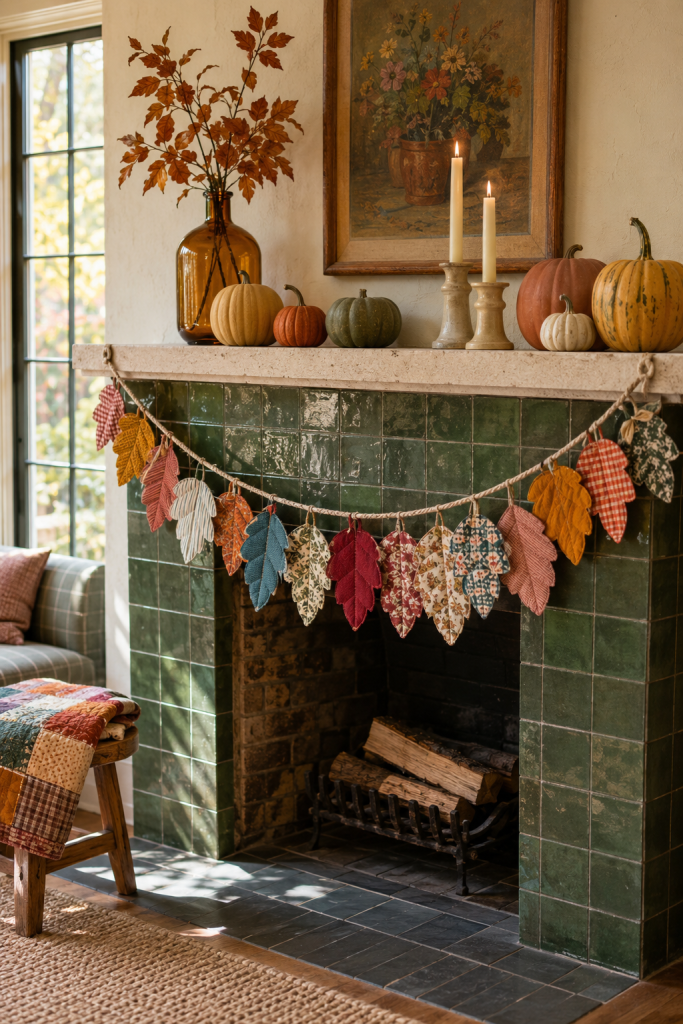
A fabric leaf garland gives this fall mantel its warmth before a single pumpkin is considered. Gingham, stripes, florals, textured solids, and small prints sweep across a deep green tiled fireplace on a thick cord. Above, mixed pumpkins, an amber bottle vase, copper-toned branches, and two ivory candles build a quieter layer that lets the handmade focal point remain dominant.
What Makes This Patchwork Fall Mantel Work
Repeated Silhouette with Textile Variety: The garland succeeds because it combines one repeated shape with changing fabrics. Every leaf belongs to the same family, but differences in size, vein detail, color, and print keep the line from feeling manufactured. Mustard, rust, cranberry, dusty blue, coral, cream, and deep green recur at uneven intervals, guiding the eye smoothly from one end of the fireplace to the other.
Contrast Across Gloss and Matte Surfaces: The glazed green tile is more than a background color. Its small square grid contrasts with the curved leaf edges, and its reflective surface catches daylight around fabrics that are mostly matte. A pale stone mantel forms a useful visual break between the patterned garland below and the solid pumpkins above. That strip of neutral material prevents the two distinct layers from merging into one busy band.
Asymmetric Height Distribution: Height is concentrated rather than spread evenly. The large amber vase and airy copper leaves rise at the left, the floral artwork occupies the center wall, and two tapers create a narrower vertical accent near the middle. Pumpkins run low across the shelf with generous gaps between them. Without the large artwork, the best adjustment is to lower the branch height slightly and preserve more open wall above the candles, preventing the vase from becoming an accidental substitute for the missing frame.
Key Pieces to Recreate the Look
Patchwork Fabric Leaf Garland
Choose a finished garland made from real woven textiles, or sew individual leaves from quilting cotton, linen, velvet, and gingham scraps. A mix of prints and solids will read more clearly than a collection in which every leaf carries a dense pattern.
Braided Cotton Cord and Secure Hangers
A substantial neutral cord supports the soft leaves and adds a handcrafted edge. Select removable hooks or ties rated for the garland’s weight and compatible with stone, tile, wood, or the actual mantel surface.
Mixed Uncarved Pumpkins
Gather a few medium and small pumpkins in mustard, terracotta, cream, muted coral, and moss green. Matte real pumpkins or realistic faux versions suit the tactile fabrics better than glossy, identical shapes.
Large Amber Glass Vase
A simple bottle-shaped vessel introduces transparent warmth and enough scale to anchor one end of the shelf. Use a stable, broad-bottomed form with a narrow neck that can hold several branches without a bulky arrangement.
Autumn Branches
Sparse oak-like branches with copper or rust leaves echo the seasonal colors while preserving negative space. Fresh cuttings should be checked for insects and moisture; realistic faux stems are easier to position near artwork.
Ivory Tapers and Ceramic Holders
Warm ivory candles give the eye a quiet pause between the amber glass and pumpkins. Low stoneware holders with wide bases feel connected to the pale mantel and provide a safer, steadier foundation.
A Secondary Patchwork Textile
A folded quilt or throw on a nearby stool extends the textile story beyond the fireplace. Keep only a small portion visible so it reads as a supporting echo rather than a competing centerpiece.
How to Style It at Home
1. Map the Garland Curve on the Floor First
- Floor Mockup: Begin with the garland because its drop determines how much of the fireplace face remains visible. Lay it on the floor first, alternate pale and dark leaves, and move any nearly identical prints apart.
- Three-Point Anchor: Attach the ends securely, then add one discreet center support hook so the cord forms two relaxed curves rather than pulling the outer hooks inward under tension.
2. Confirm Fireplace Clearances and Safe Alternatives
- Manufacturer Clearances: Before decorating the shelf, confirm required fire clearances for your fireplace and follow all manufacturer guidance.
- Fabric Heat Limits: While the styling shows the fabric well above the firebox opening, a working fireplace may require a greater distance or no hanging textile at all.
- Alternative Locations: If heat clearances cannot be maintained safely, move the fabric garland to the wall above the mantel, across a nearby window frame, or onto an unlit decorative fireplace.
3. Anchor Asymmetric Heights and Cluster Accents
- Vase and Branch Spread: Set the amber vase near one end and rotate the branches until their widest spread stays neatly within the wall area rather than overlapping the artwork.
- Counterbalance with Pumpkins: Place the largest pumpkin toward the opposite side, then distribute smaller pumpkins organically across the remaining gaps.
- Cluster the Tapers: Cluster the two candleholders together near the center instead of stiffly placing one on each half of the shelf.
- Preserve Stone Breaks: Stop adding decorative objects while the exposed stone mantel still forms visible breathing room between the varied textures.
4. Scale and Edit for Narrow Mantels
- Color Discipline: If the existing green tile already introduces plenty of color into the room, borrow only two or three subtle hues from the fabric for the shelf objects to keep the mantel restful.
- Shortening the Garland: For a narrower mantel, shorten the garland by removing leaves from the outer ends instead of bunching the textiles tightly together.
- Compact Hierarchy: A minimal lineup of three pumpkins, one vase, and one or two candles will fully preserve the visual hierarchy.
Shop Similar Pieces
Choosing a Fabric Leaf Garland
Look for visible woven texture, several coordinated prints, finished edges, and leaves that hang separately instead of forming a flat printed banner. Check the total width and weight against the mantel and planned hooks.
Find Fabric and Cord for a DIY Version
Select small-scale cotton prints, a few textured solids, medium-weight interfacing, and flexible braided cord. Coordinated remnants offer better variety than buying full yardage of every pattern.
Shop for Believable Faux Pumpkins
Favor muted fall colors, believable stems, mixed profiles, and matte or softly textured finishes. Choose sizes that leave visible shelf space rather than creating an uninterrupted pumpkin row.
Select an Amber Vase for Tall Branches
A weighted base, narrow opening, and warm brown glass will support sparse stems while keeping them controlled. Measure the combined vase and branch height against nearby art before purchasing.
Pair Neutral Candles with Stable Holders
Confirm that the taper diameter fits snugly and that the ceramic bases sit flat on the mantel. Warm ivory wax and sand-colored stoneware will calm the patchwork without adding another bright accent.
Final Styling Tip
Clip a small paper template the size of the largest fabric leaf to the cord before committing to a finished or DIY garland. It quickly shows whether the planned drop will cover too much tile, approach the firebox, or collide with the mantel’s side details.