
*This post may contain affiliate links for which I earn commissions.*
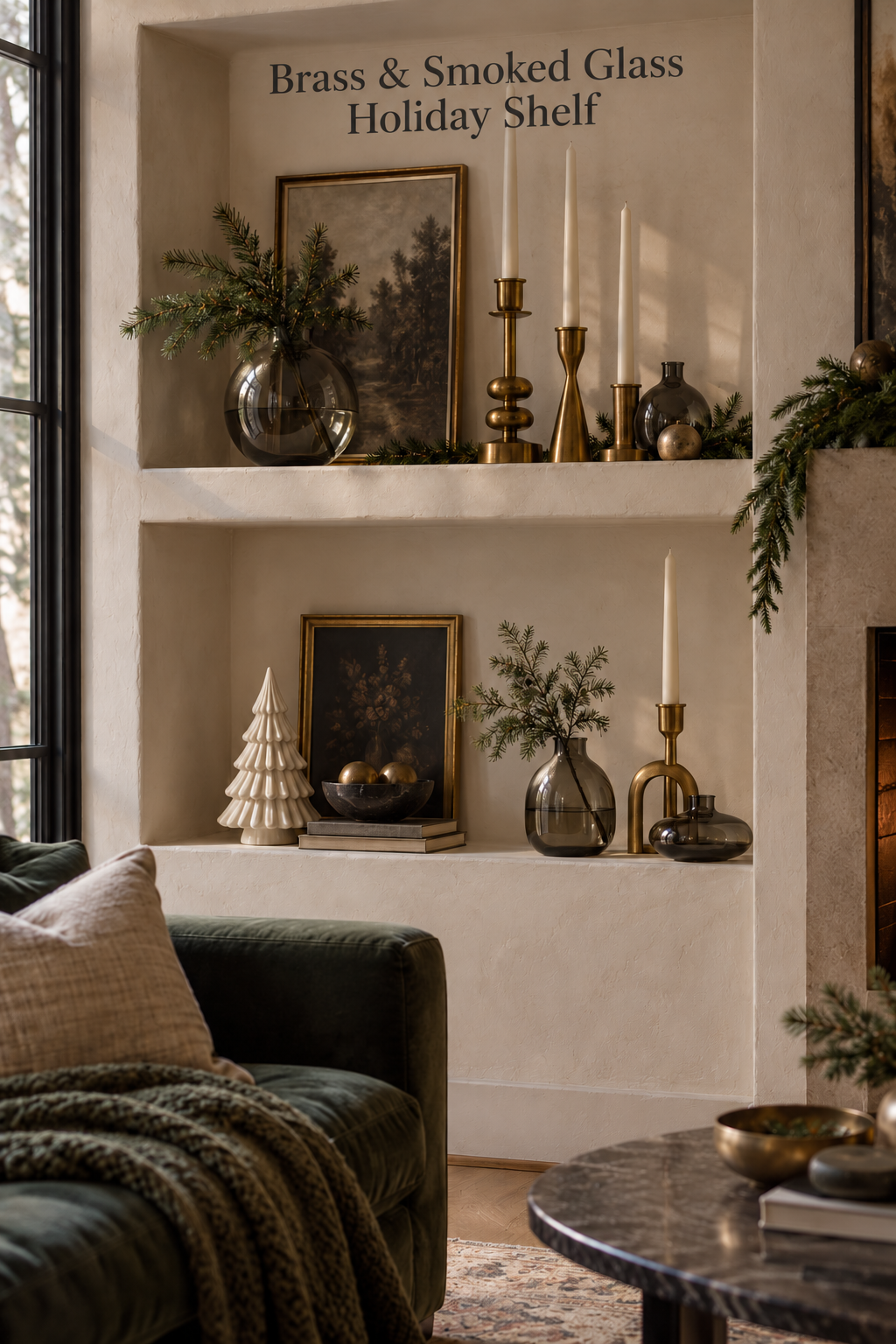
This image was created with AI and is presented as decorating inspiration.
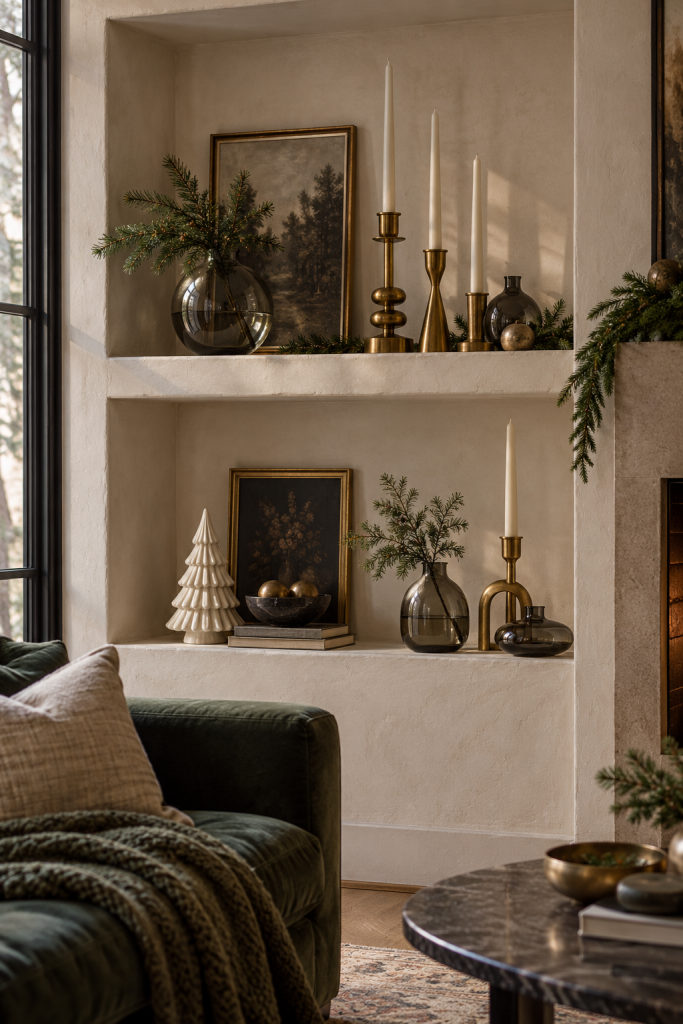
The two recessed shelves in this image bring together warm metal, smoky translucent glass and restrained greenery. Tall ivory tapers rise above rounded glass vessels; below them, a pale ceramic tree sits beside a shallow dark bowl. It reads as a winter display in a lived-in sitting room, with a sofa and window still visible beside the niche.
The useful lesson is restraint. Instead of treating the niche as a product lineup, the arrangement changes height and opacity from one object to another, and leaves bare plaster around the group. You can adapt that balance to a bookcase or mantel even when your shelves are narrower.
What Makes This Shelf Work
Brass shapes make a vertical rhythm
The upper shelf has several candleholders with differing profiles, from rounded stacked forms to a slimmer stem. One taller piece on the lower shelf repeats the material without copying the arrangement. Their warm finish links the two levels, while their varied heights keep the row from looking like identical merchandise. The tapers are unlit in the image, so the visual effect comes from their pale lines against plaster, not a claim about burning candles near greenery.
Smoked glass softens the bright metal
Rounded translucent vessels catch the window light without becoming as reflective as the brass. A larger vase on the upper shelf and smaller shapes below give the display a repeated material at different scales. The smoke tone creates a gentle transition between the dark framed pictures, the sofa and the cream-colored recess. The exact glass composition is not known from the image; when shopping, prioritize the visible tint and silhouette.
A single pale tree signals the season
The ceramic tree on the lower shelf is a clear Christmas note, but it has plenty of room around it. A shallow bowl and framed artwork keep the display from becoming a row of identical trees. Short evergreen sprigs add a fresh organic line across the shelves. They are accents rather than a thick garland, which helps preserve usable shelf area and avoids hiding the shapes that define the look.
Key Pieces to Recreate the Look
Mixed brass candleholders
Select a small group with distinct profiles and related warm finishes. Their role is to add height to the upper niche and one echo on the lower level; a mix of one rounded and one narrow form is more useful here than a matching set of many pieces.
Ivory taper candles
Pale tapers extend the vertical lines above the holders. Check that the bases fit the actual sockets securely and follow the candle and holder instructions if you intend to light them; unlit tapers can serve the decorative purpose shown here.
Smoke-colored glass vases
Look for a rounder vessel and a compact bud vase rather than several objects at the same scale. Translucency lets light pass through the display and makes the greenery look less dense.
One sculptural ceramic tree
Choose a modest ivory or off-white tree whose ridged profile can be recognized from the room. A single figure is enough to establish the holiday cue on the lower shelf without crowding the artwork.
Evergreen cuttings
A few short sprigs break up straight shelf edges. Place them in water when appropriate for the plant and vessel, or use a suitable faux clipping; keep greenery clear of candle flames and heat.
Low dark bowl and framed art
The dark bowl grounds the pale tree and gives small objects a place to sit. Muted framed art forms a backdrop in both niches; use pieces you already own if their tones sit comfortably behind the display.
How to Style It at Home
Start with the shelf depth
Measure the usable depth before choosing any holder or vase. The image’s niche is recessed, but the front edges remain mostly free. On a shallow shelf, place the tallest holders farther back and avoid any object that projects beyond the edge. Leave space to lift a vase or candleholder without disturbing its neighbor.
Build one tall group, then one quieter group
Set the taller brass pieces on one level, varying their silhouettes rather than lining them up evenly. On the other level, position the ceramic tree and one vertical brass accent apart from each other. Step back to see whether the two shelves read as related but distinct. Remove a piece if the upper and lower arrangements become equally busy.
Let the glass catch side light
Place the roundest glass vessel where daylight can pass through it, as it does near the window in the image. Try a branch clipping in one vase, then leave another vessel empty. Filling every bottle with stems hides the clarity that makes the smoked glass useful. A framed picture can sit behind a vessel if its edges remain visible.
Keep greenery controlled
Use short lengths instead of wrapping the entire niche. Tuck a small piece beside a framed object or allow a sprig to cross a corner, but leave the main candleholder bases and shelf edges visible. If using real greenery, protect the shelf from moisture and replace cuttings as needed. Keep every stem away from any candle you might light.
Shop Similar Pieces
Compare brass holder bases
Check the footprint and stability of each holder against the actual shelf depth. Mix shapes within a similar finish family, and verify taper compatibility before purchasing. Tall holders can work as unlit decorative pieces where flame clearance is uncertain.
Look through the glass first
Photographs of smoked vases vary widely in tint. Seek a transparent gray-brown tone rather than an opaque black finish if you want the same light-through-glass effect. Compare neck openings if you plan to use fresh clippings.
Pick a tree by silhouette
The pale ridged tree should remain visually clear at the distance from which the room is normally viewed. Compare its height with nearby bowls and artwork rather than selecting the largest available seasonal figure.
Find a bowl with a low profile
A shallow, dark bowl can hold small ornaments without competing with the tree. Check the base and rim dimensions so it sits securely and leaves enough room to access the other lower-shelf objects.
Final Styling Tip
Photograph the niche once in daylight and once under room lamps. If the glass disappears in the evening, move one vessel closer to a light source instead of adding more ornaments.